


Welcome to Courtyard Urbanist, the online space where the courtyard urbanism conversation lives.
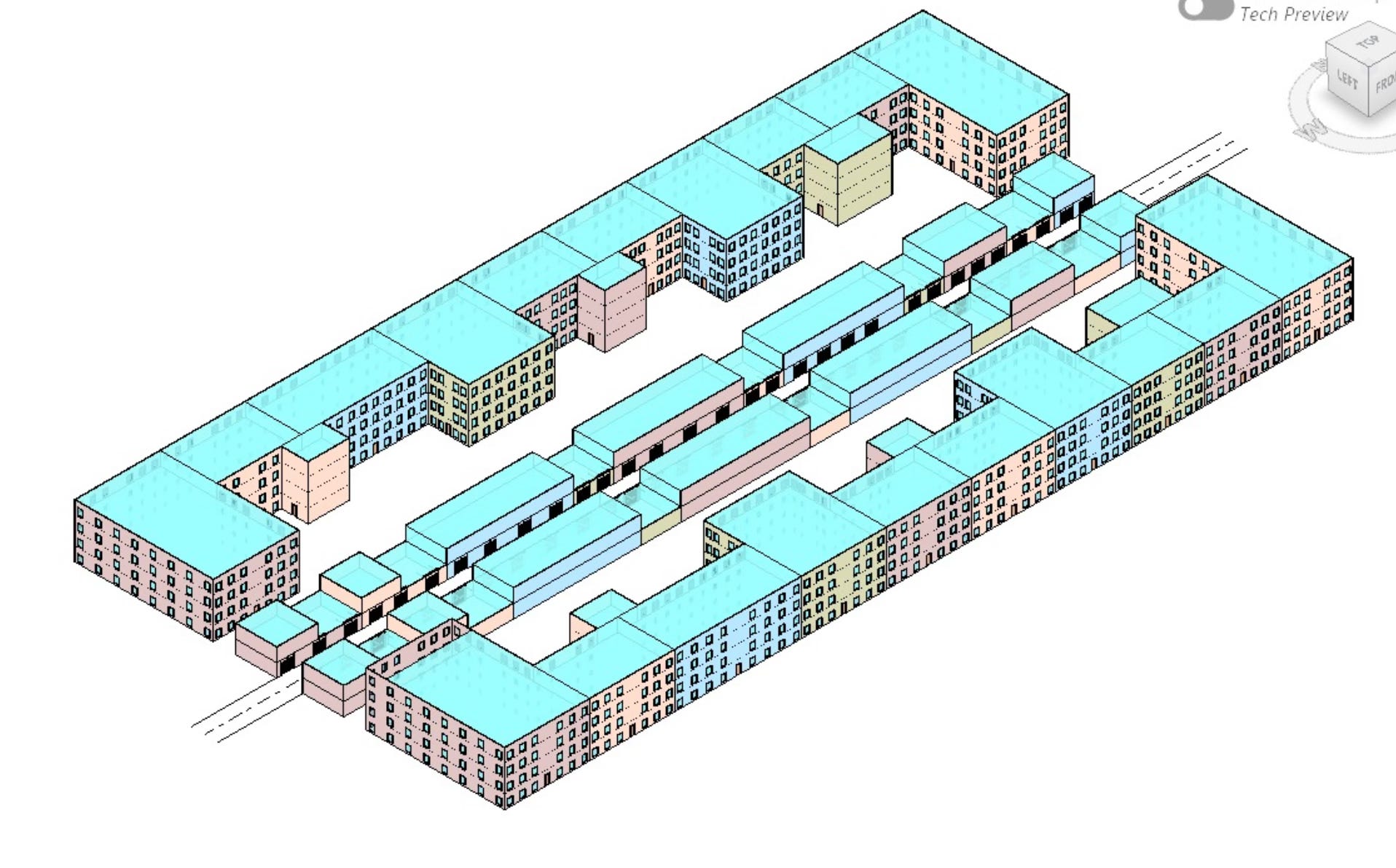
It is a conversation between people who are trying to bring back family-friendly cities and neighborhoods for diverse households to North America using courtyard blocks.
This Newsletter Is For Three Kinds Of People:
Courtyard Urbanist is specifically for:
The Builder. You’re an architect, developer, planner, or policy person actively working on (or trying to work on) courtyard-scale housing in North American cities. You need to know which policy windows are open, which projects are moving, and where the funding is. The Monthly Market Brief is written for you.
The Advocate. You write, research, teach, or organize around urban form, housing policy, and the future of American neighborhoods. You follow the courtyard urbanism conversation closely and want to be ahead of it. The weekly newsletter and research archive are your territory.
The Enthusiast. You love cities. You’ve walked the streets of Rome or Copenhagen and wondered why American cities don’t feel like that. You’re not necessarily an architect or developer, but you’re curious, you’re paying attention, and you believe the built environment matters. You belong here, too.


The Biggest Problems Keeping Courtyard Urbanism Out Of American Cities
If you’ve landed here, chances are you’re running into one ,or several, of these walls.
Problem #1: Nobody has mapped the policy landscape. Setback rules, lot coverage rules, side-yard requirements, parking minimums: the regulations blocking courtyard blocks vary city by city, and almost no one has done the work of tracking what’s changing and where. Most builders find out what’s possible only after they’ve already committed to a site.
Problem #2: American developers don’t have a repeatable courtyard block model. European cities built this form for centuries. American developers are starting from scratch, without the typological knowledge, the financing templates, or the precedent library that would make courtyard blocks a routine product instead of a bespoke experiment.
Problem #3: The funding landscape is opaque. Which Low-Income Housing Tax Credit (LIHTC) programs, state housing funds, and federal initiatives actually support mid-rise perimeter block construction? Most practitioners don’t know, not because the money isn’t there, but because no one is synthesizing it specifically for this building type.
Problem #4: Courtyard projects keep getting killed in permitting. Wide, shallow buildings with no side setbacks and commercial ground floors run into zoning codes that weren’t written for them. Knowing where the exceptions, variances, and reform pathways exist is the difference between a project that moves and one that dies on the desk.
Problem #5: There’s no trusted source tracking what’s actually being built. Which courtyard projects are in the pipeline in North America right now? Which cities are actively reforming codes to enable this typology? Without a synthesized, regularly updated source, practitioners are flying blind.
Problem #6: The European precedents are hard to translate. Prague, Copenhagen, Berlin, Edinburgh: these cities have centuries of courtyard block fabric. But what actually transfers to American land economics, zoning structures, and construction costs? The analysis is mostly missing.
Problem #7: Families are still leaving cities at scale. The family flight problem has not been solved. Millennial parents who want to stay in cities are still being priced out of single-family homes and underserved by small apartments. The housing form that would keep them (spacious, dual-aspect, courtyard-facing units) is virtually unknown in the United States.
Problem #8: The advocacy is scattered. Strong Towns, missing middle advocates, new urbanists, YIMBY coalitions: many groups are adjacent to courtyard urbanism, but no single publication is making the specific, sustained case for the perimeter block as a distinct, deployable housing solution.
Problem #9: Zoning reform moves faster than most practitioners can track. States are passing setback reform bills, cities are updating ADU rules, density bonuses are proliferating, but parsing what each change actually means for courtyard-scale development requires time most practitioners don’t have.
Problem #10: There’s no community of practice around this typology. Architects, developers, planners, and researchers working on courtyard blocks are largely isolated from each other. The knowledge isn’t accumulating. Every project reinvents the wheel.
This is not a newsletter about urbanism in general. Every issue delivers something specific and usable.
And here’s what I’m doing to help builders, advocates, and designers upgrade U.S. cities with family-friendly courtyard blocks…
Courtyard Urbanist “Chronicles” — Movement Intelligence
What is Courtyard Urbanist working on?
Which developers, cities, and coalitions are moving?
Where is momentum building, and where is it stalling?
The Chronicles keep you inside the conversation as Courtyard Urbanist develops.
Regulatory and Zoning Study — Policy Intelligence You Can Act On
I go deep on a specific regulatory question:
A state setback reform bill
A city’s lot coverage rules
A zoning variance pathway that opens the door for courtyard-scale buildings
I tell you what the change actually means for someone trying to build a perimeter block in that jurisdiction, and where the next opening is likely to emerge.
In-Depth Case Study — Design Precedents That Transfer
European courtyard blocks are the proof of concept. But the analysis has to go deeper than “look how beautiful Prague is.”
Each case study covers topics like:
Block structure
Building width
Unit layout
Courtyard geometry
Specific conditions — regulatory, economic, cultural — that made it possible.
The goal is always the same: what can actually be adapted for North American cities, and how?
Wildcard Essay — The Analysis That Can’t Wait
A policy announcement
A provocative idea
Or a live debate demands a response that doesn’t fit neatly into a scheduled format
The Wildcard Essay is where I write the piece that needs to be written — the most complex, controversial, and timely analysis I produce.
Courtyard Urbanist’s Monthly Market Brief
This is the synthesized intelligence layer for practitioners.
Every month:
Policy wins and losses
Projects in the pipeline
The funding landscape for courtyard-scale development
Opportunity alerts for advocates and developers
And updates from Courtyard Urbanist’s own active work.
Who Am I?
I’m Alicia Pederson, PhD, Founder and Director of Courtyard Urbanist, and a developer and researcher focused on courtyard block housing for North American cities.
My path to urbanism is unconventional.
I hold a doctorate in English from Northwestern University, with a specialization in Renaissance English and Italian literature and research on urban writers and the city-rural nexus.
I spent time living in a 16th-century Florentine palazzo, where I experienced firsthand what courtyard housing actually does to daily life.
I’m a mother of three living in Chicago’s Lincoln Square. Around 2022, I started watching families leave our neighborhood because the housing simply stopped working for them. A 2BD condo worked for two people. It didn’t work for a family of five. And a $1M+ single-family home wasn’t an option.
The courtyard block is the solution I kept looking for and couldn’t find in any American city.
I started writing publicly in 2024, first on X (growing from 0 to 24,000+ followers in less than two years), the Chicago Tribune and Crain’s Chicago Business, and now here.
Courtyard Urbanist has grown from a research project into the field’s primary publication, tracking policy, projects, and precedents across North America and Europe.
I work directly with my city through local urbanist groups, my neighborhood organization board, and ongoing collaboration with elected officials, architects, and developers. That on-the-ground work shapes everything I write here.
Best Issues
New to Courtyard Urbanist? Here are some of my readers’ favorite newsletters:
Courtyard Urbanism--an Introduction

Around 2022–2023, I became increasingly aware of the real estate pressures that were driving families out of the city and into the suburbs, and of the urban planning and architecture norms that exacerbated these real estate pressures.
The Zoning Rule That Broke the American City Block

Why American Buildings Don’t Touch or Meet the Street
The Death of the Office Tower and the Rise of the Live-Work Neighborhood

Just as one slows to stare at a car wreck on the highway, so am I captivated by the stream of “distressed asset” headlines cross-cutting my newsfeed. It is a slow-motion REIT pile-up: iconic office towers, once the blue-chip anchors of the American skyline, are being offloaded at “high-vacancy” fire sale prices.
Work With Courtyard Urbanist
Courtyard Urbanist offers advisory and development services.
If you’re a developer, municipality, architect, or investor working on a courtyard block project — or trying to determine whether one is viable in your market — I offer consulting engagements focused on site feasibility, regulatory strategy, typological design, and courtyard block precedent research:
Type Kits: Typological pattern book for the Courtyard Urbanist ideal, with variations for context and program.
Action Kits: Supporting real-world implementation, helping local actors navigate planning, political, and financial systems
Talks, Seminars, and Discussions
Exploratory Introductory Calls
Development Strategy Call
Live, Virtual, and Recorded Programs
Video Seminar — Client-Specific Themes
Advisory & Consulting
And more!
Learn more about working with Courtyard Urbanist →
Get In Touch
If you have a project, a partnership idea, or an invitation to speak or collaborate
→ projects@courtyardurbanist.comIf you’re bringing research, sources, or spirit of inquiry—especially if you’re a student or educator interested in contributing
→ research@courtyardurbanist.comIf you’re looking to participate, volunteer, advocate, or help grow the community
→ community@courtyardurbanist.com

Subscribe to Courtyard Urbanist
Dozens of paying subscribers (and counting!)
The leading newsletter for architects, planners, developers, and enthusiasts bringing family-friendly courtyard blocks to American cities.