


This essay adapted from an earlier piece published in Create Streets blog.
In early December 2025, Patrick Collison observed that a cultural “vibe shift” is returning attention to a fundamental question: what is truly valuable and worthy? His suggestion was not that society lacks ambition or resources, but that our prevailing moral, institutional, and policy frameworks no longer produce obvious human flourishing. Shortly thereafter, Collison and Tyler Cowen announced a grant program to support work on a ‘new aesthetics,’ explicitly including architecture.
Nowhere is the question of value, worth, and failure more visible than in the contemporary built environment. Across the United States, new development rarely appears beautiful or oriented toward long-term civic life. Housing is punishingly expensive, and the dominant urban forms are optimized for throughput rather than attachment. The crisis extends beyond style to the very question of form: the building types, street patterns, and ownership structures through which style gains meaning and permanence.


And the question has never been more timely. Amid growing interest in improving our cities and rising demand for better urban housing for families, the conversation around Courtyard Urbanism is expanding into the broader Courtyard Urbanist project and community, with guidance from experts in the U.S. and abroad. Later this month, urbanists, abundance advocates, entrepreneurs, technologists, and YIMBY organizers will convene at the first Festival of Progressive Abundance in Los Angeles (30 January–1 February). There, I will share reflections on this moment and how Courtyard Urbanist aims to contribute, drawing on recent conversations from Chicago, New York, San Francisco, Austin, St. Louis, Toronto, Stockholm, Brazil, New Zealand, and the Netherlands.
This burst of enthusiasm signals a new interest in cities, and, more critically, a new willingness to align policy, technology, capital, and design around a shared question: what should we be building—and why?
New Urban Aesthetics Require New Typologies
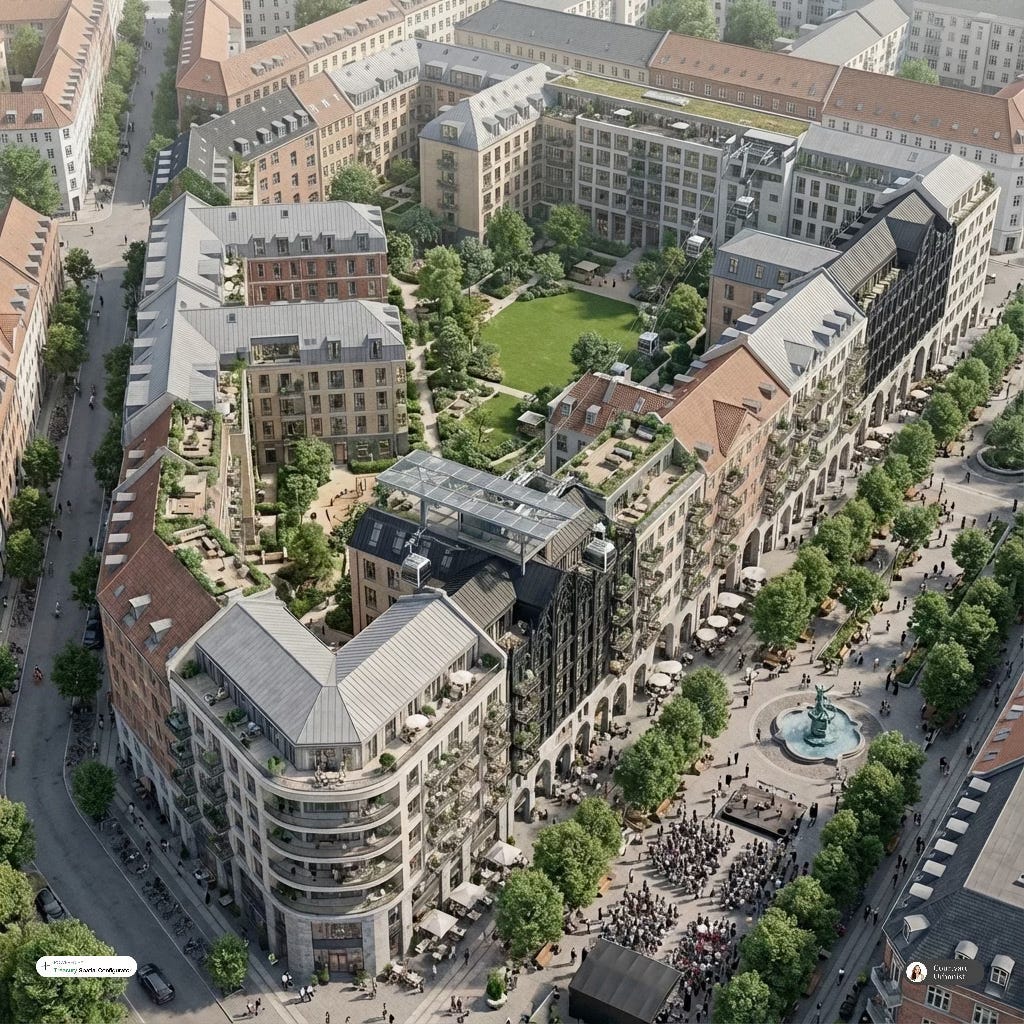
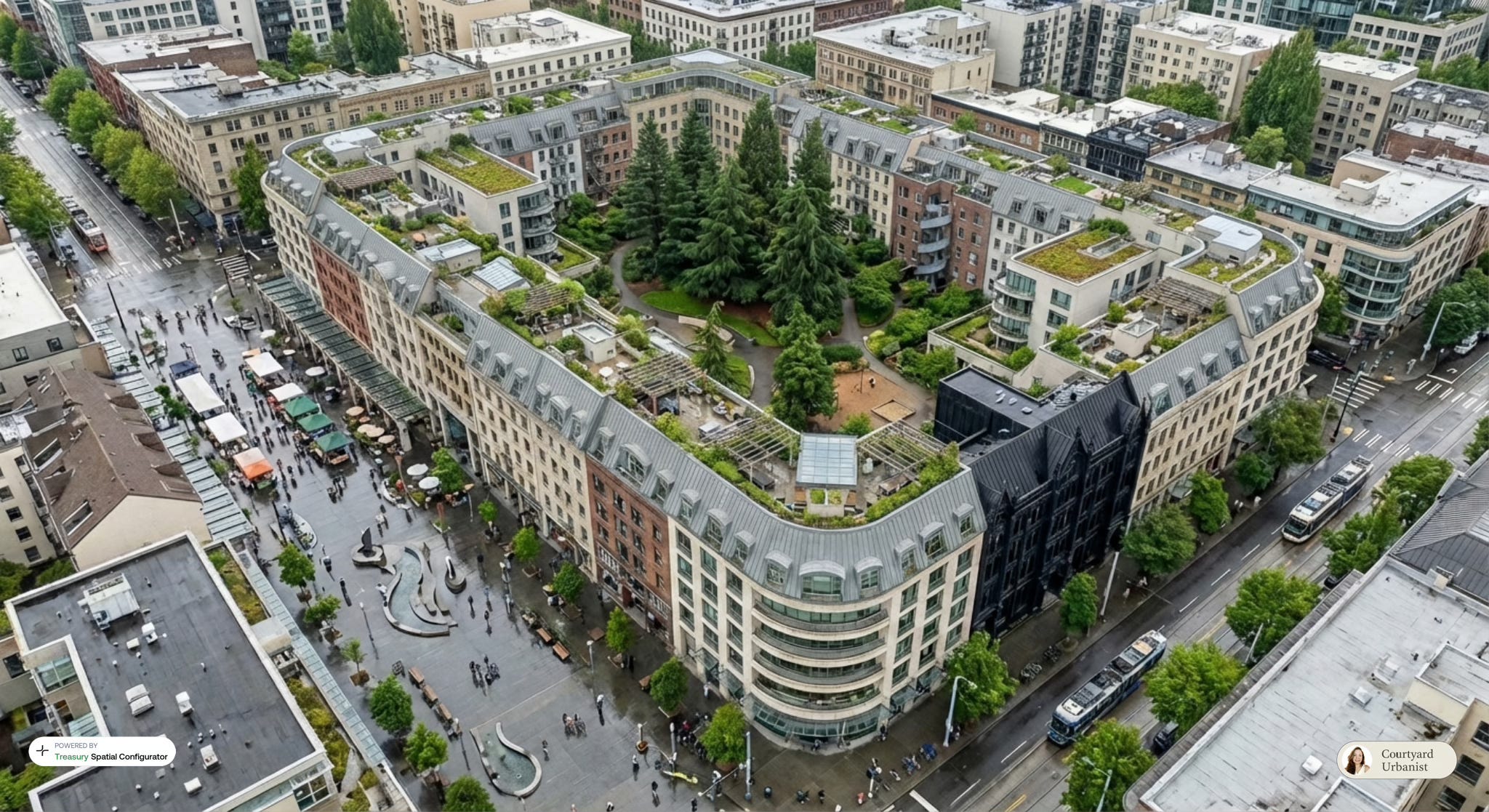
This essay begins from the premise that new urban aesthetics require new urban typologies, and that Courtyard Urbanism—dense, mid-rise, fine-grained neighborhoods organized around shared green space—offers a concrete response to the aesthetic and social failures of contemporary development. The question is not whether beauty matters, but which institutional, regulatory, and technological conditions make it routine rather than exceptional.
Against this backdrop, the YIMBY movement emerges as a candidate mechanism for realizing Courtyard Urbanism and the broader new-aesthetics agenda. The key question is whether YIMBY can help restore the conditions for building valuable, beautiful, family-friendly urban forms at scale. Can the abundance agenda harness today’s technological capacity to deliver lasting public benefit through renewed urban aesthetics and placemaking?
The Courtyard Urbanism Solution to the Problem of Our Age: Building Without Worth
Contemporary planning systems do, in a narrow sense, deliver housing units. But the places they produce rarely feel aspirational or even humane. Most new urban housing is out of reach except for households that are very small, very fortunate, or very subsidized. And the larger multi-family developments, meanwhile, are optimized for short-term occupancy rather than long-term belonging.
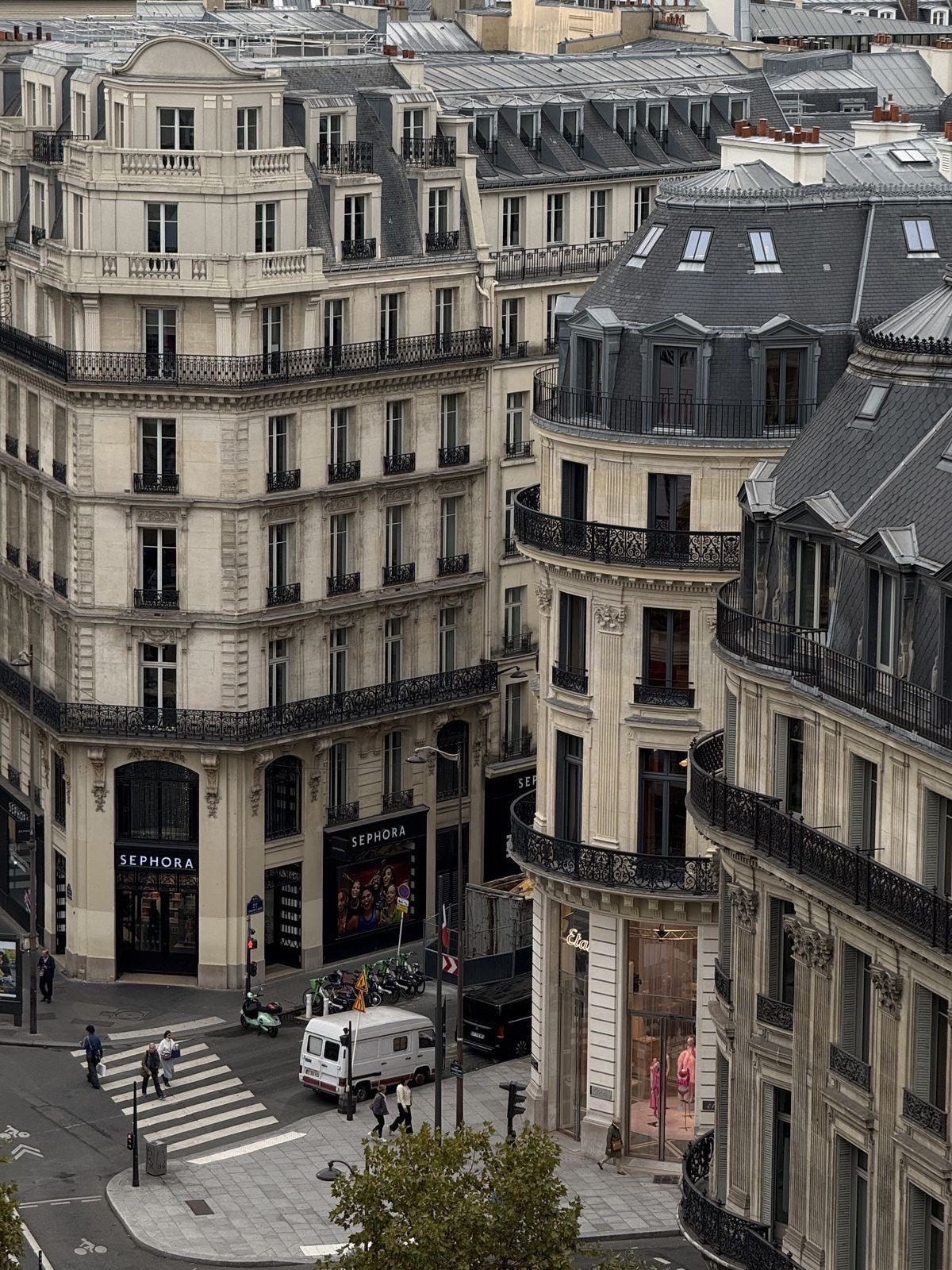
Courtyard Urbanism responds directly to this failure. Historically, the urban neighborhoods people most admire—whether in Copenhagen, Berlin, Vienna, or pre-war American cities—were built from mid-rise, single-stair, small-footprint buildings arranged around courtyards and streets that supported everyday life across ages and stages. These places were not one-off mega-developments; they were the default output of a regulatory environment in which building was routine.


Today, we have unprecedented architectural talent and technical capacity, yet we lack the institutional means to reproduce at scale these truly valuable buildings that balance density and green space. The “aesthetic problem” of contemporary cities is therefore not a failure of style so much as a systems failure that deprives style of stable forms through which it can materialize.
Typology as Aesthetics: Why Form Communicates Value
To understand why modern cities feel visually and socially impoverished, it is useful to compare two streets: a newly completed multifamily corridor in South San Francisco (2019) and a street in Manhattan’s West Village, largely built in the late nineteenth and early twentieth centuries.


By conventional metrics, the newer street should be a banger. It is dense; buildings meet the pavement; the street is not unusually wide. And yet the pedestrian experience is dispiriting. The older street, by contrast, feels rich, legible, and humane.
The key difference is not style alone, but the relationship between style and typology. In architecture, typology refers to the underlying building forms through which aesthetic and social intentions take physical shape, while style provides those forms with a visual language. Art Deco, as a style, is a palette of colors, curves, and materials; as a typology, it organizes space around celebrated entrances and vertical circulation—stairs and lifts. Across history, typology is where culture, art, identity, materials, technology, and finance converge to give style durable expression in the built environment.
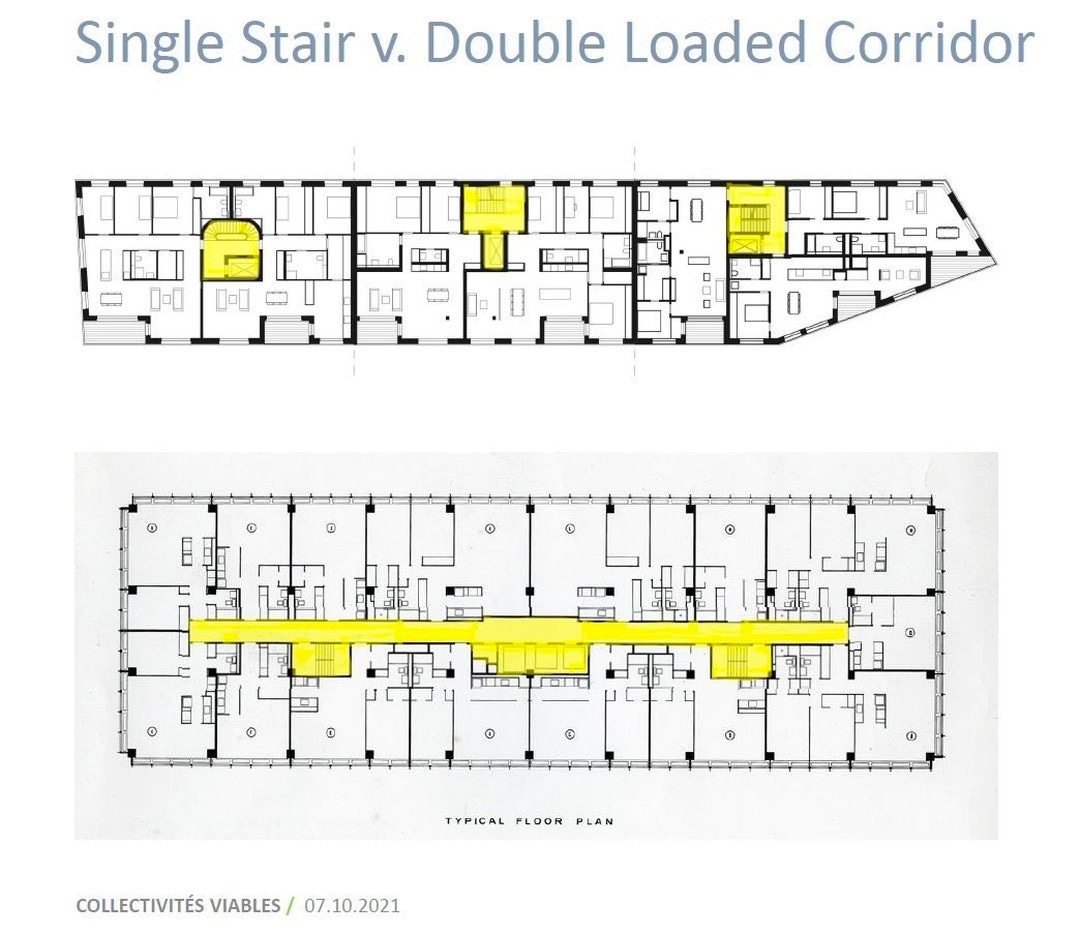
This is the story these images tell. The South San Francisco buildings conceal large, double-loaded corridor structures above parking podiums. Their long blank walls, infrequent entrances, garage openings, and curb cuts make the underlying logic legible to pedestrians, flattening both the visual language and the social promise of the street. These buildings signal transient occupancy, monolithic ownership, and a narrow range of household types. Few raise children here, few own their homes, and few remain long enough to form durable attachments to place.
The West Village street, by contrast, is clearly composed of multiple buildings. There are frequent entrances, varied widths, fire escapes indicating single-stair layouts, and dwellings that receive light from front and back. The street reads as a place where people live across decades, its visual richness inseparable from the life patterns its forms make possible. Some own, some rent; some stay long enough to raise children, invest in local institutions, and anchor civic life. Some families remain in these buildings for generations.
This is typology and style operating together as aesthetics. When we form an aesthetic judgement about a palace, we respond emotionally and morally to whether the combined forms can support a complete human life and, not to style on its own.


Courtyard Urbanism and the Institutional Roots of Bad Form
If typology drives aesthetic experience, what are the institutional causes of bad urban typology and how do we correct them? This is where YIMBY reform becomes relevant.
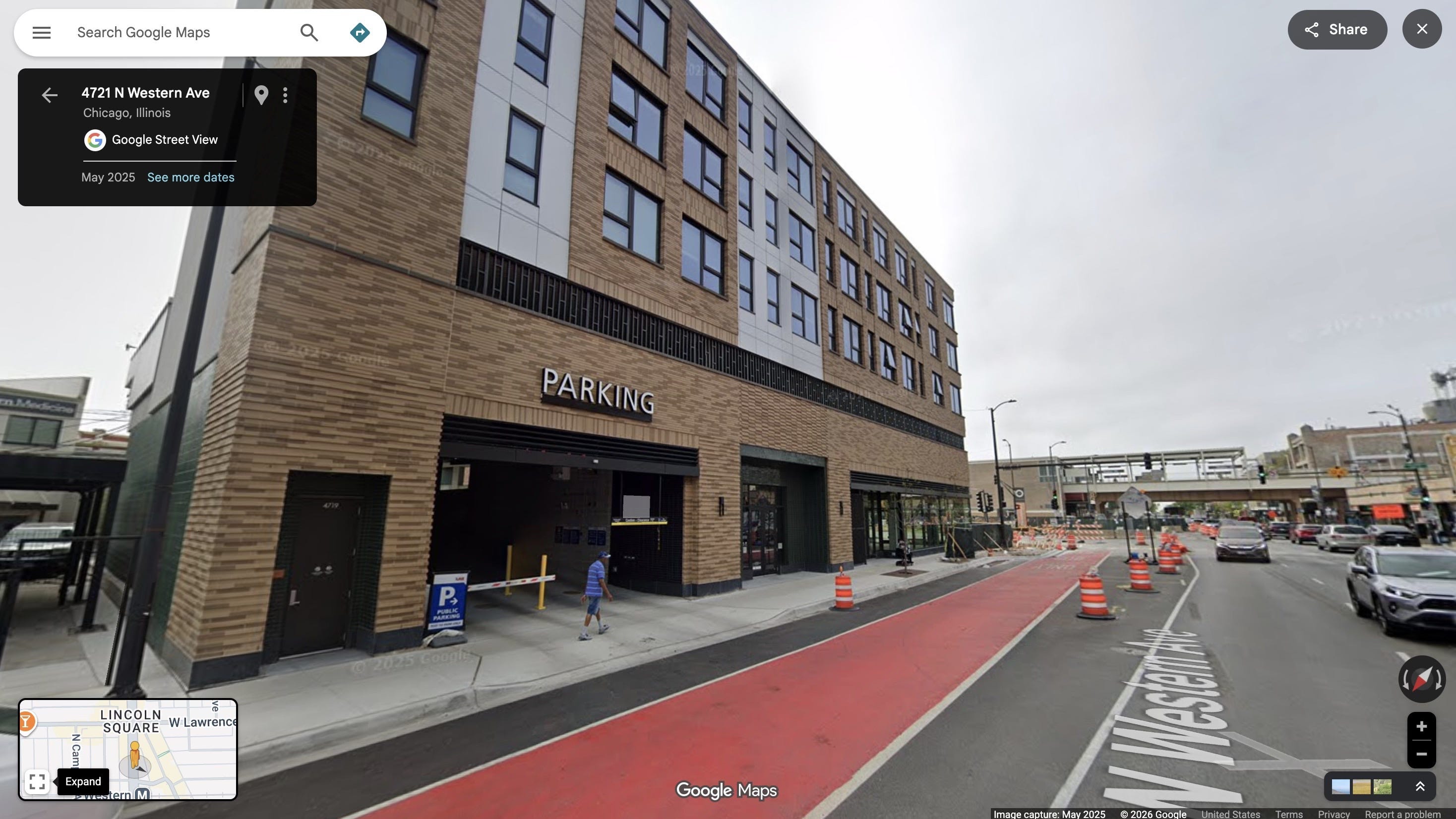
Modern zoning and building codes produce bulky, car-oriented buildings regardless of architectural intent. Parking minimums force garages and blank façades. Dual-stair mandates eliminate small floorplates. Discretionary approvals reward consolidation at scale and discourage parcel-level variation. Together, these rules make traditional Courtyard Urbanism illegal or financially irrational in most American cities.
From this perspective, YIMBY reforms matter not because they promise “MOAR HOUSING,” but because they dismantle the regulatory machinery that prevents valuable and worthy building typologies.
Parking reform is one clear example. Eliminating parking minimums near public transport removes a primary driver of inactive ground floors and hostile streetscapes. Recent examples include California’s AB 2097, Chicago’s 2025 ordinance, and Illinois’ People Over Parking Act.
Even more consequential is single-stair reform. For much of the early twentieth century, mid-rise buildings with one principal stair were normal in the United States, enabling small floorplates, cross-ventilation, courtyards, and multiple entrances. The shift to dual-stair mandates systematically favored large corridor buildings and eliminated an entire class of family-friendly, fine-grained housing. Recent reforms in Denver, Culver City, and San José represent early attempts to reverse this constraint. The significance is not aesthetic in isolation; it is structural—and therefore aesthetic in its consequences.
These reforms reopen the legal possibility space for courtyard blocks, small parcels, and buildings that ‘live like a house’ while achieving urban density.
Abundance, Technology, and the Return of Routine Building
Seen in this light, the project of a “new aesthetics” converges with the project of abundance. Both seek to replace politicized, one-off outcomes with systems capable of delivering quality at scale. The trade-offs that dominate contemporary discourse—beauty versus affordability, quality versus quantity—are not natural laws. They are artifacts of scarcity regimes.
At present, every new development is burdened by layers of code compliance and discretionary approvals of uncertain public value, so each design improvement is treated as a penalty on capacity. In a higher-functioning system, developments are subject to predictable rules clearly tied to genuine public goods, such as safety, health, access, and environmental performance. In such a system, developers can rationally invest in higher-quality designs and materials.
Technological advances will reinforce this shift. In fabrication and construction, for example, Monumental Labs is developing AI-powered robotic stone fabrication that dramatically lowers the cost of intricate stone ornament and structural elements while reviving craftsmanship that had become prohibitively expensive. Their robotic milling platform can automate stone carving and deliver highly detailed architectural features at a fraction of the traditional cost. Other techniques emerging include “printing” of concrete in forms equivalent to quality structural stone. On the construction side, emerging models led by firms such as Augmented Architecture replace centralized, high-overhead fabrication with compact on-site robotic mini-factories, supported by local labor. This approach reduces transportation costs, compresses schedules, and shifts labor from unpredictable site work to higher-skill fabrication and assembly.
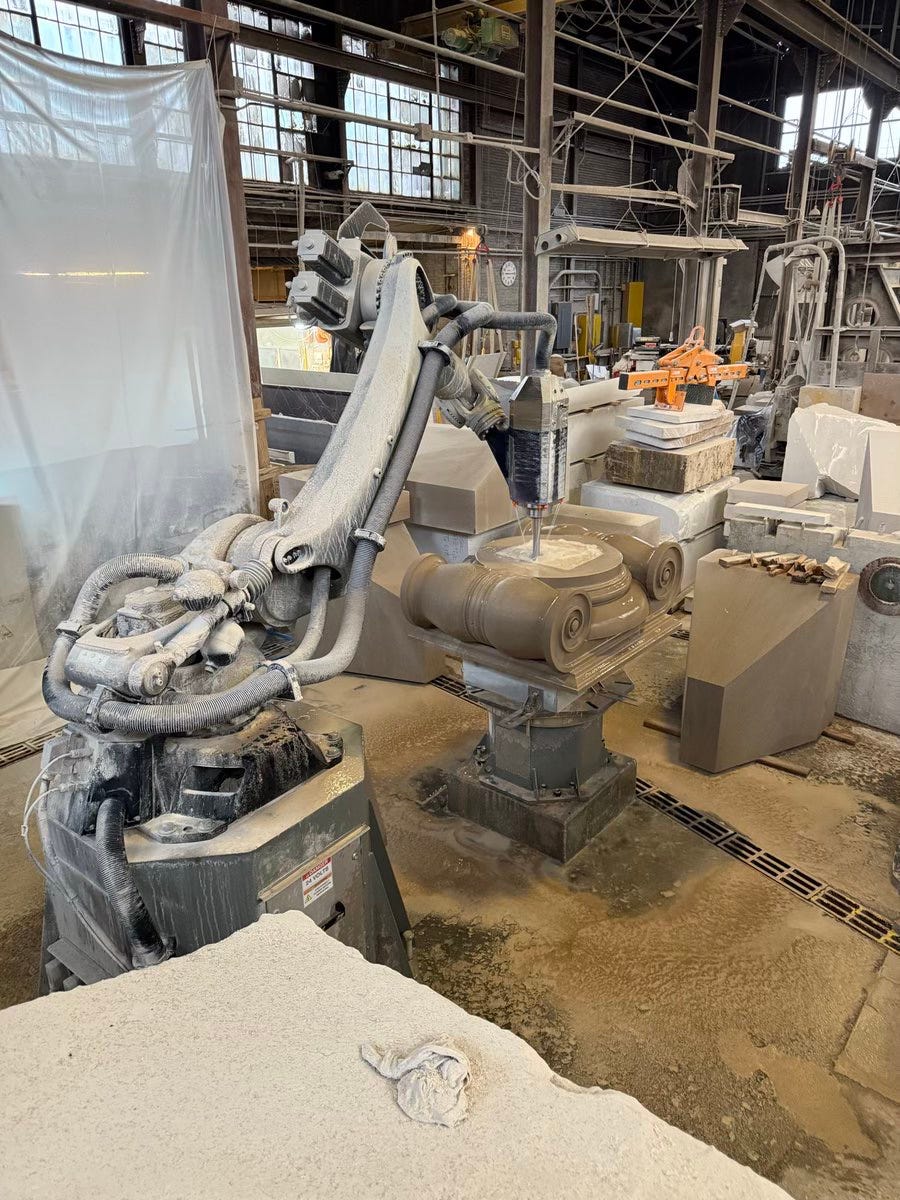
In the absence of extraordinary regulatory obstacles, these technologies will allow developers to think again in terms of material quality and ornament as expressions stabilized by repeatable building forms. They can even put stone back on the menu of modern building! Not just for one-off premier projects, but for the boiler-plate buildings that will make up new neighborhoods.
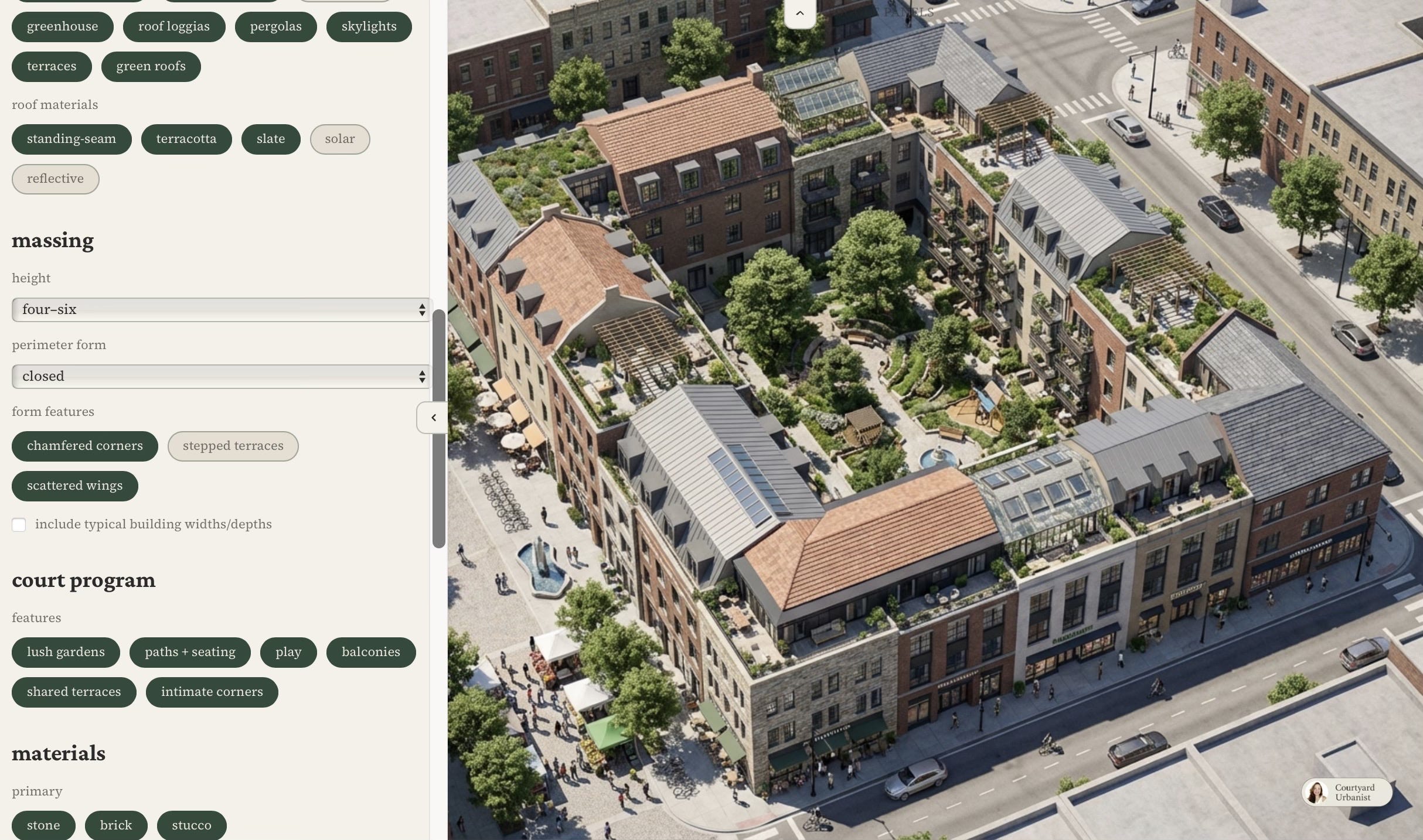
In design and design technology, the way buildings and urban spaces are conceived, visualized, and valued is evolving at an unprecedented pace. Treasury, a design technology firm co-founded by Zaha Hadid Architects, and development partner of Courtyard Urbanist, is enabling both enthusiasts and professionals to imagine courtyard designs both from first principles (new aesthetics even) and established premises. Whether from speculative concepts, context images, or constructible real technical drawings, sites can be reimagined, valued, and handed off directly to the new breed of validation and permitting tools, such as Arcol and Sybium–in seconds, not months.
This intersection of reform and technology points toward a new ecology of building—one in which good urban form can be produced routinely rather than exceptionally. In this context, California Forever presents a singular opportunity. The project, led by Jan Sramek and backed by prominent investors, aims to build a walkable, mixed-use city of hundreds of thousands of new homes in Solano County, California, with dense neighborhoods, retail, and parks, plus major employment centers focused on manufacturing and shipbuilding. It is arguably the first serious attempt in America in decades to build a major urban community from scratch under 21st-century conditions. It is a potential laboratory for testing how a new legal and regulatory environment, paired with emerging construction technologies, can make fine-grained, pedestrian-oriented urbanism feasible at scale.
So, the bottlenecks in development seem to be collapsing. On the capital front, all the companies listed above are venture-backed, demonstrating that the built environment is finally considered a driver of tech-scale value.
What remains unresolved are three linked challenges: sustained public interest (to which this article seeks to contribute), developer attention (where efforts like California Forever show early promise), and planning reform. An abundance-oriented approach could contribute meaningfully to that reform, but only if it is grounded in local context and genuine inclusion. Reforms must respond to climate, landscape, and existing urban fabric. They must respect regional building traditions and patterns of life. And they must engage current residents as participants in shaping durable, public places.
Conclusion: Making Great Aesthetics Normal Again
In this vision, Courtyard Urbanism stands as a fully contemporary, scalable approach to urban development. Projects like California Forever matter less as finished artifacts than as physical and institutional experiments that test whether legal reform, enlightened capital, and emerging construction technologies can together support humane and urbane forms under modern conditions.
And Patrick Collison’s question—what is truly valuable and worthy?—is ultimately a question about what we choose to make normal, and what path America, and in particular California, takes as a constellation of places and people, rather than a vehicle of GDP and leading producer-consumer of AI and tech. A serious new aesthetics for cities will emerge through institutions that allow expressive styles to take root in humane, repeatable forms. It will be built through code reforms that legalize good form by right. It will depend on an abundance mindset that treats building as a routine civic activity rather than a heroic exception. And it will require institutions capable of translating newly legal possibilities into durable, repeatable models.
In this sense, the Collison–Cowen grants and the Festival of Progressive Abundance signal more than renewed cultural interest in architecture. They point to a broader realignment of policy, technology, capital, and design around a shared task: making beauty, durability, and civic richness normal again.
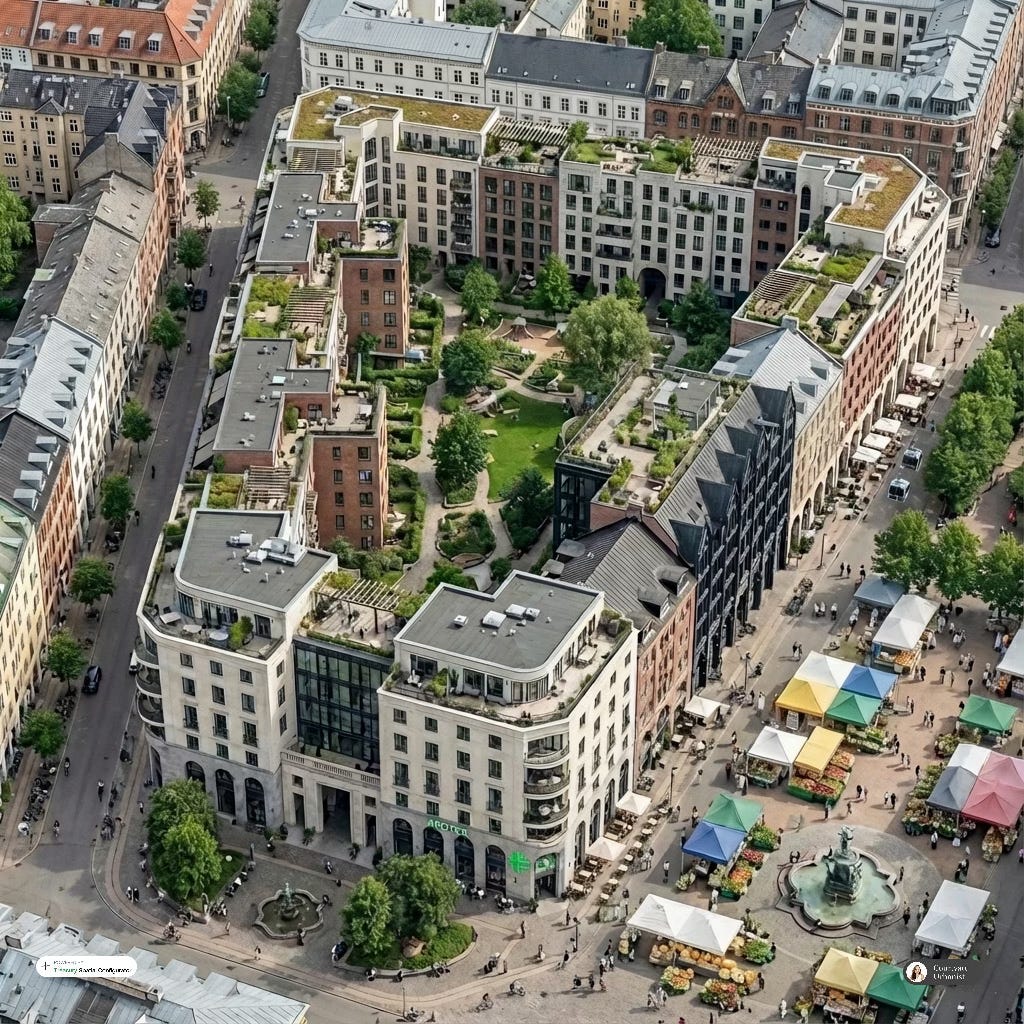
Some images used in this article are generated by the Courtyard Composer, design and visualization tool. Sign up for beta access:
http://composer.courtyardurbanist.com
.
Beautiful.
Job #1 is figuring out how to navigate fire marshals. I think junkets where you send them to Europe to hang out with euro fire fighters, and like go drinking. Would this be the most valuable marginal dollar for US urbanism?
Good commentary pointing to advocacy. The CNU broke this ground thirty years ago. But, without a deep understanding and critique of ownership and capital allocation the abundance “movement” will meet the same fate as the now-irrelevant New Urbanists.