Building Family-Friendly Courtyard Neighborhoods
Courtyard Urbanist is a design, development, and implementation platform advancing courtyard-block housing in North American cities.
We help municipalities, institutions, developers, architects, builders, and community organizations turn courtyard urbanism from an appealing idea into viable plans, buildable projects, and enabling policy.
Our work connects urban design, housing typology, development feasibility, regulation, construction, public engagement, and capital strategy. The Courtyard Urbanist publication supports this practice by sharing research, precedents, policy intelligence, and lessons from active projects.
What We Do
Project Strategy and Development Support
We work with project teams during the earliest—and often most consequential—stages of development.
Our services can include:
Site and development-capacity analysis;
Courtyard-block master planning;
Development feasibility and underwriting support;
Family-friendly unit mixes and ground-floor programs;
Parking, access, servicing, and phasing strategies;
Modular and conventional construction studies;
Locally appropriate architectural direction;
Capital and implementation strategy;
Coordination among municipalities, developers, designers, manufacturers, and community partners; and
Demonstration-project and pilot-site planning.
The goal is to identify a clear path from site control and concept design to entitlement, financing, construction, and long-term neighborhood value.
Pattern Books and Design Databases
Courtyard Urbanist develops reusable design intelligence for cities, institutions, developers, architects, and builders seeking to deliver courtyard neighborhoods at scale.
Pattern books and design databases can address:
Block dimensions and site configurations;
Building types, heights, and development increments;
Unit sizes and family-friendly housing mixes;
Ground-floor commercial, residential, office, garage, and flexible programs;
Circulation, access, servicing, and shared wet-wall strategies;
Courtyard landscapes and communal amenities;
Façade families and locally appropriate architectural character;
Construction systems and value-engineering options;
Development capacity and value analysis; and
Connections to visualization, design, and construction workflows.
These tools establish enough coherence to create a recognizable neighborhood while allowing different sites, designers, builders, and owners to participate.
Action Kits
Action Kits help local partners create the conditions necessary for courtyard urbanism to succeed.
They combine:
Community engagement and public education;
Zoning and building-code analysis;
Policy and ordinance development;
Workshops and design charrettes;
Stakeholder and political strategy;
Visual communication;
Development-process guidance; and
Practical implementation roadmaps.
Action Kits can support a specific project, a neighborhood initiative, or a broader effort to legalize and enable family-friendly density.
Research, Education, and Advocacy
Courtyard Urbanist works with civic organizations, policy groups, universities, elected officials, and local advocates to explain why housing form matters.
This work includes:
Public talks and panel discussions;
Professional and community workshops;
Research partnerships;
Policy and legislative initiatives;
Educational programs;
Writing and media; and
Coalition-building around family-friendly urban housing.
We connect the physical design of housing to questions of affordability, household formation, child-friendly cities, economic development, sustainability, and long-term municipal value.
The Publication
The Courtyard Urbanist newsletter is the public research and intelligence arm of the practice.
It tracks courtyard projects, regulatory changes, funding opportunities, design precedents, and implementation lessons across North America and Europe. It also provides a place to test ideas, share knowledge from active work, and build a broader community of practice.
The publication is written for practitioners, policymakers, advocates, researchers, and anyone interested in creating better urban neighborhoods.
About Alicia Pederson


Courtyard Urbanist was founded by Alicia Pederson, PhD, a developer, researcher, writer, and advocate focused on family-friendly courtyard housing.
Alicia’s approach combines close research with practical development work. She collaborates with municipalities, developers, architects, institutions, manufacturers, community organizations, and policy leaders to adapt the courtyard-block tradition to contemporary North American conditions.
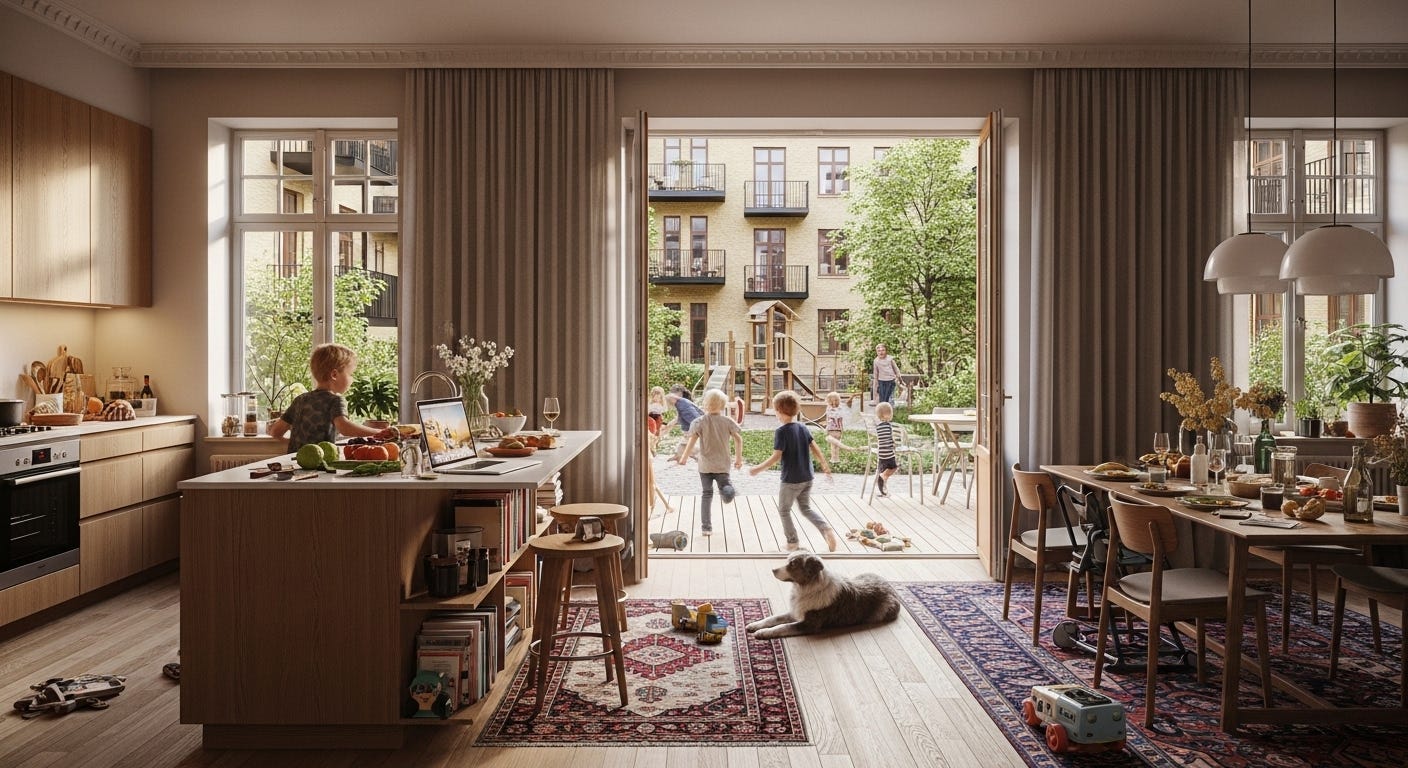
Her interest is personal as well as professional. As a mother of three living in Chicago, she has watched families leave walkable neighborhoods because the available housing no longer meets their needs. Courtyard urbanism offers another possibility: spacious homes, shared green space, community, privacy, and urban convenience within compact, walkable neighborhoods.
Her writing has appeared in the Chicago Tribune and Crain’s Chicago Business. Through Courtyard Urbanist, she is developing the design knowledge, partnerships, policy tools, and demonstration projects necessary to make courtyard neighborhoods a normal part of American city-building.
Work With Courtyard Urbanist
We welcome conversations with:
Municipalities and public development entities;
Developers and landowners;
Universities and anchor institutions;
Architects, builders, and manufacturers;
Community and advocacy organizations;
Researchers and educators; and
Capital partners interested in neighborhood-scale development.
If you have a site, project, policy initiative, research question, or partnership idea, we would be glad to hear from you.
Project and partnership inquiries:
projects@courtyardurbanist.com
Research and educational collaboration:
research@courtyardurbanist.com
Community and advocacy:
community@courtyardurbanist.com
Courtyard Urbanist helps move courtyard housing from precedent to practice—and from individual projects to a repeatable way of building neighborhoods.