


The elevator problem hiding inside America’s urban housing crisis

****Sign the letter to congressional leaders here****
If you’ve traveled much in Europe, you know that their small multifamily buildings have practical, wheelchair-accessible elevators that are unknown in the US. Many of these are VERY old buildings that have been retrofitted with elevators.
Why do small apartment buildings in the United States not have elevators?
If you walk through almost any prewar neighborhood in Chicago, you’ll notice the pattern immediately. Three-story buildings. Four-story buildings. Beautiful, compact urban housing that doesn’t have elevators.
For the disabled, for parents with small children, for seniors, negotiating multiple flights of stairs without an elevator is a serious life constraint.
It means someone who uses a wheelchair cannot live there. It means seniors are eventually forced to move out of homes they love. It means parents carry strollers up flights of stairs.
And it seemed strange, because in other countries, buildings like these often do have elevators.
So I dug deeper, got to read Stephen Smith’s fantastic work on the subject, and learned that the issue wasn’t about technology or the market but policy.
How good intentions produced the wrong outcome
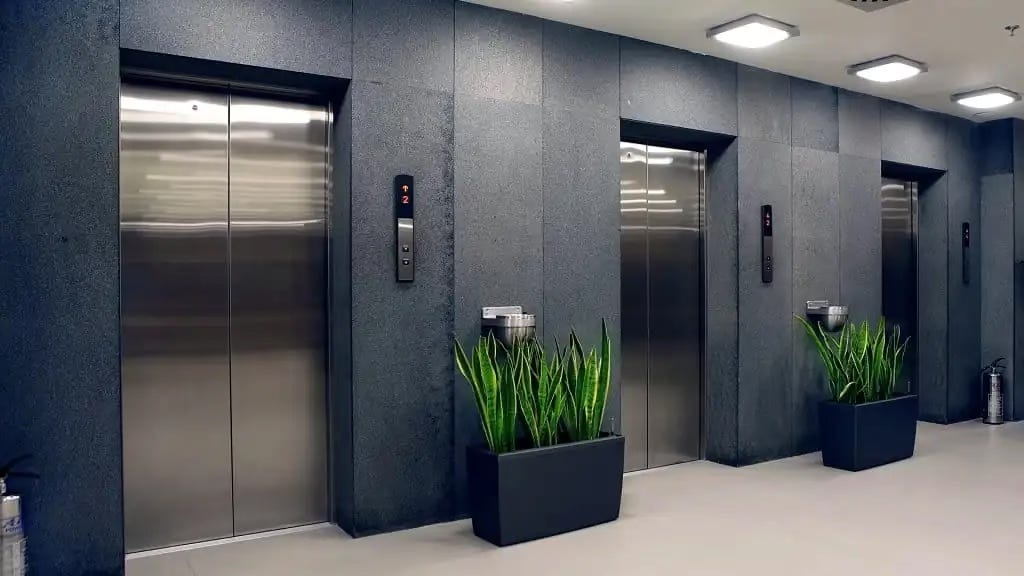
In the United States, the Fair Housing Amendments Act quite rightly requires multifamily housing to be accessible.
But over time, the law has been interpreted in a way that effectively requires very large elevators—much larger than what is commonly used in Europe and other developed countries.
These elevators are excellent. They accommodate wheelchairs comfortably.
But they are also expensive and spatially demanding. They require larger shafts, larger overruns, and more building area devoted to circulation instead of housing.
And that this creates a situation where developers of small and mid-rise buildings often decide not to include an elevator at all. Not because tenants or buyers don’t want elevators! But because the specific type of elevator the regulatory environment expects makes the building financially or physically infeasible.
So, perversely, the Fair Housing Amendment Act has been interpreted in a way that has decreased building accessibility.
What Europe gets right
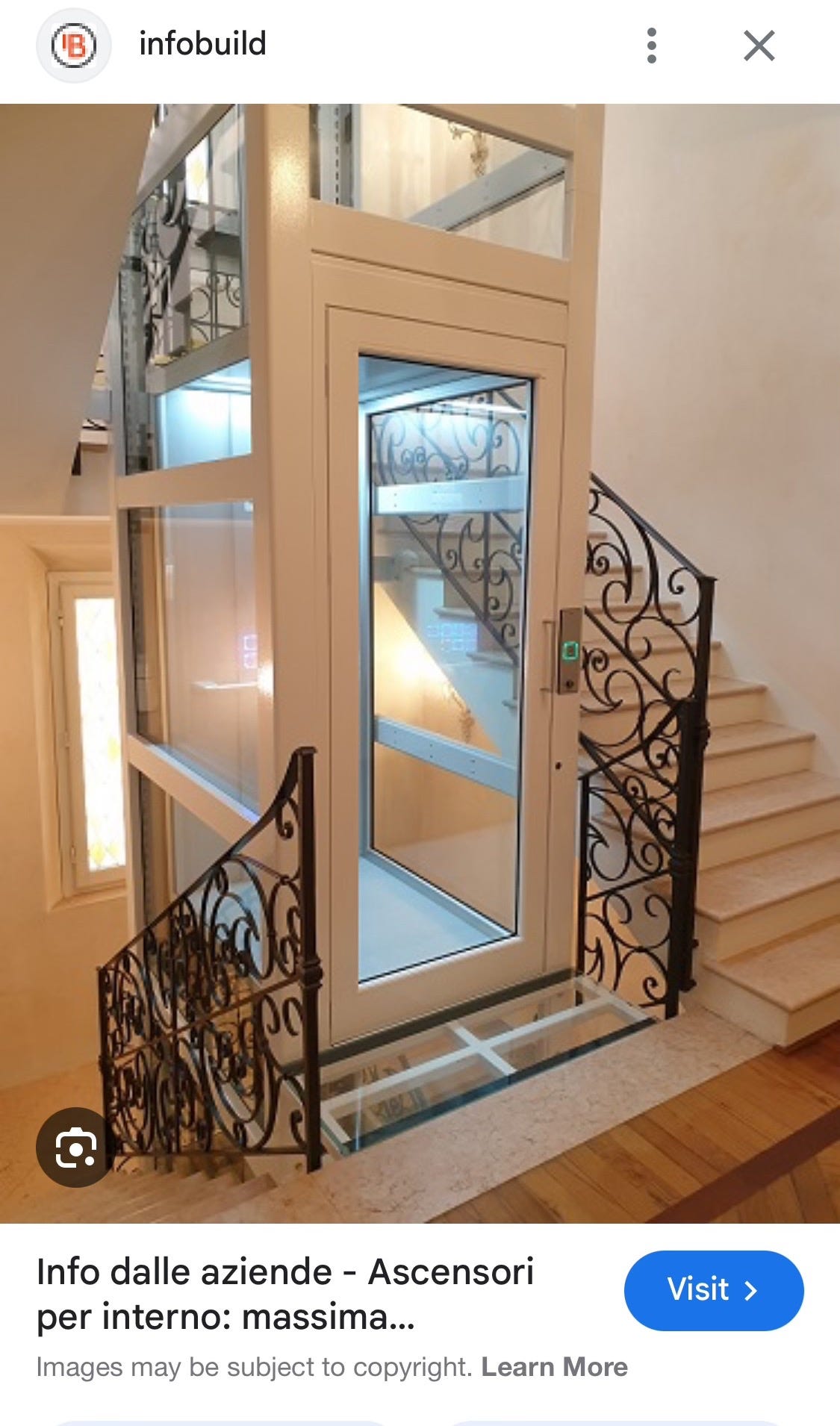
In much of Europe, smaller elevators are standard. They are fully usable by wheelchair users. They are safe and dignified.
And because they are smaller and less expensive, they get built everywhere.
Five-story buildings have elevators. Six-story buildings have elevators. Ordinary apartment buildings include them as a matter of course.
Accessibility is not reserved for luxury buildings.
This is one of the reasons European cities are easier places to have families and age in place. People don’t have to leave their neighborhoods just because they have a baby and stroller or because their mobility changes.
The small multifamily buildings work for all ages and abilities.
The reform that could enable millions of accessible homes
Recently, I’ve been talking to Stephen Smith of the Center for Building in North America about possible congressional fix (read his work—he is the “undisputed king of elevator reform” in North America).
Stephen explains that Congress can clarify that small and mid-rise apartment buildings are allowed to use smaller—but still fully wheelchair-accessible—elevators.
This would expand accessibility tremendously.
It would mean that thousands of buildings that currently omit elevators would include them.
It would also lower housing costs, improve housing quality, and make it easier to build the kinds of urban housing that America desperately needs.
Sometimes, the most powerful reforms are not massive new programs, but small corrections that allow good things to happen again.
This is a rare moment when Congress can act
Congress is currently working on major housing legislation, and this presents a WONDERFUL opportunity to address this problem now.
We’ve drafted a letter urging congressional leadership to include this clarification.
You can read it here:
https://action.courtyardurbanist.com/elevator
If you care about housing affordability, accessibility, or the future of walkable urban neighborhoods, I encourage you to sign.
This is personal for many people—including future versions of ourselves

Elevator access isn’t just about disability in the abstract.
It’s about aging and injury.
It’s about pregnancy and parents with strollers.
It’s about whether the home you live in today can still work for you tomorrow.
I agree with you about everything except what you say about European countries. I use a wheelchair and spent most of 2024 and 2025 traveling and living in Europe—Arcachon and Paris, France; San Sebastián and Bilbao, Spain; and Oxford and London. In France and Spain, every apartment building I stayed in had an elevator but none were big enough for my small manual chair. The San Sebastián one was at the top of six stairs! In Oxford, our apartment building didn’t have an elevator at all—thank goodness we were on the ground floor. This is a universal problem—it needs to be consistently addressed world-wide.
Thank you so much for your advocacy efforts on this. I just signed on to the letter and will be encouraging others to do the same.