



One Friday morning last month, I boarded the Brown Line downtown to hear Governor J.B. Pritzker deliver his State of the State address at the City Club of Chicago. When the Governor’s office invited me to attend, I rescheduled my prior commitments immediately. I had been a strong supporter of the BUILD Plan since its announcement in January, and I wanted to hear Pritzker make the case for it live before a room of policymakers, developers, housing advocates, and civic leaders.

As the train rose above the street and began its creaking north-to-south cut through Chicago, I looked out at the city from one of its best vantage points. The Brown Line is one of Chicago’s great urban tours because it stays above ground almost the entire way. From its tracks, you can see the city as an achieved civilization of middle housing: two-flats, three-flats, six-flats, courtyard buildings, small apartment houses, commercial corridors, schools, parks, alleys, back porches, garages, churches, and tree-lined streets. As the train approaches downtown, this fine-grained fabric gradually gives way to taller buildings, until you are rumbling around the Loop through a forest of skyscrapers.


Dazzling as the downtown towers are, they would not exist without the surrounding neighborhoods that housed the people who built and sustained them. Chicago’s economic power has always depended on residential neighborhoods where people could live close to jobs, schools, transit, churches, parks, and daily necessities. They could rent. They could own. And many could do both: living in one unit while leasing another to tenants. In my neighborhood, this is still known as the “Polish pension plan,” because so many Polish immigrant families used rental income from an extra unit to sustain themselves in retirement. A city of middle housing is a city of homeowners, renters, small landlords, extended families, and neighborhood-scale financial independence.
This is what makes neighborhoods durable. It allows more kinds of people to live near one another. It supports local businesses because there are enough customers within walking distance. It supports neighborhood public schools because there are enough families within attendance boundaries. It supports transit because there are enough riders to make frequent service useful.
All of this was made possible by Chicago’s rich tradition of middle housing. And all of it is much harder to build today than it should be.
And this brings us back to the City Clubs event, and Pritzker’s BUILD Plan, which matters precisely because it is an attempt to reopen the path to the kind of neighborhood fabric that made Chicago work in the first place.
“The fault, dear Brutus, is not in our stars, / But in ourselves”

At the City Club event, Pritzker energetically defended the BUILD Plan. His main theme is well known: the housing shortage is one of the most urgent problems facing both Illinois and the United States, and it is a problem almost entirely of our own making.
Bad policy and excessive regulation prevent developers from delivering the homes Illinois needs. Housing costs rise because supply is constrained. Parking mandates, discretionary approvals, local veto points, and outdated building codes slow construction and limit the number and kind of buildings that can exist at all.
In a wonderful moment that took my breath away (as a Renaissance Lit PhD), Pritzker framed the BUILD Plan as an assertion of agency over fatalism, quoting Julius Caesar to make the point:
“To quote William Shakespeare,” Pritzker said, “the fault, dear Brutus, lies not in our stars, but in ourselves.”
In Julius Caesar, Cassius says the line to Brutus as an argument against fatalism. We should not blame fate—the stars—for misfortunes that are, in fact, the result of human action or inaction. It is a line about agency, responsibility, and the obligations of people with power.

Agency over fatalism means admitting that high housing costs are the predictable result of zoning laws, parking mandates, procedural delay, and building-code requirements that make small-scale multifamily housing unnecessarily difficult or impossible to build.
Agency over fatalism means taking action by reforming zoning laws, building codes, and legalizing traditional neighborhood forms again. We have the power to make it easier to build the middle housing that makes up the affordable, walkable neighborhoods people want now more than ever.
And the BUILD legislation does just that. As introduced, HB 5626 would require municipalities to allow up to four units on lots larger than 2,500 square feet, up to six units on lots larger than 5,000 square feet; and up to eight units on lots larger than 7,500 square feet. It would also legalize accessory dwelling units in districts that permit single-family homes, limit certain parking mandates, standardize some impact fees, create plan-review and inspection timelines, and prevent building codes from prohibiting single-stair residential buildings that meet specified requirements. (Illinois General Assembly)
Critics have already tried to recast the proposal as a plot to force “Section 8 housing” into suburbs. That is simply not what the legislation says. The bill is about zoning capacity, ADUs, parking mandates, permitting, impact fees, and building-code reform.
Others raise parking. But developers do not build homes without parking where buyers or renters demand parking. And in transit-served urban neighborhoods, forcing every small unit to carry a parking space can be the difference between a feasible building and no building at all.
But what is really going on here? Why is there resistance to middle housing? And why don’t property owners already have the right to build two flats and three flats in places where it is legal to build a single-family home? This is important to understand.
Historical context: zoning as nuisance prevention
To understand why property owners do not already have the right to build multifamily housing in places where it is already legal to build a single-family home, we need to review the history of American zoning law. Since Village of Euclid v. Ambler Realty Co. in 1926, local governments have had broad power to decide what may be built where.
The original justification was nuisance prevention. The Supreme Court ruling intended to keep genuinely harmful or incompatible uses—factories, smoke, noise, heavy industry, dangerous operations—away from homes. This logic seems fair enough. A thing may be reasonable in one place and unreasonable in another. As the Supreme Court put it, “a nuisance may be merely a right thing in the wrong place—like a pig in the parlor instead of the barnyard.”
There are clearly land uses most people do not want in the middle of a quiet residential block. Few wish to live near a slaughterhouse, a heavy industrial facility, a large farm operation, or a data center. These raise real questions of noise, traffic, sanitation, safety, and public order.
However, Euclid also understood the exclusion of apartments as central to modern zoning. Cities could create residential districts where not only industry and commerce, but also hotels and apartment buildings, were banned in order to preserve detached-house neighborhoods. And here the Court accepted a striking theory of harm. Apartment houses, it reasoned, might be “entirely unobjectionable” and even “highly desirable” in one setting, but nearly nuisance-like in another, because they could bring height, bulk, traffic, parked cars, noise, and the loss of light, air, and open space for children. “[T]he coming of one apartment house is followed by others,” reasons Euclid, “interfering by their height and bulk with the free circulation of air and monopolizing the rays of the sun which otherwise would fall upon the smaller homes, and bringing … the disturbing noises incident to increased traffic and business, and the occupation, by means of moving and parked automobiles, of larger portions of the streets, thus detracting from their safety and depriving children of the privilege of quiet and open spaces for play” (272).
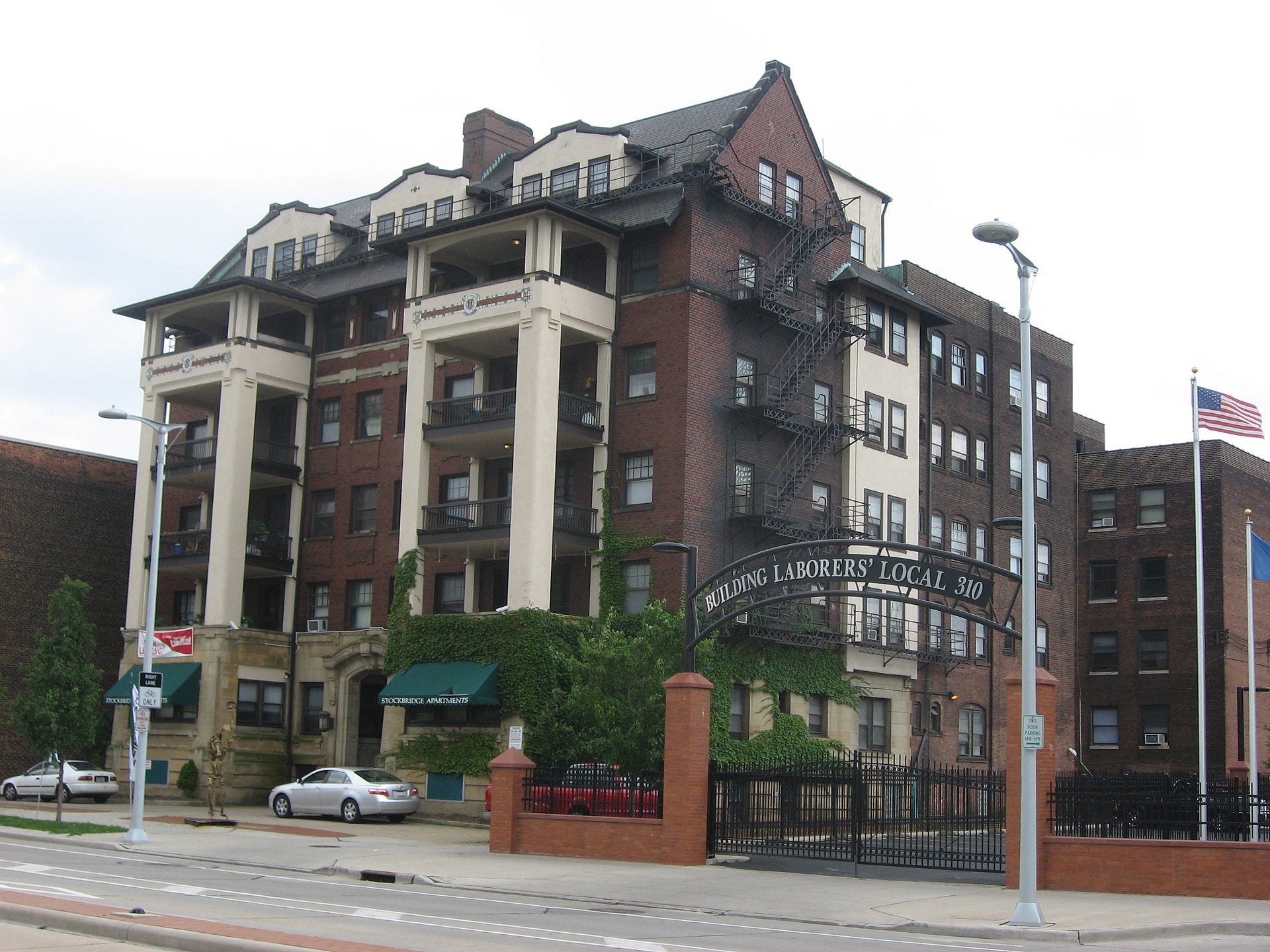
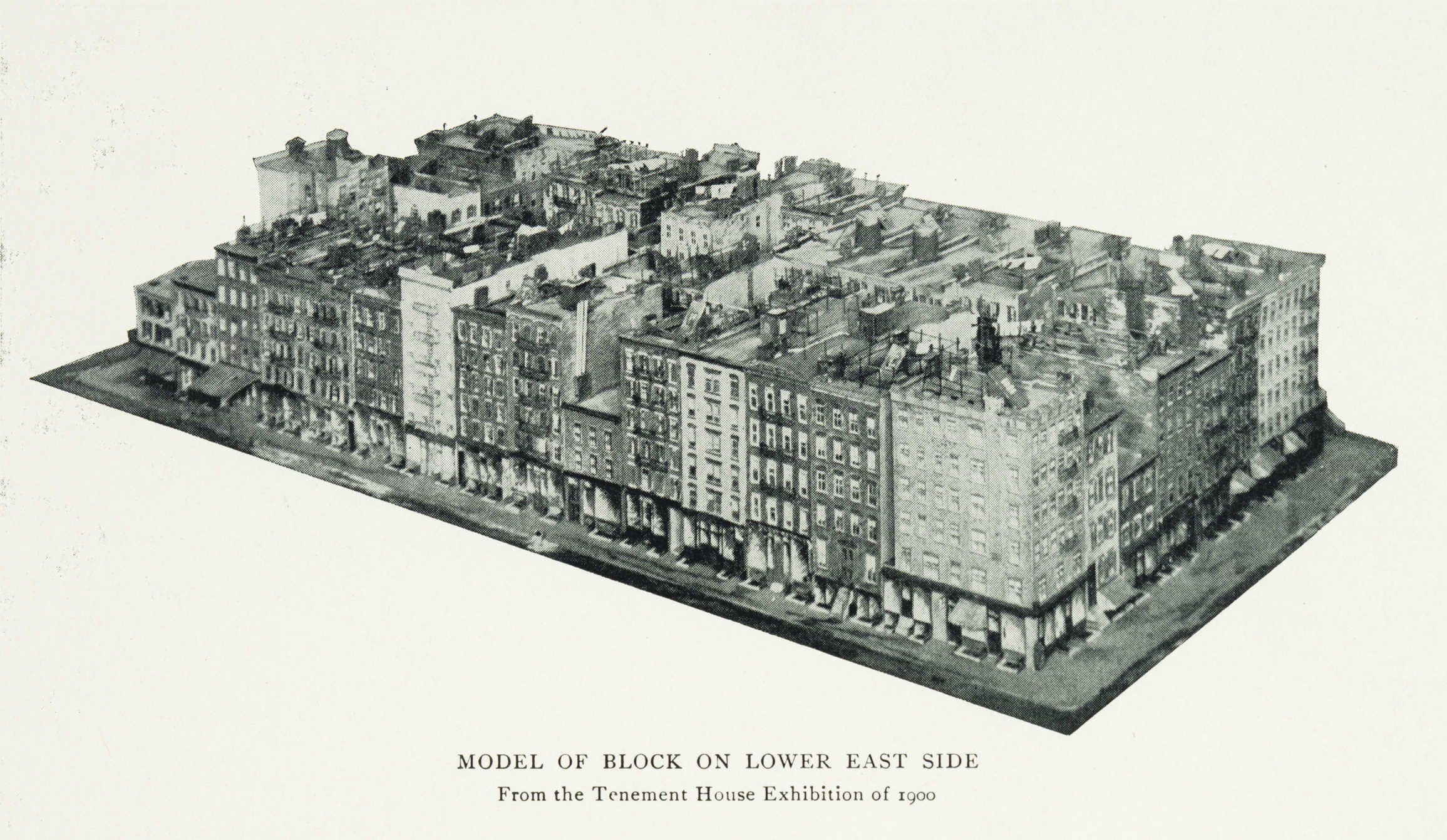
That argument did not come out of nowhere. Euclid was responding to a serious early twentieth-century American problem. A large share of apartment housing in the United States had, sadly, become associated with overcrowding, poor ventilation, dark rooms, fire risk, dangerous vehicle traffic, and generally bad living conditions. Unlike many European jurisdictions, which used height limits, lot-coverage controls, courtyard requirements, and building-depth rules to ensure sunlight, ventilation, and shared outdoor space, many American cities allowed developers to cover too much of the lot and build too high without providing enough light, air, or protected space for children.
So the apartment house entered the American legal imagination as a nuisance. It became associated not with the sunny courtyard block, the Parisian apartment house, the Berlin perimeter block, or the Edinburgh tenement, but with overbuilt lots and high-traffic streets. This is important context for understanding the rise of the suburbs and the twentieth-century stigma against apartment living.
But Euclid misjudged apartments. Apartment housing can be fully compatible with light, ventilation, nature, and family life when it is designed well. In fact, it may be especially compatible with family life because it allows multiple households to share land and building costs, support one another socially, and benefit from the greater convenience and amenity that apartment neighborhoods make possible.


The right decision was never to ban apartments from residential neighborhoods, but to regulate the form. Prevent nuisance by limiting lot coverage, controlling height, and preserving the center of the block as a protected area for light, air, gardens, and children’s play.
This is exactly what many European cities learned to do. No front setbacks. No side setbacks. Buildings aligned along the street to create a continuous urban edge. But only partial lot coverage—often around half the parcel or block—so that the interior could remain open, green, sunny, and shared. Under these conditions, apartments delivered some of the best residential urbanism ever built! Apartments with cross-ventilation, sunlight, courtyards, gardens, shops nearby, schools nearby, and children playing in protected interior spaces.
As for the BUILD Act, eight units on a residential lot will not create a nuisance. But if suburban municipalities are worried about light, air, traffic, and open space, they have tools far better than exclusion. They can limit lot coverage. They can regulate building depth. They can require usable rear yards or shared courtyards. They can protect the center of the lot or block for trees, gardens, stormwater, and children’s play.
In other words, they can legalize middle housing while also requiring good middle housing.
The deeper point is that nuisance prevention is a legitimate goal for residential neighborhoods, but it should never have been used to exclude small multifamily buildings. Whether in rental apartments, condominium buildings, multigenerational houses, courtyard buildings, tenements, flats, or houses divided among several families, middle housing has been normal throughout urban history. It has a long lineage stretching from antiquity through the early modern and modern city. Fine-grained, small-format multifamily buildings allowed households to share land, share infrastructure, reduce housing costs, and benefit from proximity, mutual support, and community. They are not a threat to residential life. They are one of civilization’s basic tools for making residential life more affordable, convenient, and socially durable.


So the question the BUILD Act implicitly reopens: should a municipality have the same basic authority to exclude a four-flat as it has to exclude a factory? Should a town be able to treat small multifamily housing as though it were a nuisance?
Or should the State of Illinois recognize that middle housing is not a threat to residential life, but one of its basic and historic forms?
Because if it is already legal to build one home on a large parcel, what exactly is the public harm in allowing a property owner to build four, six, or eight homes instead?
I think the answer is yes.
Not an unlimited right to build anything, anywhere. Not a right to impose genuine nuisances on neighbors. Not a right to ignore life-safety codes, stormwater, fire access, structural integrity, or basic standards of habitability.
But a right to build small multifamily housing—up to eight units—on large residential lots where detached single-family homes are already allowed.
That right should be protected by the State of Illinois because the benefits are too large, and the alleged harms are too small. More homes mean more affordability. More households sharing expensive land means higher land productivity. More residents mean more customers for local businesses, more riders for transit, more children for neighborhood schools, and more property-tax revenue for municipalities facing long-term fiscal pressure.
Meanwhile, the dominant objection is parking.
At some point, a civilization has to decide whether the theoretical inconvenience of storing cars is more important than the real and escalating crisis of housing families, sustaining schools, and maintaining the social life of neighborhoods.

A bipartisan convergence
What is striking is that Pritzker’s plan is not some isolated blue-state experiment. Across the country, Democrats and Republicans alike are converging on the same basic conclusion: overly restrictive local zoning has helped create the housing crisis, and states have a legitimate role in restoring the right to build.
Montana, for example, passed major housing reforms in 2023 with broad bipartisan support, including duplex legalization and ADU reforms; the Montana Supreme Court upheld key parts of that package in March 2026. Pew has described 2025 as a year of “unprecedented reforms” in state legislatures, with states such as Texas, Washington, and Montana targeting barriers ranging from parking requirements to building codes. And states across the political spectrum—including Oregon, Montana, California, Utah, Washington, Arizona, Vermont, Colorado, Florida, New Hampshire, Maryland, and Minnesota—have adopted statewide zoning reforms of one kind or another.
This is because housing is not really a left-right problem. It is a build-or-don’t-build problem.
Republicans can understand it as property rights, family formation, and fiscal prudence. Democrats can understand it as affordability, inclusion, and climate-smart growth. Urbanists can understand it as neighborhood repair. Environmentalists can understand it as anti-sprawl land conservation. Parents can understand it as the ability to stay near schools and friends. Builders can understand it as removing rules that make good projects impossible.
The coalition is obvious because the need is obvious.
Thanks for reading! If you liked this, you should read Governor Pritzker’s article (linked below) about the BUILD plan’s role in bringing back starter homes (middle housing means more starter homes).
Cheers,
Alicia

Preach it sister!
The one area I wonder about is parking. Well designed courtyards work well for pedestrians and bicycles but they can also work with some parking. When I pencil the numbers, basement parking paid by the residents who want parking totally works for courtyards.
Strong piece. I especially appreciated the focus on how cities historically evolved through incremental layers of housing and neighborhood investment, while modern systems often push toward larger singular interventions. That tension feels increasingly important in growing cities.