



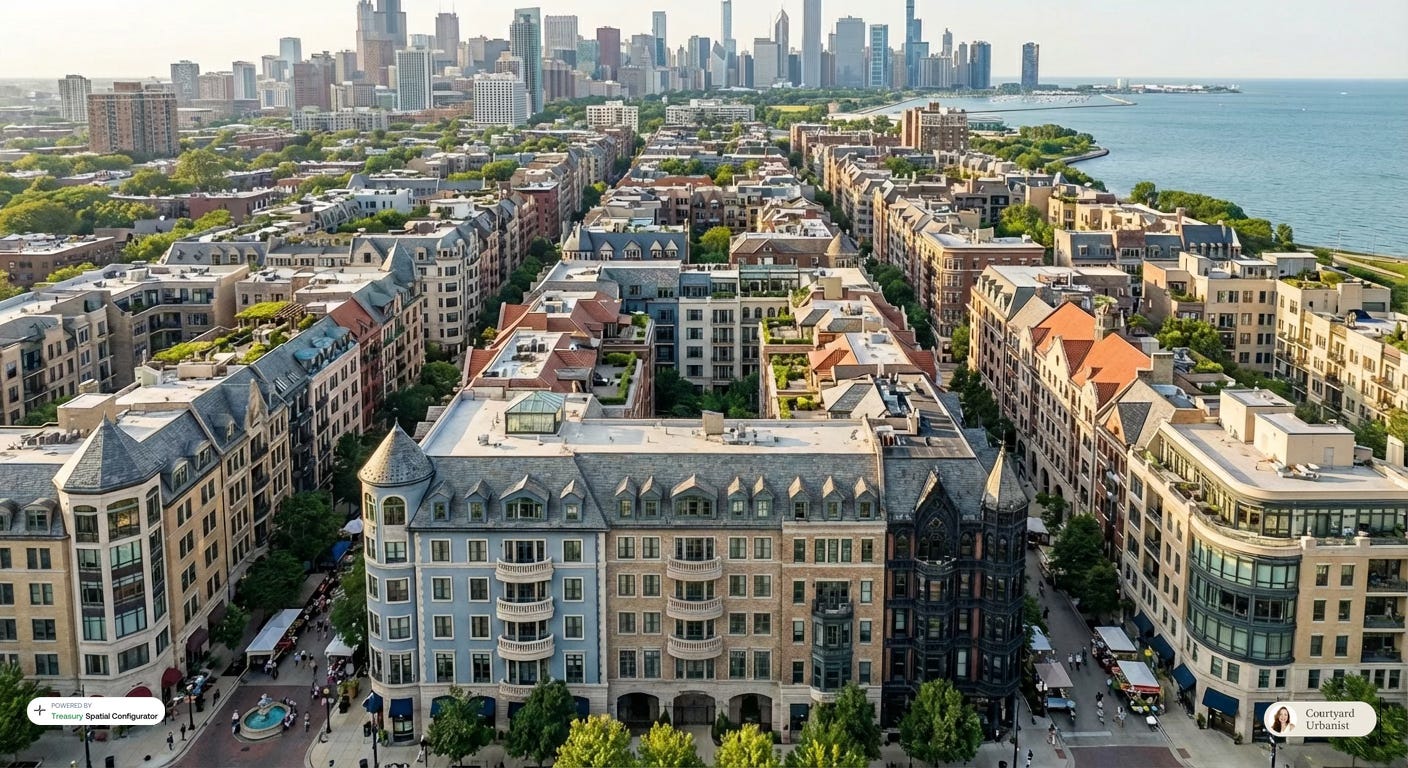
The Courtyard Urbanist project aims to modernize the role of urban courtyards in addressing a growing set of challenges: housing availability, quality of family life, urban infrastructure, built value and aesthetics, and more.
What began as a provocation is increasingly becoming a real contribution. The number of people and institutions engaging with the courtyard urbanism grows weekly.
Progress in this space requires bridging complex and often sensitive divides between professions, technologies, and political constituencies. In a moment shaped by dazzling novelty and passionate disagreement, advancing housing abundance through courtyard urbanism means orchestrating people, systems, and ideas across multiple axes.
Orchestration in the New Design Era
Architectural design and design technology represent only some of these axes, but they reveal the need for orchestration in three critical ways.
1. Visualization, AI, and the role of architects
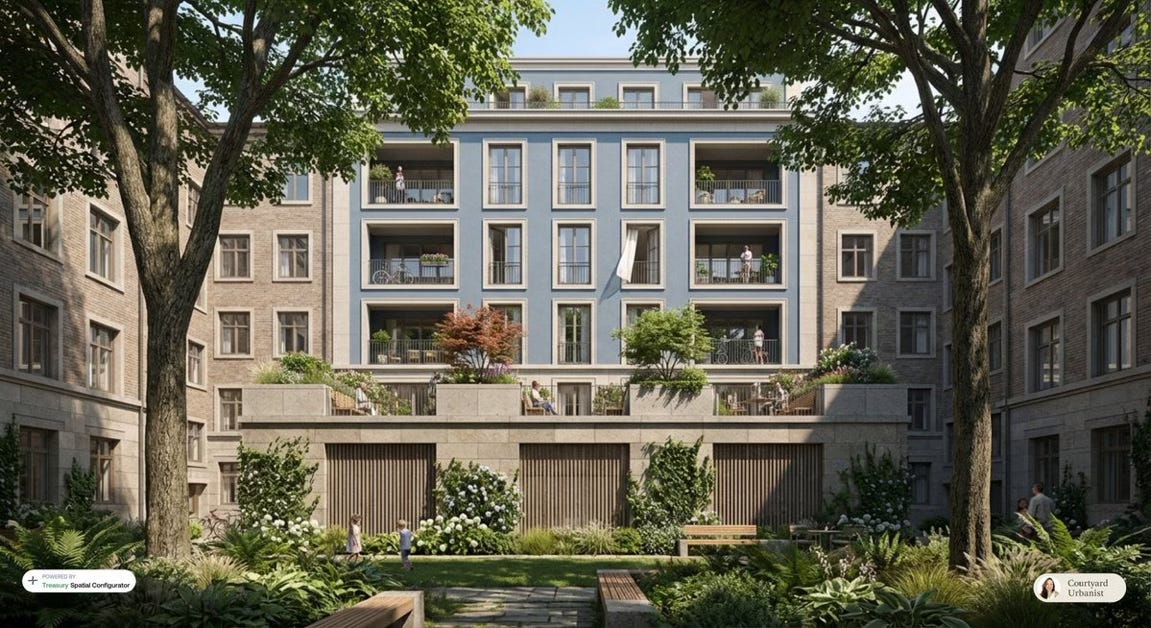
AI-driven visualization is rapidly improving the public and developer’s ability to imagine alternative urban futures. Tools such as the Courtyard Composer make this tangible.
We believe that this AI acceleration must not bypass architects and creators. On the contrary, it should validate their worth and even expand their reach to new forms of creative work.
This happens in a couple of initial ways:
Ensuring attribution, licensing, and compensation for named designers and contributors.
Ensure that design and stylistic content from professional designers is used under licensed terms rather than treated as free, and that this use directly generates engagement and new commissions.
2. A wide range of spatial and design technologies maturing are emerging and maturing simultaneously
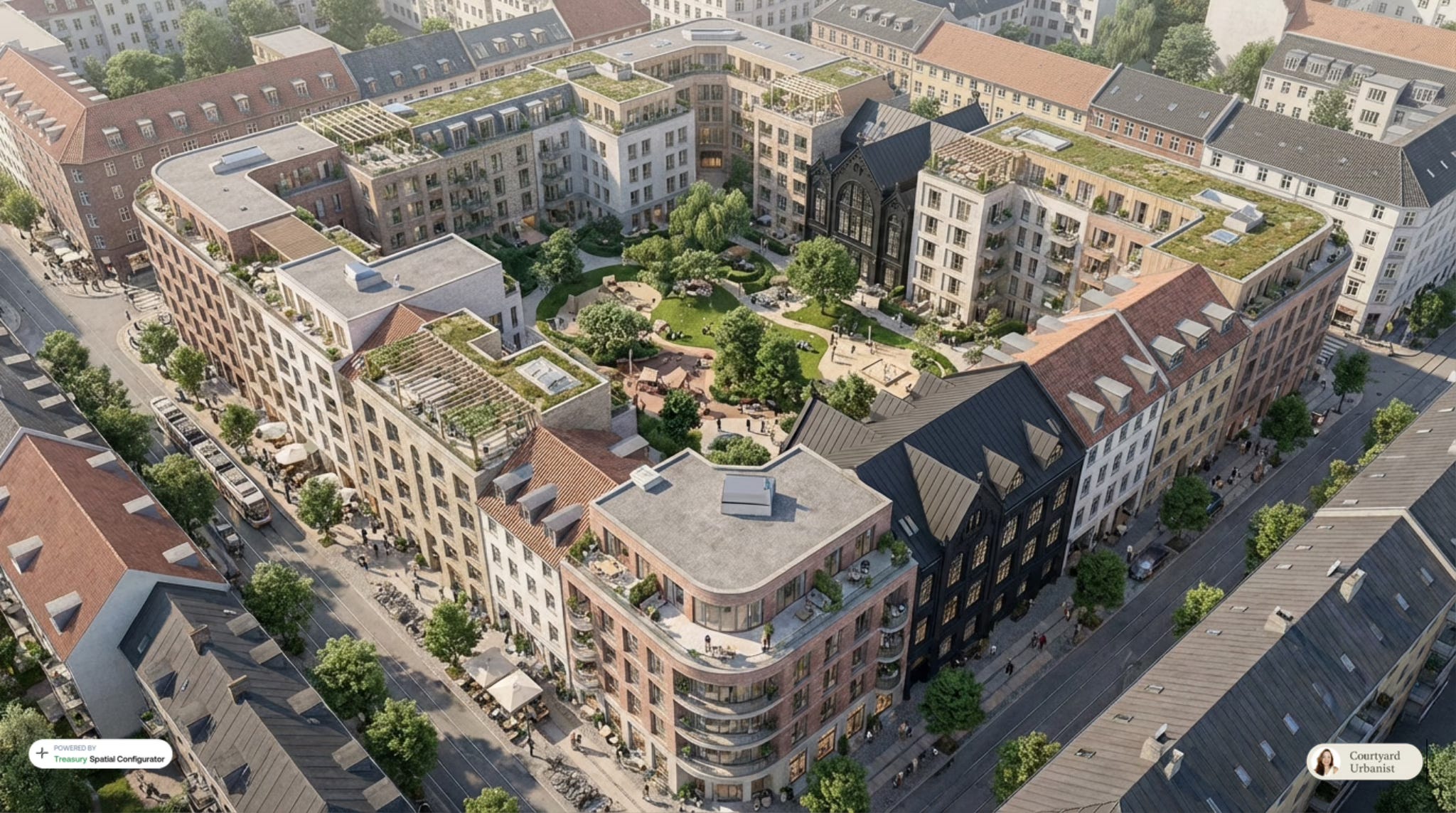
Under such conditions, no single piece of software or closed, sinecured workflow can plausibly produce high-quality built design. Quality now depends on nimble orchestration across technical and creative domains, moving at great speeds, and based on high levels of knowledge and experience.
3. Design must become public and participatory earlier and faster
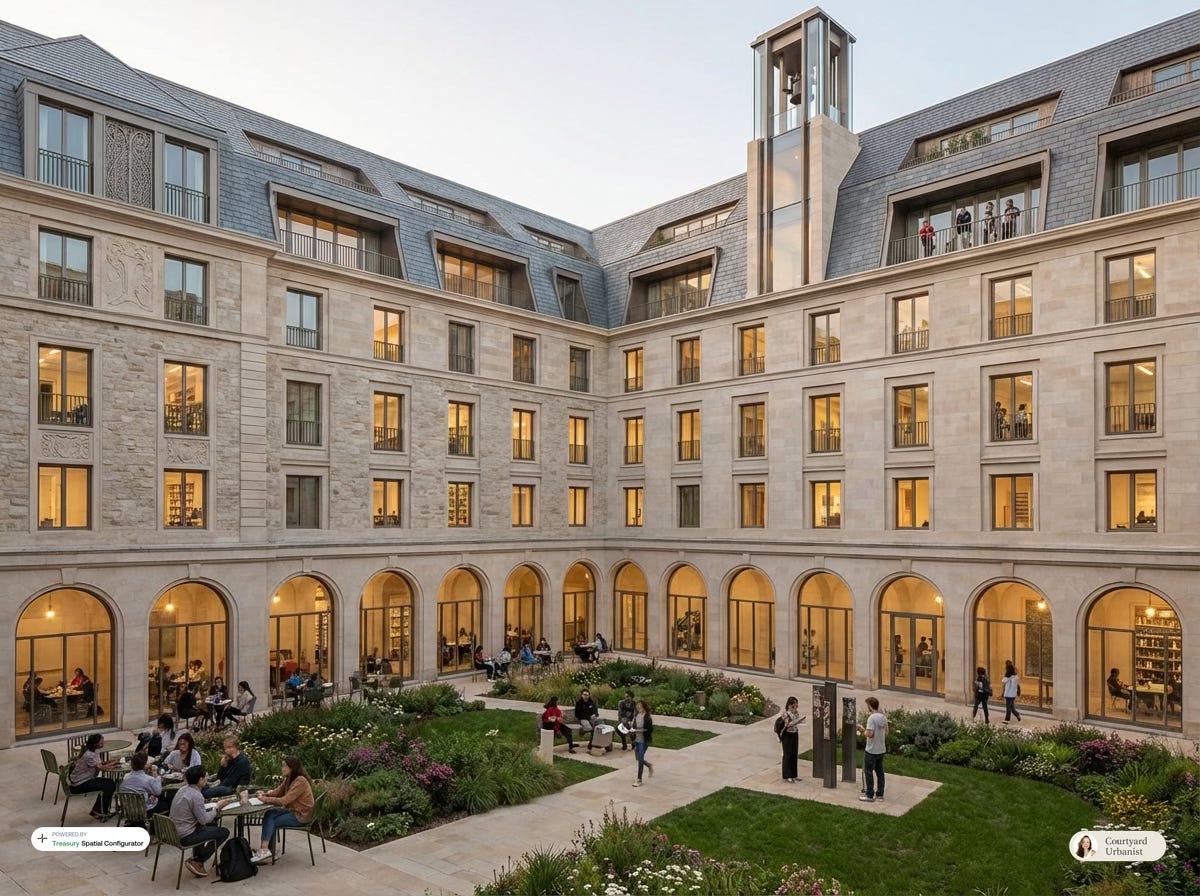
Finally, professionals, experts, enthusiasts and novices can come together simultaneously around design, visualization, and planning tools. It makes no sense to include the public in consultation when the design is essentially done, nor does it make sense for design iteration among developers, planners, architects, owners, and the general public to take months and years, when it can and should take seconds and days.
So: The new era of built design and design technology isn’t and cannot be one of incumbent tools being forced on yet another generation of reluctant professionals. Instead, it is an arena that invites orchestration of many, sometimes historically opposed themes into a new whole.
Standing Projects, 2026-2027
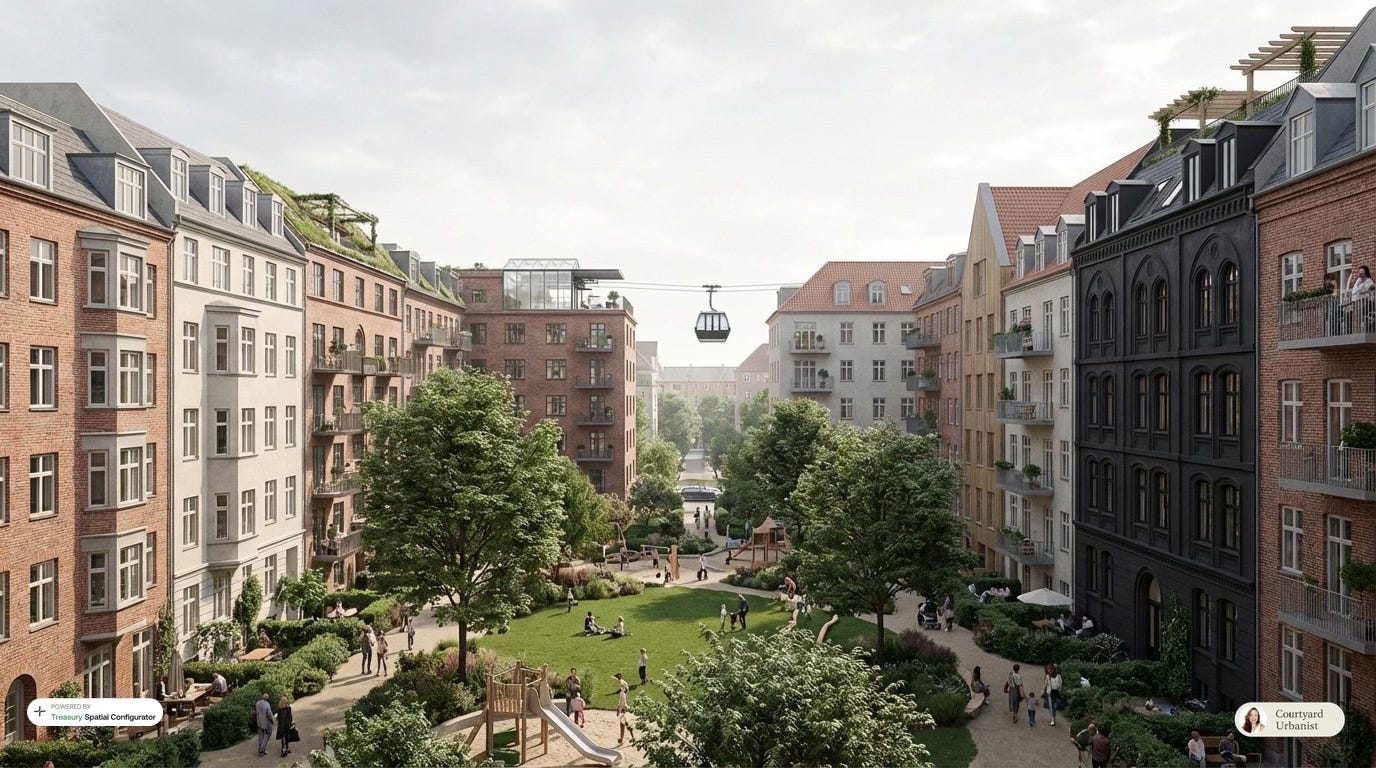
Courtyard Urbanist aims to facilitate this evolution with three standing projects, alongside ad-hoc collaborations and invited projects: (1) Type Kits, (2) Action Kits, (3) Courtyard Composer
Type Kits
Courtyard Urbanist is developing, with partners, a Type Kit for modern urban courtyards: a kind of typological pattern book for the Courtyard Urbanist ideal, with variations for context and program.
This isn’t just, or even primarily, an aesthetic exercise. Type Kits are intended to:
Reframe architectural contributions to everyday living, focused on courtyard urbanism;
Provide guidance on materials, circularity, and wellness;
Accelerate new fabrication and construction techniques;
Clarify the value proposition of courtyard-led urban morphology
Integrate directly with contemporary visualization, design and construction systems.
Additional Type Kits from independent partners and designers are invited, forming a family of related but distinct courtyard identities.
Action Kits
The Courtyard Urbanist Action Kit supports real-world implementation, helping local actors navigate planning, political, and financial systems. It provides concrete guidance on researching codes, engaging planners and representatives, interfacing with developers, and rallying local interest for current and potential urban courtyard initiatives.
Courtyard Composer
The Courtyard Composer is an early implementation of the Treasury Spatial Composer tool, specialized for development of urban courtyard typologies. It allows:
Architects to share modular and parametric designs with clients in real time;
Designers and enthusiasts to upload mesh models for exploration and imagine;
Developers and the public to select real sites, test courtyard typologies, and explore how it would look, and what it would cost, to developer any given type of courtyard there.
The Courtyard Composer draws directly on the Courtyard Urbanist Type Kit and invites other Type Kits to drive engagement.
To explore the Courtyard Composer, sign up at composer.courtyardurbanist.com
To discuss the broader architectural design and design technology opportunities behind Courtyard Composer, and to use the Treasury Spatial Composer for non-courtyard uses, contact Treasury.
To colloborate on any projects in general, please contact Courtyard Urbanist here.