


Dear Friend, Subscriber, and Courtyard Urbanism Enthusiast,
In April, courtyard urbanism continued to make great progress in its path from architectural idea into statutory language, code reform, and development strategy.
Idaho enacted laws limiting setback, lot-size, and ADU restrictions. Indiana passed a housing bill that preserved important by-right and mixed-use provisions, even after being narrowed by local-government opposition. And Illinois’s BUILD package is now the serious state-level fight to watch because it goes directly to the rules that determine whether small multifamily buildings can be built: attached courtyard housing, single-stair reform, and parking reduction.
The setback rules, egress rules, and parking rules matter enormously. A city can say it wants more housing. It can legalize duplexes, fourplexes, and ADUs. But if the law does not recognize courtyard housing as a legitimate form, if the building code still forces small apartment buildings into large-building circulation patterns, and if the zoning code still requires too much parking, then small multifamily will not be built because it will be too expensive.
None of this means courtyard blocks are suddenly easy to build. But it does mean the assumptions that have made them difficult in much of the United States (mandatory setbacks, minimum lot dimensions, excessive parking requirements, two-stair mandates, discretionary approvals, and the absence of small-building finance) are now politically contestable.
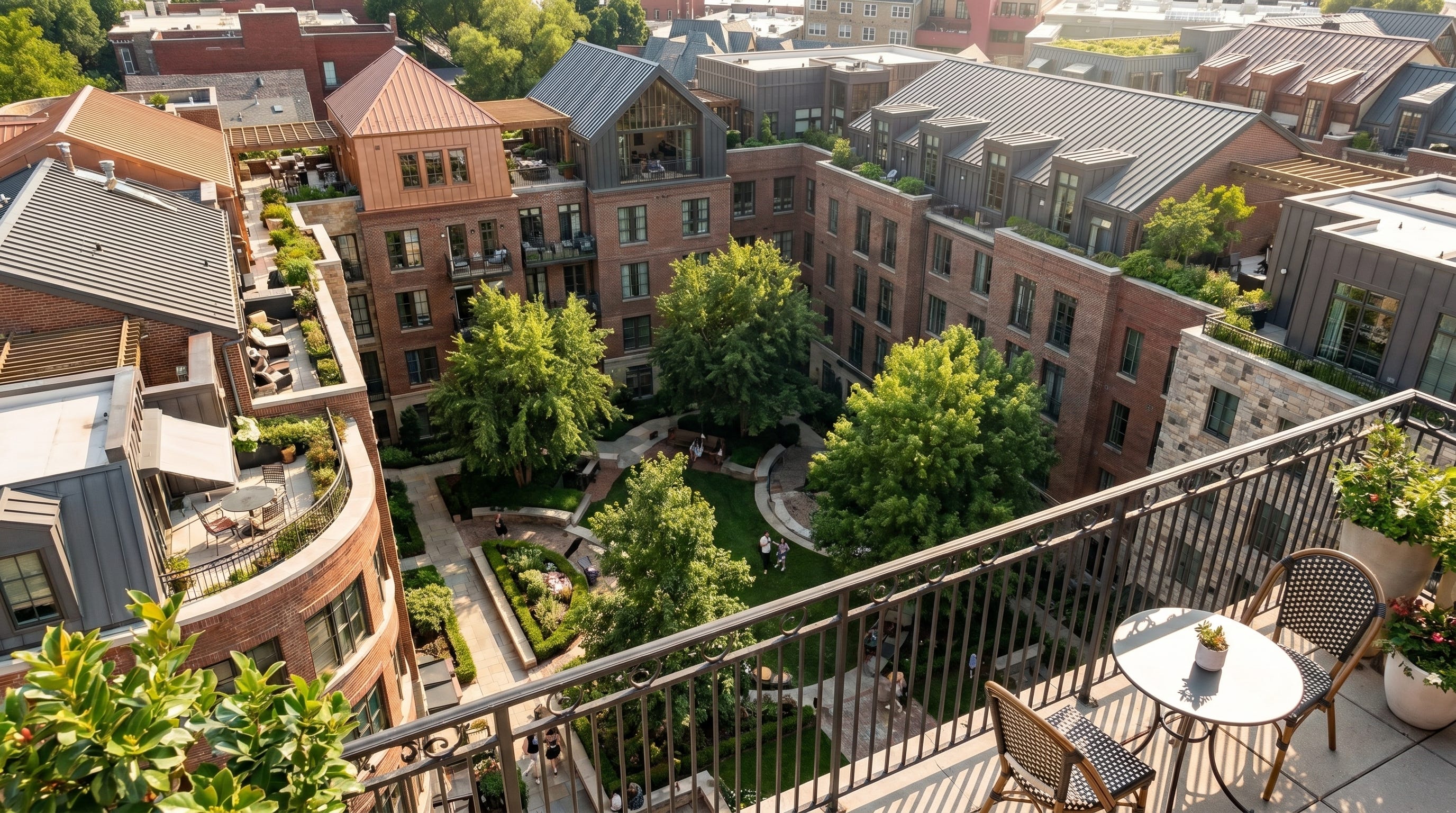
Courtyard blocks are simple: buildings meet front and side property lines and create family-capable urban homes around protected green space. But they depend on a legal, financial, and development environment that allows those things to happen.
This month’s Market Brief covers the laws, projects, financing tools, and Courtyard Urbanist updates that matter for turning courtyard housing from a beloved historic type into a repeatable contemporary development model.
This month’s Market Brief covers:
CU Project Updates — building prototypes, consulting work, speaking events, Horizon Lines 2050, the Tribune op-ed, and the Diversey/Seminary substation fight.
Funding and Financing Landscape — why Courtyard Urbanist needs a capital stack built around Reg D, project SPVs, demand aggregation, public land, and smaller-building finance.
The Big Picture — why April 2026 matters for the geometry, code, and financing of courtyard-scale development.
Enacted Laws — Idaho and Indiana’s state-level reforms, and what they actually change.
Pending Fight in Illinois — why HB 5626’s attached courtyard housing, single-stair, and parking provisions matter so much.
Losses and Watch List — Virginia’s missing-middle bill, LIHTC expansion, and the limits of state reform.
Projects in the Pipeline — Chicago’s $1 land + gap-financing pilot and Le Village’s coworking/childcare model.
1. CU Project Updates
Building the Typology, the Pipeline, and the Local Case
April was a busy month for Courtyard Urbanist.
The work is moving on several fronts at once: building prototypes, consulting inquiries, speaking engagements, local policy work, and early project-specific opportunities.
Building prototypes: family-sized units for the American market
The Courtyard Urbanist team has continued developing building prototypes, with a particular focus this month on floor plans for 3-bedroom and 4-bedroom units.
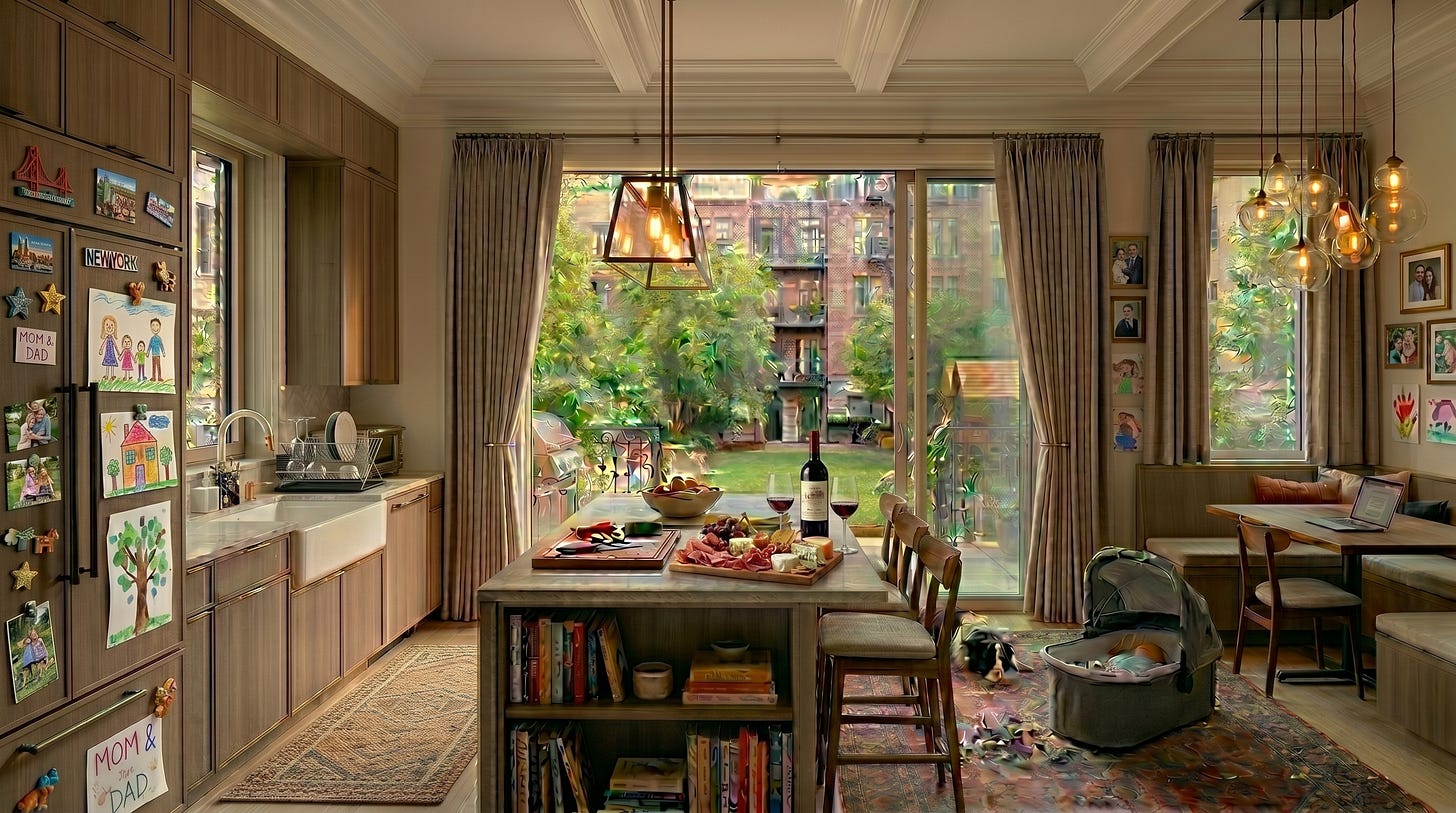
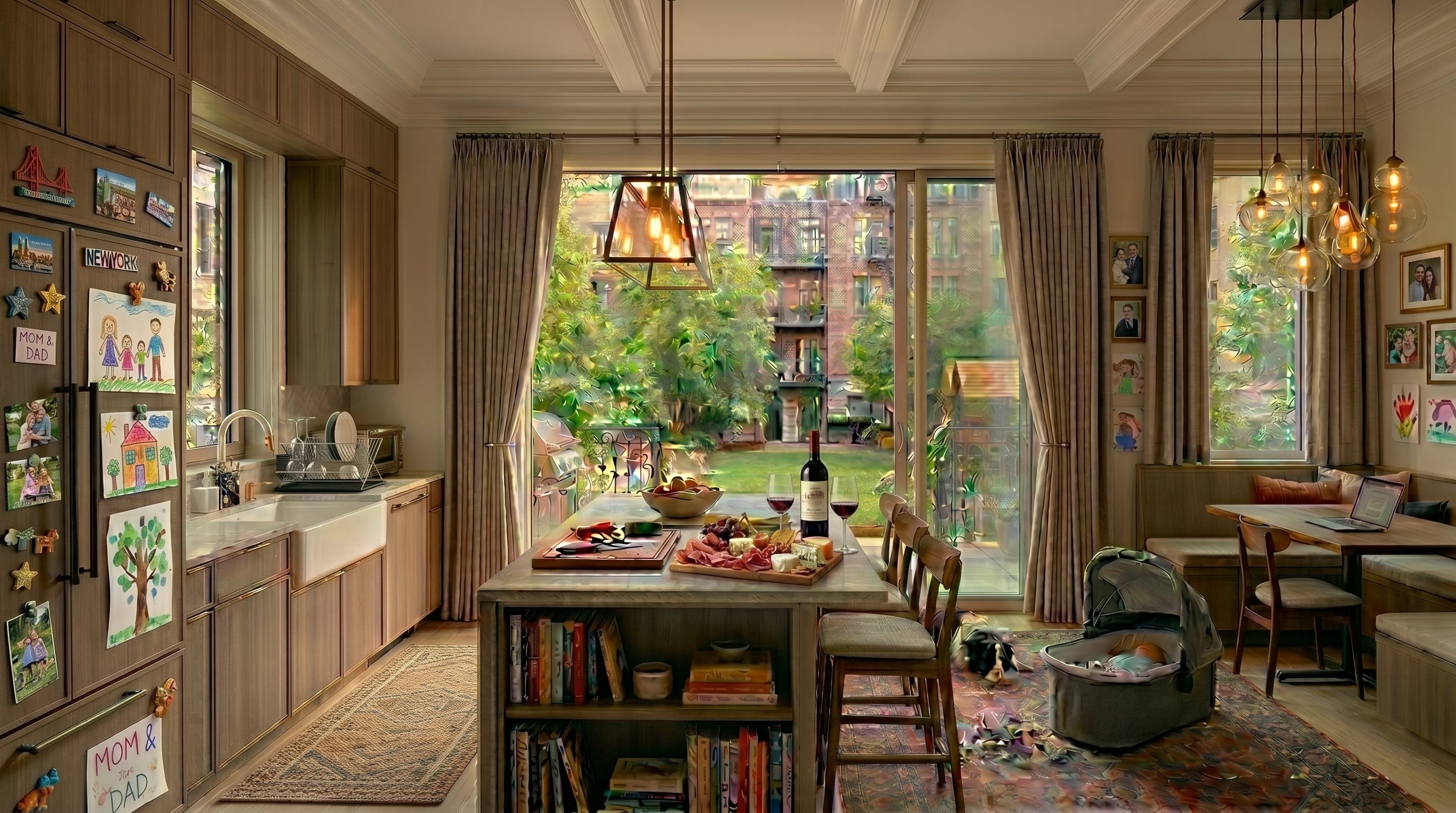
This has involved a lot of back and forth between the architects and me because the details matter a lot and, as you can imagine, I have a lot of input on the floor plans. The goal is not simply to produce “large apartments.” The goal is to modernize and Americanize the courtyard typology for contemporary U.S. markets. To be clear, these are apartments designed to compete with suburban 4BD homes. These are city homes that can urbanize a larger share of middle America by giving families the convenience and community of urban life without giving up the functionality of a real home.
There are several patterns I believe should pervade the family-sized units:
the kitchen should have a window wall to the courtyard;
the primary bedroom should have a window wall to the courtyard;
bedrooms should not open directly into common areas;
bathrooms should have windows wherever possible;
and the main entrance should open into a real foyer, not directly into the living room or kitchen.
These may sound like small design choices, but they are not. They are the difference between an apartment that merely has three or four bedrooms and a home that actually works for family life.
The floor plans are getting very exciting.
I think they have the potential to meet a need in the American housing market in a way almost nothing else does: family-sized urban homes with light, privacy, practical circulation, generous kitchens, and a direct relationship to shared outdoor space.
That is the promise of the courtyard block. Not just more units. Better homes.
Consulting work: translating large parcels into courtyard blocks
April was also busy on the consulting side.
Courtyard Urbanist continues to hear from clients and potential partners who want technical guidance on how larger parcels could be developed as courtyard blocks. There are practical questions about site geometry, parcelization, building depth, unit mix, access, parking, courtyard dimensions, ground-floor programming, and how to make a block-scale concept legible to stakeholders.
The team is increasingly able to field this work because the models are becoming more precise.
That is important. Courtyard urbanism cannot remain only a visual or rhetorical idea. It has to become a repeatable development framework: something that can be tested on actual parcels, explained to landowners, reviewed by architects, understood by public officials, and financed.
