


This article is adapted from a presentation I gave at Edge Esmeralda, in Healdsburg, California, on June 25, 2026.
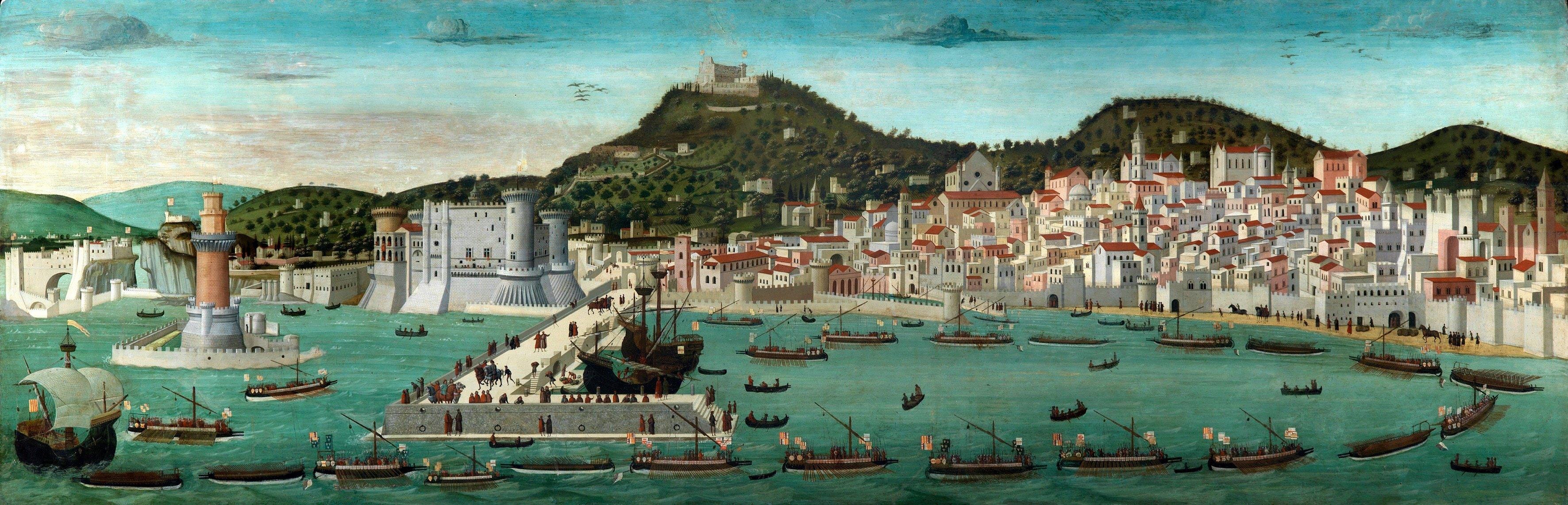
Cities have always struggled to order the intensity they create.
Writers have been aware the problem of urban intensity going back hundreds of years. It’s a theme that appears in Renaissance pastoral literature, a genre 16th- and 17th-century writers often used to explore the tension between the country and the city. (Remember my background is in Renaissance literature, not urban planning, so hang with me for a moment here.)
Renaissance pastoral often begins with escape. A young gentleman or lady grows tired of the crowds, unrest, and plagues of the city, and flees to the countryside in search of simplicity and nature. But they never remain in the country. Among the shepherds, the urban exile becomes bored and restless. The pastoral idyll cannot replace the social, intellectual, and civic world of the city.
For example, in Sannazaro’s Arcadia (published in Naples in 1504), the young Neapolitan gentleman Sincero withdraws from Naples into the pastoral world of Arcadia, but he ultimately turns back toward the city. Near the end, he remembers Naples not as a corrupt place to be escaped forever, but as his “noble and most generous patria,” a city of ports, towers, temples, palaces, streets, beauty, learning, and public life. The pastoral retreat clarifies that the city, for all its blemishes, remains the environment that formed him and gave scope to his life.

Renaissance writers spoke of crowds and thongs the city. Today, we usually call this density.
Density is both the source of the city’s power and the source of its vulnerability.
Density is necessary to create the proximity and convenience that define city living. Cities exist to bring people into close proximity to one another, to jobs, commerce, culture, institutions, and opportunity. Historically, this proximity has been one of the basic thresholds of civilization. It has broadened people’s ability to trade, worship, marry beyond the clan, build professional relationships, and transmit knowledge through teaching and apprenticeship.
When researchers study human accomplishment across different kinds of places, they consistently find that achievement in science, art, commerce, and culture is disproportionately concentrated in cities. The higher rates of achievement flow from the higher concentration of people with different skills, ambitions, and experiences. Cities, moreover, concentrate capital, institutions, specialized labor, patrons, customers, collaborators, and audiences in the same place. All of this concentration creates the social and economic conditions for achievement across many fields.


In that sense, cities can be spaces of extraordinary freedom of action. Cities are environments where you can “just do things,” because the collaborators, capital, talent, customers, teachers, patrons, and institutions needed to make things happen are close by.
But density also concentrates harm. It can intensify noise, congestion, disease, pollution, crime, and disorder. It intensifies land value and, with it, the cost of housing. When many people want access to the same urban opportunities, the price of land rises, and the large house with a yard becomes unattainable for many middle-class households. Urban life has always contained this tension between renaissance and plague, convenience and cost, the benefits of density and its negative externalities.


Density is both the city’s power and its danger.
We often respond to the harms of density through law and public administration. Crime is addressed through policing. Disease through sanitation, vaccination, and public health. Pollution through regulation. These interventions obviously have merit, but they do not answer the more fundamental spatial question:
How should we shape the built environment so that it captures the benefits of density while containing its harms?
We want high density. The challenge is to structure high density so that cities can maintain both high proximity and a high standard of living for residents across the full life cycle.
The question is how to recover the city’s great light without getting burned.
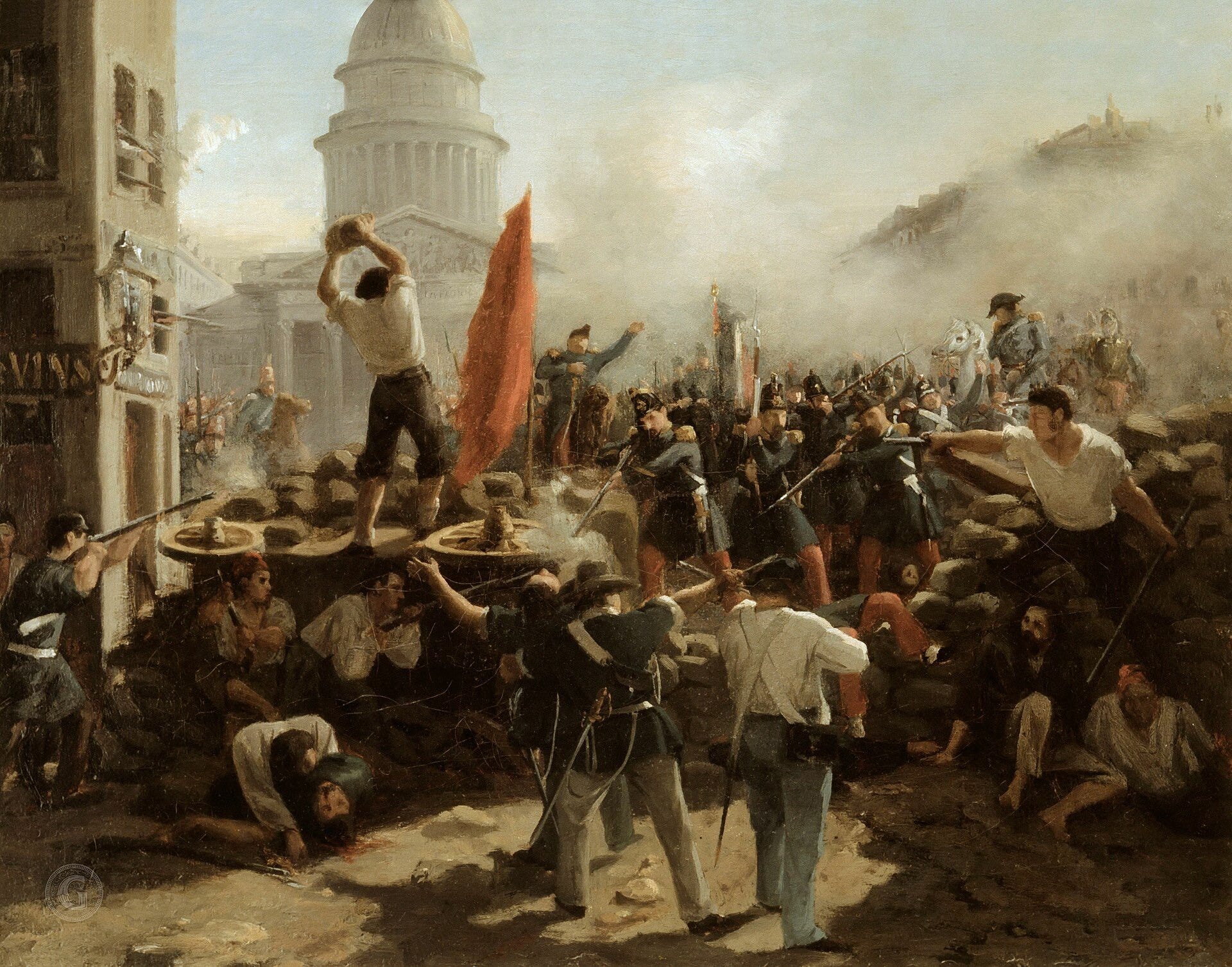
Our Tall ‘n’ Sprawl Non-Solution to Urban Intensity
American development generally offers two responses to urban intensity.
The first is to spread it out.
The second is to concentrate it inside very large buildings.


Each approach solves part of the problem. Neither fully resolves it.
Sprawl offers legitimate advantages of privacy, quiet, personal space, and a yard of one’s own. But that privacy and space is purchased at the expense of convenience, community, and civic life. Daily destinations become a logistical burden. Children depend on adults to go almost anywhere, encouraging helicopter parenting in the absence of an environment where children can independently play with friends, walk to school, or get to activities. Older people can become isolated when they stop driving. And the private landscape itself becomes a constant obligation: mowing, raking, shoveling, trimming, watering, repairing, and maintaining outdoor space that is used by one household alone rather than shared as part of a larger civic realm. Local businesses struggle when too few customers live nearby. Public transportation struggles with ridership. Public schools struggle with enrollment, especially as household size decreases. Public life disappears because there is no common ground where people can meet.
Sprawl protects the household from urban intensity by destroying civilization itself.


The contemporary apartment megaproject solves one problem while creating another. It gathers hundreds of households into a single enormous structure, often near transit, employment, and commerce, and it delivers true density and convenience. But it does so for a narrow segment of the population willing to live in large, anonymous buildings, often for a relatively short period of life. These buildings can work for young adults, small households, and short-term renters. They are much less successful at creating homes that people want to inhabit across the life cycle. Families, owners, neighbors, parents, children, and older residents need both urban convenience and a more fine-grained, domestic form of city living.
Large apartment complexes often organize domestic life like a hotel. Residents pass through a common lobby, take an elevator, and walk down long double-loaded corridors to reach small, one-sided apartments. These units lack the spatial logic of houses, which usually have fronts and backs, public and private sides, direct thresholds, and a legible relationship to outdoor space. And while hundreds of people may live under one roof, sheer numbers do not create community. Past a certain scale, the probability of knowing any particular neighbor declines. The megabuilding delivers density and convenience, but often at the cost of familiarity and domestic life.
This arrangement is especially difficult for families with young children. Many parents want a house with a yard because they want outdoor space that functions as a place where a child can play while a parent cooks dinner, folds laundry, or answers an email nearby. A courtyard on the other side of a large building does not serve that purpose. If your apartment is on the fifth floor facing the street, you cannot send a four-year-old downstairs and around the building to play where you cannot see them, hear them, or call them back inside. For family life, outdoor space must be visible, accessible, and close enough to feel like a shared room under the open sky.


Sprawl destroys the city. Megaproject urbanism concentrates it without ordering it into a form that supports domestic life across generations.
The urbanist’s challenge is preserving the freedom, opportunity, and convenience created by proximity while maintaining a high standard of living for households at every stage of life.
Courtyard urbanism, the ordering technology for density
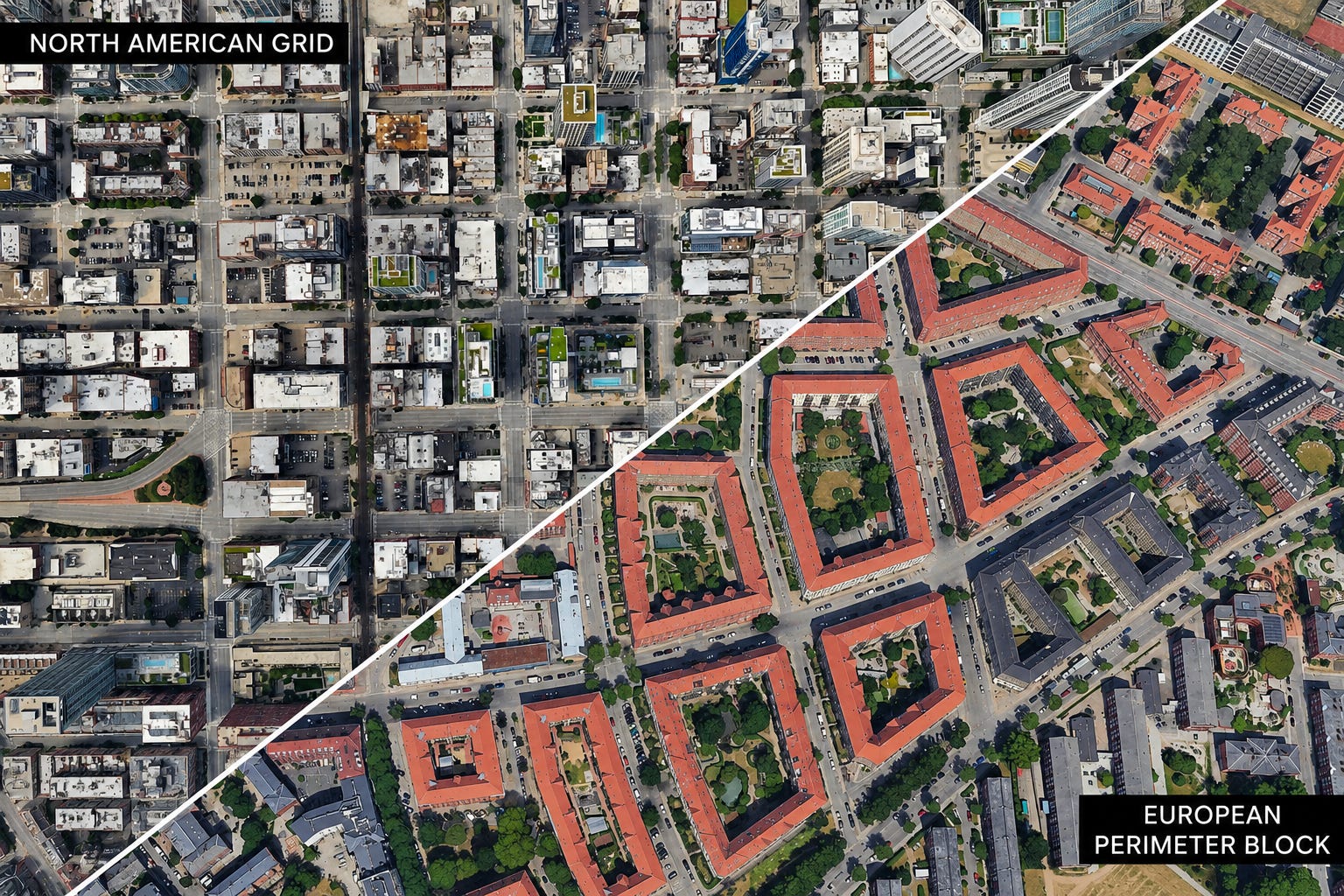
The courtyard block is a time-tested urban planning technology, refined over centuries to create density while maintaining private outdoor space in the form of the courtyard.
Its fundamental achievement is creating great homes with yards while maintaining the density and form needed for intense public life.


The courtyard block creates the density and form needed for intense public life by stacking homes of different sizes on top of commercial space, allowing many owners and residents to share expensive urban land.
The courtyard block creates great public streets and spaces by framing the mixed-use streets and piazzas that belong to everyone. They are the rooms and corridors of the city. They accommodate crowds, commerce, entertainment, protest, and celebration. It is the realm of opportunity. It is the place where people encounter businesses, institutions, amenities, and one another.
Rather than eliminating crowds and commerce and the full Shakespearean cast of society, it puts them in their right place, framing them in the streets and plazas.
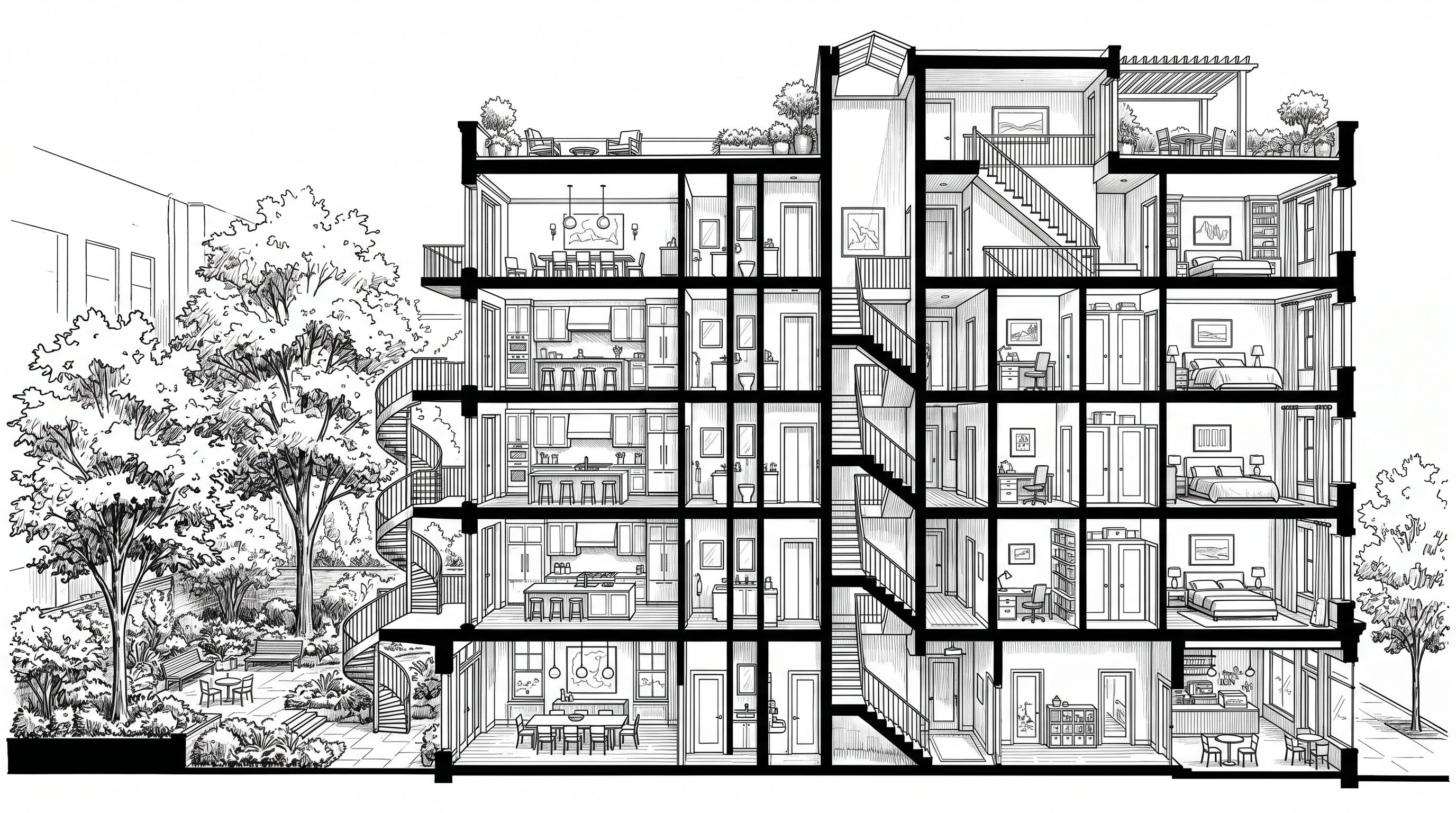
The courtyard block creates great homes with yards by CHUNKING density into many small, multifamily buildings that are built around the perimeter of a block to enclose an interior, private courtyard.
Because these are small multifamily buildings, units are accessed off of a central stair rather than long corridors. Large units can be front to back, with a window wall facing the public street and a window wall facing the the courtyard. Like a house, not a hotel room, a street side and a quiet courtyard side, and their stair provides direct access to a private courtyard.
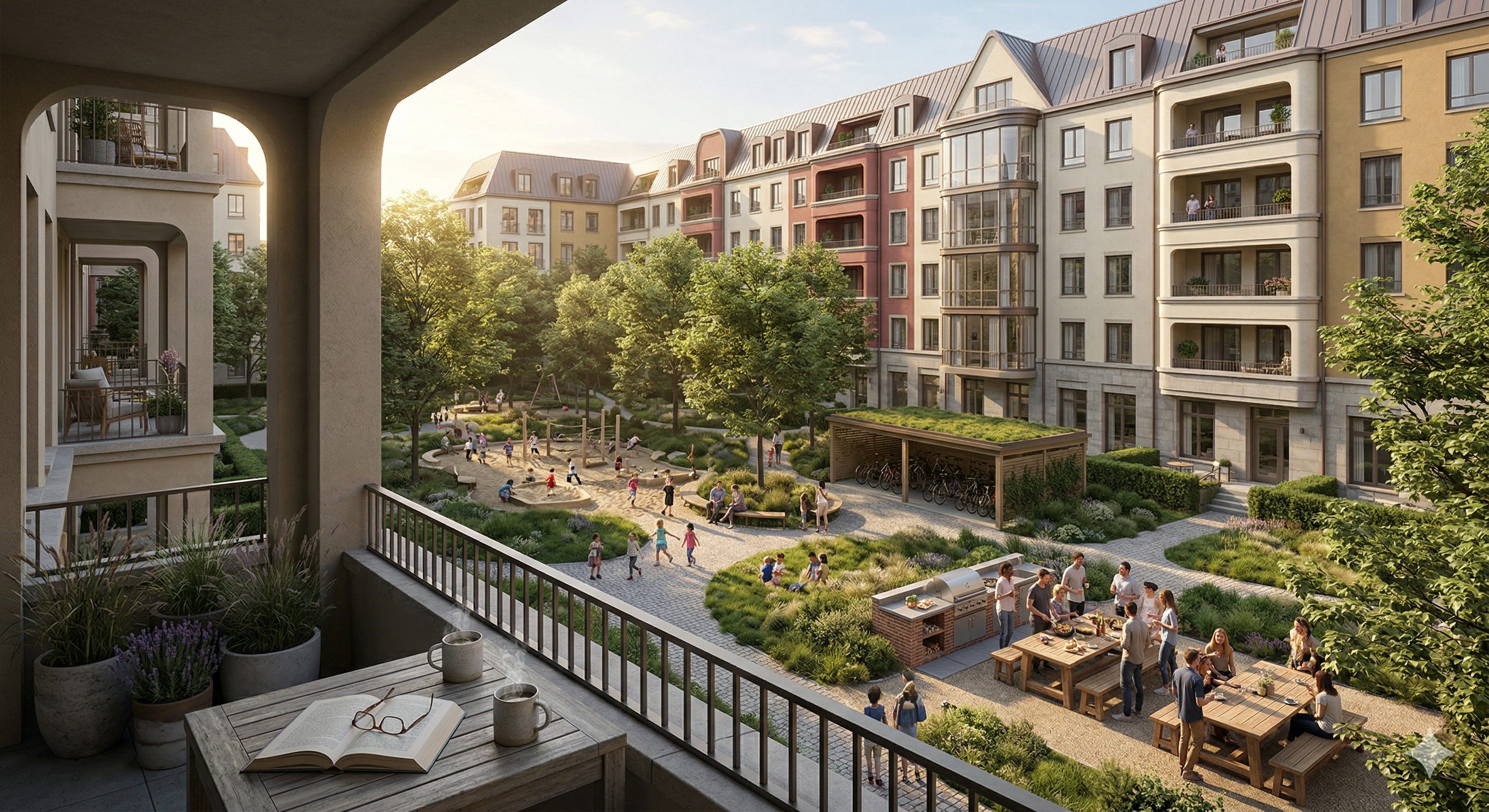
The courtyard is shared, but private to the residents. Green, protected, and bounded, it belongs to a recognizable residential community. It can accommodate gardens, meals, children’s games, casual conversations, and small acts of mutual assistance. It exemplifies the “comedy of the commons,” where a thing becomes more valuable when more people own it. Kids have kids to play with on their block. Residents can share tools and equipment for gardening, biking, grilling, home maintenance.
Children have a place to play outside the apartment that does not require them to go near or cross a high-traffic street and go out of view of their parents. Parents can observe them without directing every moment. Neighbors can speak without arranging a formal gathering. The courtyard creates valuable private residential space through a specific scale and geometry that creates the possibility of large homes with yards, in small buildings, with access to private but shared courtyards.
Durable technology for creating valuable urban real estate that lasts forever


We know courtyard urbanism works because many of the most valuable and beloved urban neighborhoods on earth are courtyard-block neighborhoods. They were built when societies were poorer and construction technology was far less advanced than it is today. Yet these buildings and blocks have been renovated, adapted, and maintained across generations, sometimes for hundreds of years. I first encountered this form directly in Florence, living in a building organized around a courtyard that dated to the sixteenth century. Edinburgh’s courtyard blocks date largely to the eighteenth century. Across Europe, these places have endured because they solve the basic problem of urban life: how to combine density with light, privacy, shared outdoor space, street life, and long-term adaptability.
The façades and materials vary, but the underlying urban form is remarkably consistent. The buildings are typically wide and shallow, sometimes with wings extending back into the courtyard to add floor area. They are built wall-to-wall along the street, forming a continuous perimeter that defines the public realm outside and encloses a protected green interior within the block.
The durability comes from the economical and valuable design.
Efficient land use: Continuous street walls and zero side setbacks place more usable floor area on a given site while preserving a substantial shared courtyard.
Lower land cost per home: Land is distributed across many apartments rather than a small number of single family homes.
Shared building components: Residents share roofs, foundations, exterior walls, elevators, mechanical systems, utility connections, and outdoor space.
Less exterior envelope per unit: Party walls and compact building forms reduce façade area, heat loss, waterproofing, and long-term maintenance.
Shallow, efficient floorplates: Point-access plans reduce corridors and other non-rentable circulation, increasing the ratio of usable or saleable space to gross building area.
Mid-rise construction economics: Four- to six-story buildings can often use simpler structural systems and construction methods than towers.
Repeatable building types: Standardized widths, structural bays, cores, façades, and unit plans reduce design, engineering, permitting, and procurement costs.
Smaller contractor packages: Local and midsized builders can compete for work without the overhead associated with megaproject construction.
Distributed development risk: A delay or failure on one parcel does not necessarily stop construction across the entire block.
Shared infrastructure: Parking access, utilities, stormwater systems, energy systems, waste facilities, and courtyard improvements can be coordinated at block scale.
Lower parking burden: Walkable mixed-use locations, shared parking, and fewer internal driveways reduce the amount of expensive structured parking required.
Simpler façades and structures: Regular bays, stacked wet walls, repeated openings, and limited cantilevers make construction easier and reduce material waste.
Lower lifecycle costs: Durable party-wall construction, compact envelopes, accessible shared systems, and clearly allocated building responsibilities can reduce operating and replacement costs over time.
Balancing Density & Green Space
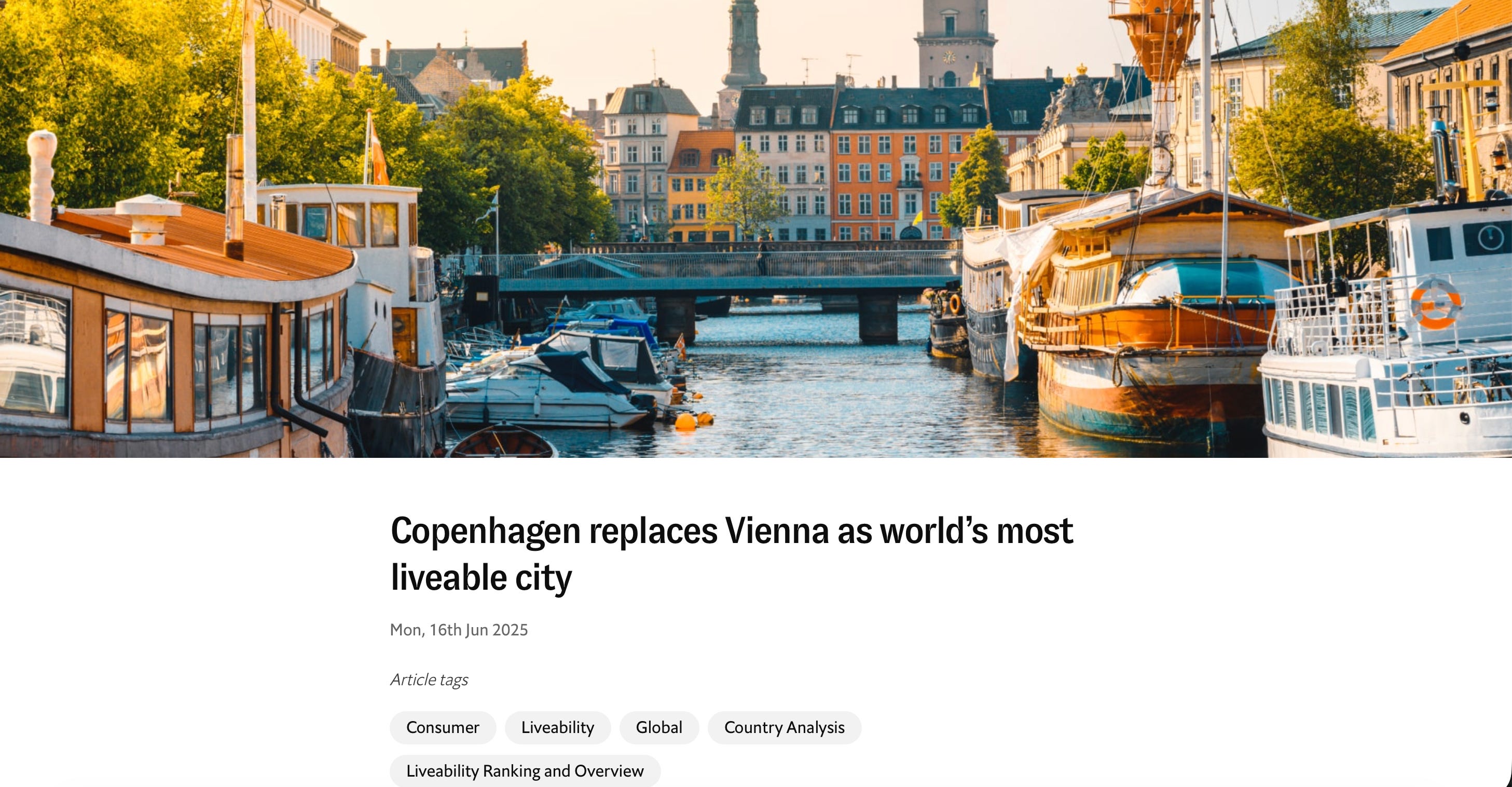
By making efficient use of the long perimeter of a city block, courtyard-block neighborhoods can produce substantial density without towers. Inner districts in Vienna and Copenhagen regularly reach roughly 40,000 to 60,000 residents per square mile, with some Viennese districts exceeding that. These are densities far above the average American urban area (2,553 people/sq mi in 2020) and even higher than many of our densest urban areas. Yet Vienna and Copenhagen are also among the world’s most livable cities, trading the top position in the Economist Intelligence Unit’s Global Liveability Index. The point is not that courtyard blocks alone cause livability, but that very high residential density can coexist with generous private yard space, parks, shops, transit, and fantastic public streets and plazas.
Medium parcels for optimizing density and livability
Urban form is downstream of parcel size. Start too small, and the development options narrow quickly. You may get a single-family house, a row house, a two-flat, or a very narrow apartment building with deep floor plans and limited light. Start too large, and development tends to consolidate into a megaproject: one big building, one ownership structure, one garage, one risk profile, and often one long corridor serving many small units.
For courtyard urbanism, the sweet spot is the medium parcel.
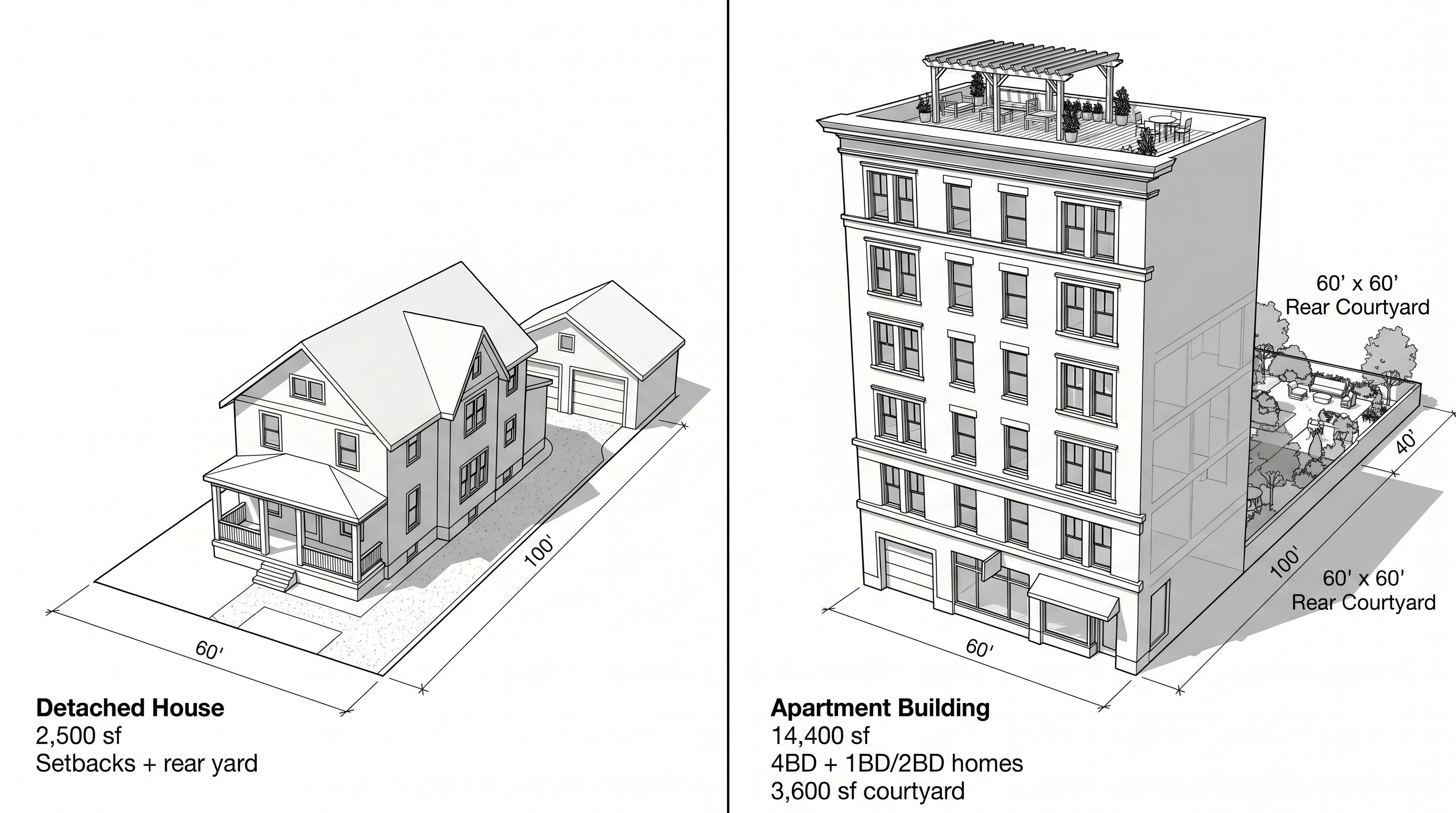
A parcel around 60 feet wide and 100 feet deep is large enough to support a mid-sized multifamily building, but still small enough to preserve fine-grained development. With no side setbacks, a 60-foot-wide parcel can hold a 40-foot-deep building with a 2,400-square-foot floor plate. On a 100-foot-deep lot, that leaves roughly 3,600 square feet of open space behind the building.
Go up six stories, and the same parcel can produce 14,400 gross square feet of building area, or an FAR of 2.4. If the ground floor contains a storefront, lobby, services, and parking or storage behind, the five upper residential floors provide about 12,000 gross square feet. At roughly 91 percent efficiency, that yields about 10,900 net square feet of usable residential area.
That is enough room for a serious family-oriented building: for example, one 5-bedroom home, four 3-bedroom homes, and eight 1-bedroom apartments. In that scenario, thirteen households share a 6,000-square-foot parcel, a generous rear garden, and the structural efficiencies of one roof, one foundation, one envelope, and one building system.
Not every building should follow this mix, but the point here is that a medium parcel gives you enough floor plate to create front-to-back homes (not just small, one-sided units) while keeping the building shallow enough for daylight, cross-ventilation, and good room proportions.
And when many of these medium parcels line the perimeter of a block, their rear yards can combine into something much more valuable to families with little kids, community gardeners, and neighbors who prefer a larger, shared courtyard to a smaller, private yard. In this way, we achieve density without towers, family housing without detached houses, and shared, private outdoor space in the dense, city center.


Three paths to courtyard urbanism
The physical form is proven. The question is how to deliver it within a development system that now favors large, consolidated projects.
There is no single implementation model. Courtyard urbanism can be initiated by a city, delivered by a master developer, or built incrementally by local builders and resident groups. What these paths share is a common spatial framework: medium-sized parcels, buildings constructed to the front and side property lines, shallow floorplates, modest parking, sufficient height, and rear open space coordinated to form a shared courtyard.
1. City-led development
The greatest barrier to courtyard urbanism is zoning.
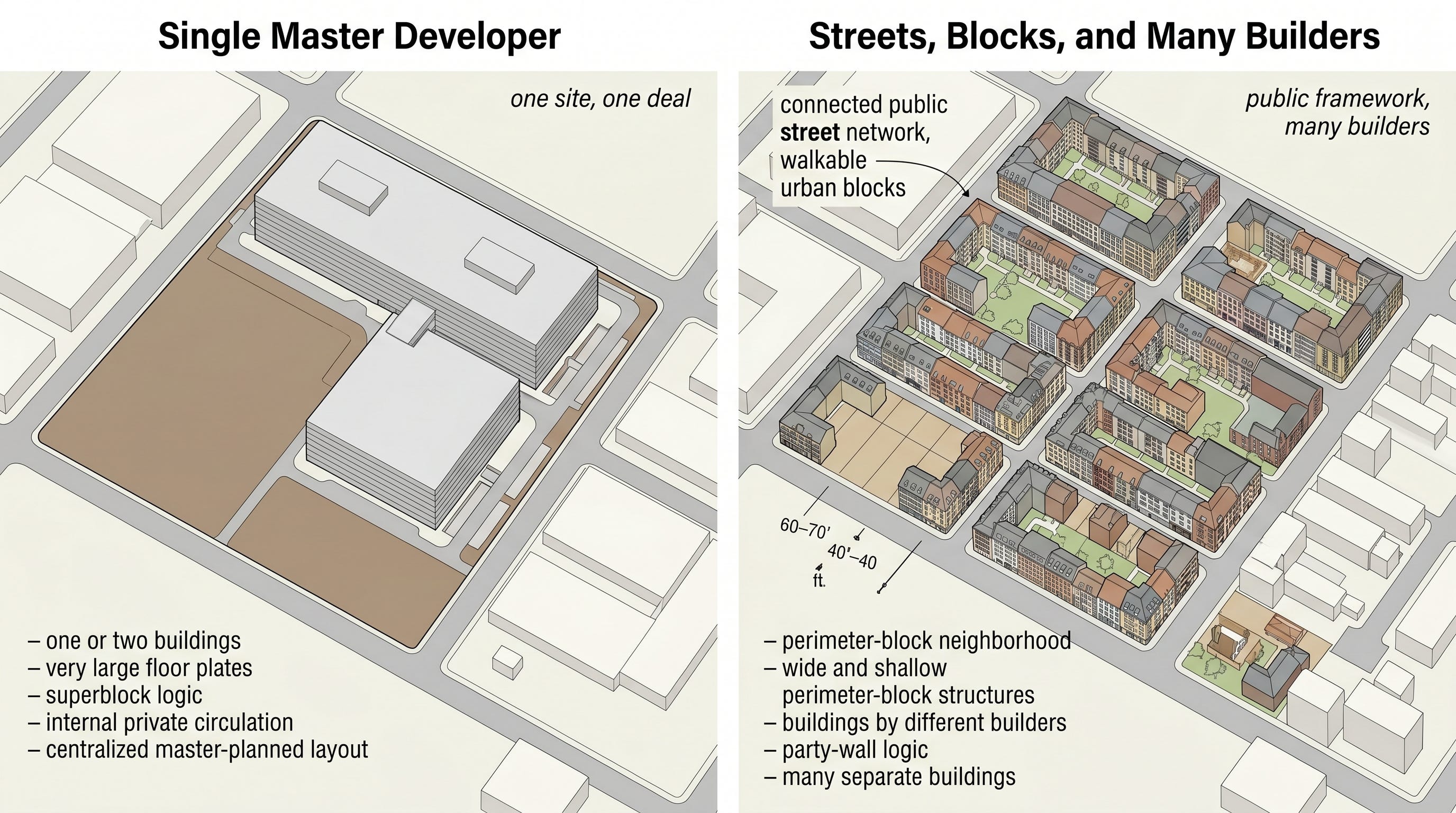
Cities can legalize the form directly. The basic rules are relatively simple: allow buildings to meet the front and side property lines; permit construction up to approximately six stories; reduce or eliminate parking requirements; and reserve roughly half of each parcel for rear gardens that combine with neighboring parcels to form a shared courtyard. Depending on the building code and local market, these buildings can use single stairs or multiple stairs, with or without elevators.
On greenfield, brownfield, or publicly controlled land, the city can go further and create the development platform itself. It can prepare the street network and utilities, establish medium-sized parcels, define the shared courtyard, resolve access and maintenance rights, and entitle the district through a form-based code. The city can then sell or lease individual parcels to local builders, cooperatives, affordable-housing providers, or groups of future residents. Each participant develops a manageable building while contributing to a coherent block and neighborhood.
This is the model Amsterdam is testing at Centrumeiland in IJburg: the city establishes the land framework, parcel rules, infrastructure, and public realm, while many different owners, builders, cooperatives, and architects deliver individual buildings. Similar principles shaped Bo01 / Västra Hamnen in Malmö and Französisches Viertel / Loretto in Tübingen, where public planning created the platform and many smaller actors produced the neighborhood.


Cities can also support courtyard urbanism through a specialized middle housing infill program. Preapproved building templates, standardized construction details, and expedited permitting could make it easier to redevelop suitable urban lots with wide, shallow apartment buildings. Cities such as South Bend, Indiana, have established “Sears Catalogue” for infill housing. The catalogue currently lacks a middle housing courtyard building exemplar, but perhaps South Bend will contact us so we can work with them on one soon.
In this model, the city’s role is using public authority to create the rules, parcels, infrastructure, and legal framework within which many different “missing middle” builders can participate.
2. Master-developer or new-town delivery
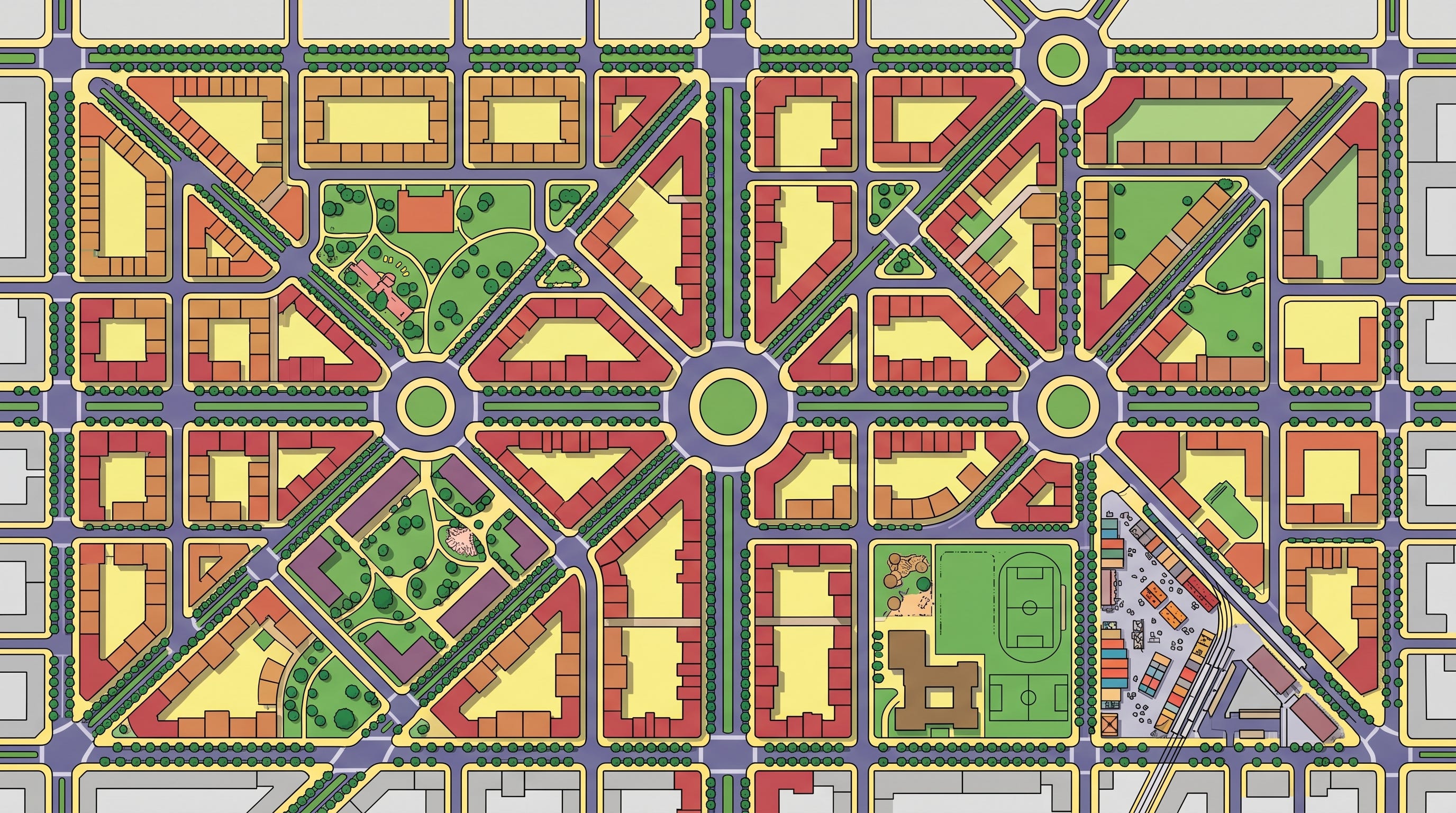
A master developer, institutional landowner, or new-town builder that controls both the land and the entitlements can implement this model today.
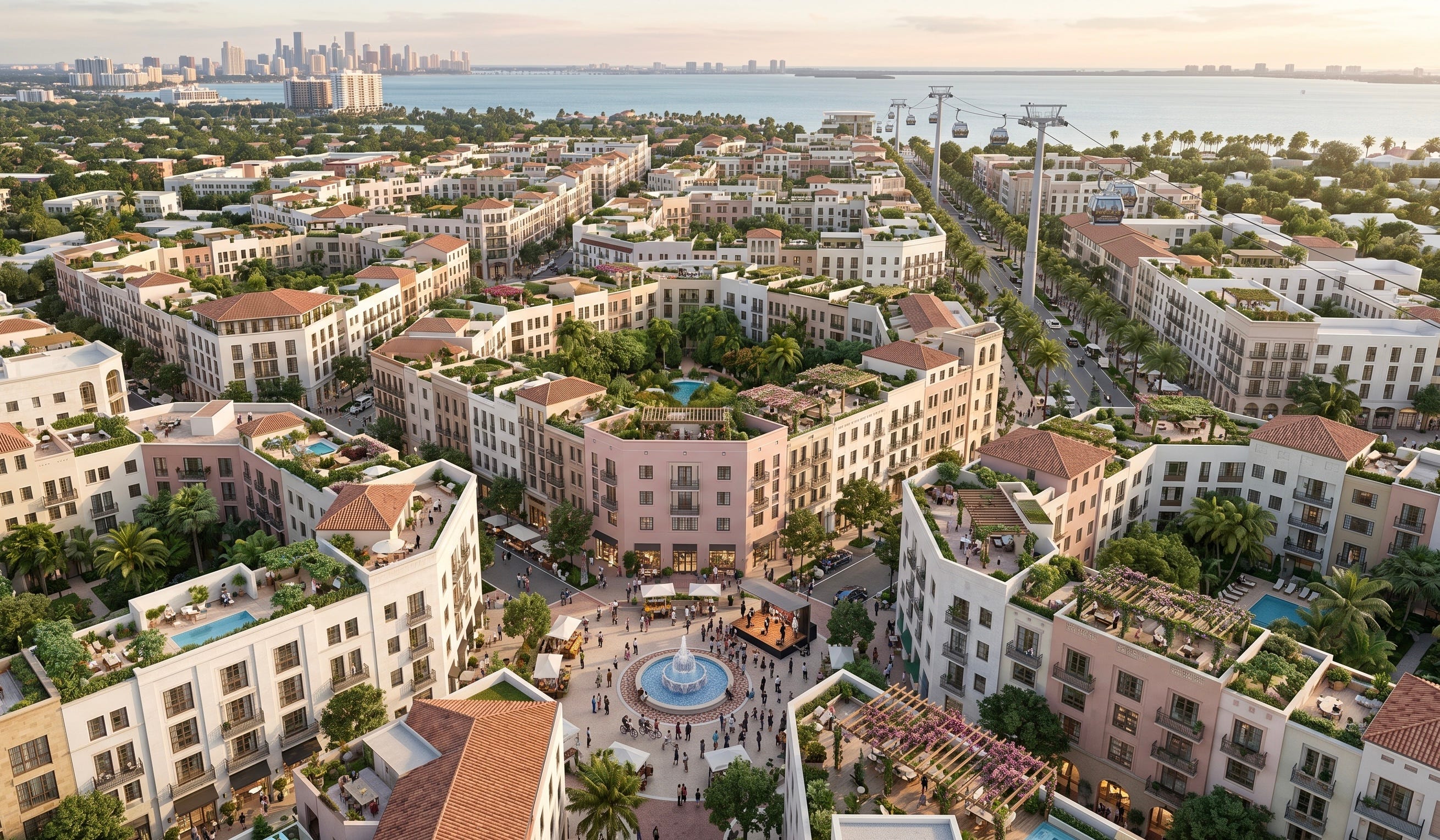
The landowner can divide the site into medium-sized parcels organized around shared courtyards. The master developer establishes the streets, utilities, parking strategy, parcel dimensions, architectural rules, and courtyard governance. Individual buildings can then be constructed directly, sold to other builders, or delivered through joint ventures.
This approach also has practical financial advantages. Instead of committing all the capital up front to one enormous structure, smaller buildings can be financed and constructed in phases, allowing the neighborhood to grow in response to demand. The first buildings may sell or lease at prices comparable to the surrounding area, but as streets, shops, courtyards, public spaces, and neighboring buildings come online, later buildings benefit from the value created by the earlier phases. The neighborhood itself becomes an appreciating asset. Early buildings prove the market, while later buildings sell into a more complete, desirable place and may achieve substantially higher returns. Capital is deployed incrementally, risk is staged, and different parcels can serve different markets (family condos, rentals, affordable housing, senior housing, cooperatives, offices, shops, or live-work units) without disrupting the coherence of the whole, because the street grid, parcel framework, courtyard structure, and design rules hold the neighborhood together.


The resulting homes should also compete more effectively than conventional corridor apartments. Wide, shallow buildings can provide better daylight, larger window walls, quieter courtyard-facing rooms, frequent entrances, and a clearer relationship between the home, street, and garden. These qualities can produce stronger sales and rental comparisons than deep, double-loaded corridor buildings on otherwise similar sites.
The landowner can divide the site into medium-sized parcels organized around shared courtyards and a coherent street network. The master developer establishes the common framework: streets, utilities, parking strategy, parcel dimensions, architectural rules, courtyard governance, and shared maintenance. Individual buildings can then be constructed directly, sold to other builders, or delivered through joint ventures.
This is not theoretical. It is close to how many of the best contemporary Nordic districts are being built.
In Nordhavn, Copenhagen, By & Havn acts as master developer: setting the plan, infrastructure, parcel structure, design expectations, and ground-floor strategy, while individual buildings are delivered by many different actors. The result is not one megaproject, but a coordinated district composed of many distinct buildings.
In Malmö, Bo01 in Västra Hamnen used a Quality Programme to coordinate many developers and architects within one shared urban framework. The city allocated individual building sites, set sustainability and design requirements, and required developers to work within common rules while still allowing architectural variation. More recently, Varvsstaden shows a similar logic at the district scale: a former industrial site is being transformed over decades into a mixed urban quarter with housing, workplaces, schools, public space, and reused industrial fabric.
In Gothenburg, Masthuggskajen is another useful precedent. The city and Älvstranden Utveckling coordinate streets, parks, quays, infrastructure, and district goals, while a consortium of builders delivers different parcels: rental housing, condominiums, offices, hotels, cultural space, preschools, restaurants, and ground-floor commercial uses. The neighborhood is coordinated, but the buildings are not all produced by one actor.
Stockholm Royal Seaport offers an especially relevant block-level example. In the Stora Sjöfallet block, multiple developers received land allocations within the same block and were required to meet shared sustainability, stormwater, and green-courtyard standards. The block contains several buildings, different ownership structures, a preschool, green roofs, solar panels, and a carefully designed shared courtyard.
These examples show that coordination does not require consolidation. A city or master developer can establish the rules of the game, build the infrastructure, and protect the public realm, while many smaller actors build within that framework.
The platform provides streets, utilities, access, parcelization, courtyard rules, shared parking, and design standards. The individual buildings provide variety, ownership opportunities, architectural difference, and phased delivery.
This lets a large site become a neighborhood incrementally. One building can be rental, another condominium, another cooperative, another affordable housing, another a resident-led project, another a corner building with shops below. The district can be coherent without becoming monolithic.
The master plan provides continuity. The parcels provide diversity. The courtyard and street network hold it all together.
Most importantly, the master developer is not merely producing a collection of new units. The developer is creating a durable neighborhood. When the underlying urban structure is good, buildings can be maintained and adapted over generations. A development that is valuable enough to justify investment over the years.
3. Incremental infill by local builders and building groups
Courtyard urbanism does not always require an entire block to be redeveloped at once. It can also emerge parcel by parcel within existing cities. A local builder might redevelop a 60-foot-wide lot with a 12- or 20-unit apartment building. A cooperative might commission the neighboring parcel. A group of households could develop a small condominium building designed around their needs. An affordable-housing provider might build another portion of the block, while a larger developer completes the corner with shops below.
This does not automatically produce one large, shared courtyard. That usually requires coordination across multiple parcels and owners. But even on a single medium parcel, the rear open space can be dramatically better than the small “postage-stamp” yards that many city homes offer, if they offer outdoor space at all. A 2,600- or 3,600-square-foot rear garden shared by 10 to 20 households is not the same as a full block courtyard, but it is still a meaningful piece of green, semi-private outdoor space: large enough for trees, tables, children’s play, and gardens.
Each project can have its own architect, financing, ownership structure, and construction schedule. The buildings do not need to look identical (although “cookie cutter” is fine if the pattern is good!). They need to follow a shared set of urban rules: build to the street, meet the neighboring party walls, maintain a shallow floorplate, and preserve the rear portion of the site as part of the block’s green interior.
This path lowers the threshold for participation. A builder does not need to acquire an entire block or raise capital for hundreds of homes. Residents can become active commissioners rather than merely choosing among standardized units. Local architects and contractors can participate. One delayed or failed parcel does not stop the rest of the neighborhood from moving forward.
Over time, separate projects can begin to form a unified courtyard block. The block becomes a platform that coordinates many buildings, owners, and development models without requiring a single institution to control everything from the beginning.


Civilizing intensity
Cities will always be intense.
That intensity is not a flaw to be engineered away. It is the source of much of the proximity, specialization, culture, exchange, discovery, and freedom that all make urban life valuable in the first place.
We get to choose what form the built environment takes, and we have to understand that there are consequences both of solving the problem of intensity with sprawl and of only using megaprojects to deliver density.
Sprawl creates logistical burdens on households and denies them access to all the amenities and opportunities and freedoms of the city. Megaproject urbanism preserves proximity but fails to create cities capable attracting lifelong residents.
Courtyard urbanism is a way of arranging or composing the city so that public streets remain active spaces of serendipity and opportunity, so that private homes remain quiet and secure, and shared green courtyards created a bounded social world between them, where young children can play safely with friends.
The courtyard block is not a retreat from urban intensity. It is how we civilize it.
From Framework to Implementation
This framework is now being tested on an active opportunity in the Greater Boston area.
The site is in an inner-suburban community with existing mixed-use and multifamily zoning, fragmented parcels, underused commercial land, and a strong local interest in walkable village-center development. The opportunity is to convert a conventional auto-oriented district into a compact, mixed-use courtyard development organized around shared open space, smaller buildings, active ground-floor uses, and a more coherent public realm.
The work is still preliminary. It involves entitlement analysis, feasibility testing, land-assembly strategy, parking scenarios, public-benefit modeling, and conversations with local stakeholders.
But the early findings are extraordinarily promising.
Here are anonymized comments from an initial presentation to the local planning board:
Planning Board Chair
“I like this. I like this a lot… this is very exciting… I don’t think [an opportunity like this] is that frequent. So this is really good.”
Planning Board Member
“I love everything you have said about the vision. It all makes sense to me.”
Planning Board Member
“Considering it’s allowed, it’s in our bylaws, to me, this is part of the point of having these flexibilities.”
“For me, the height makes sense, especially if it’s further back… maybe not all the way to the street, depending on the design.”
Planning Board Member
“It does speak to some of the elements we’ve been discussing in the comprehensive plan… village centers… missing middle housing… creation of open spaces and… third spaces… for gathering.”
“I think it turns an underused, not particularly attractive area of town into… a benefit in terms of open space, in terms of housing… bringing a little bit more vitality… I think this has the potential to do that.”
The zoning appears unusually compatible with courtyard urbanism. The land-assembly logic is plausible. Preliminary financial scenarios suggest that development will be very successful across multiple scenarios. The public-benefit proposition is legible: new housing, better use of underperforming land, more walkable local commerce, and the possibility of financing meaningful public open space through future incremental value rather than existing municipal funds.
In many American suburbs, courtyard development is not impossible because the form is unknown or because residents categorically reject it. It is absent because no one has done the work of assembling land, reading the code closely, testing the economics, designing the block, solving parking, and translating the project into a public proposition that local officials and residents can understand.
The form is centuries old. The contemporary work is making it legible, financeable, buildable, and approvable under North American conditions.
We are currently looking for local partners, implementation partners, and investors interested in this Greater Boston-area opportunity.
This may include:
local developers or builders;
landowners with adjacent or related property interests;
architects, engineers, or entitlement professionals familiar with Greater Boston suburbs;
civic or municipal partners interested in compact, walkable, family-friendly development;
capital partners, co-GPs, or project investors;
mission-aligned organizations interested in applying the courtyard framework to other sites.
If you would like to learn more, discuss the Boston-area project privately, or explore how this framework could apply to another site, please get in touch:
projects@courtyardurbanist.com
Reading Peter Calthorpe's book, "The Next American Metropolis" and then traveling in Europe inspired me to go to graduate school for city planning.
Then I realized almost every course was centered around traffic flow, subdivision requirements, and enabling more suburban sprawl.
We need planning courses centered around this article and your courtyard presentations. Have you talked to colleges about this?
This wonderful post inspires a couple of thoughts:
1. There's an intentional community called Noasis in SF whose built setting feels very much like your vision. They have a lovely inner courtyard which they use not only as common green space but as a community gathering space for nerd social events drawing on their broader techie circle (guest speakers, debates, panels on political, scientific, and cultural topics). If you've not already connected with them I can put you in touch with one of their residents and event organizers if you're interested in connecting; they seem very value aligned with you.
2. Last month I visited some friends in Paris who live in a very "courtyard-ish" high rise building, on the rue Mouchotte right by the Gare Montparnasse. It's about 20 stories tall and very long but quite shallow, has businesses and parking at ground level, and then a residents' terrace a level or two up that functions much like a courtyard. The 20 story part of the building is then served by a bunch of parallel elevators and staircases, such that around each elevator/staircase pair there are only 2-3 apartments per floor; no long corridors like in a typical big high rise.
My friends say this layout produces real community, since you naturally get to know the quite small set of people who use the same elevator as you, and a feeling of reasonable quiet and privacy even within the high rise context. And it's remarkable how good a dual-aspect, shallow floor plate apartment layout can be even in a high rise setting: theirs is only about 70 square meters, has two bedrooms, but really feels like a little house and a suitable place for a family. So there's a lot about this vision of civilized density that is adaptable even to places where land values dictate building higher than the 4-6 story courtyard model.