

Courtyard Urbanist is the leading newsletter for architects, planners, developers, and enthusiasts bringing family-friendly courtyard blocks to American cities.
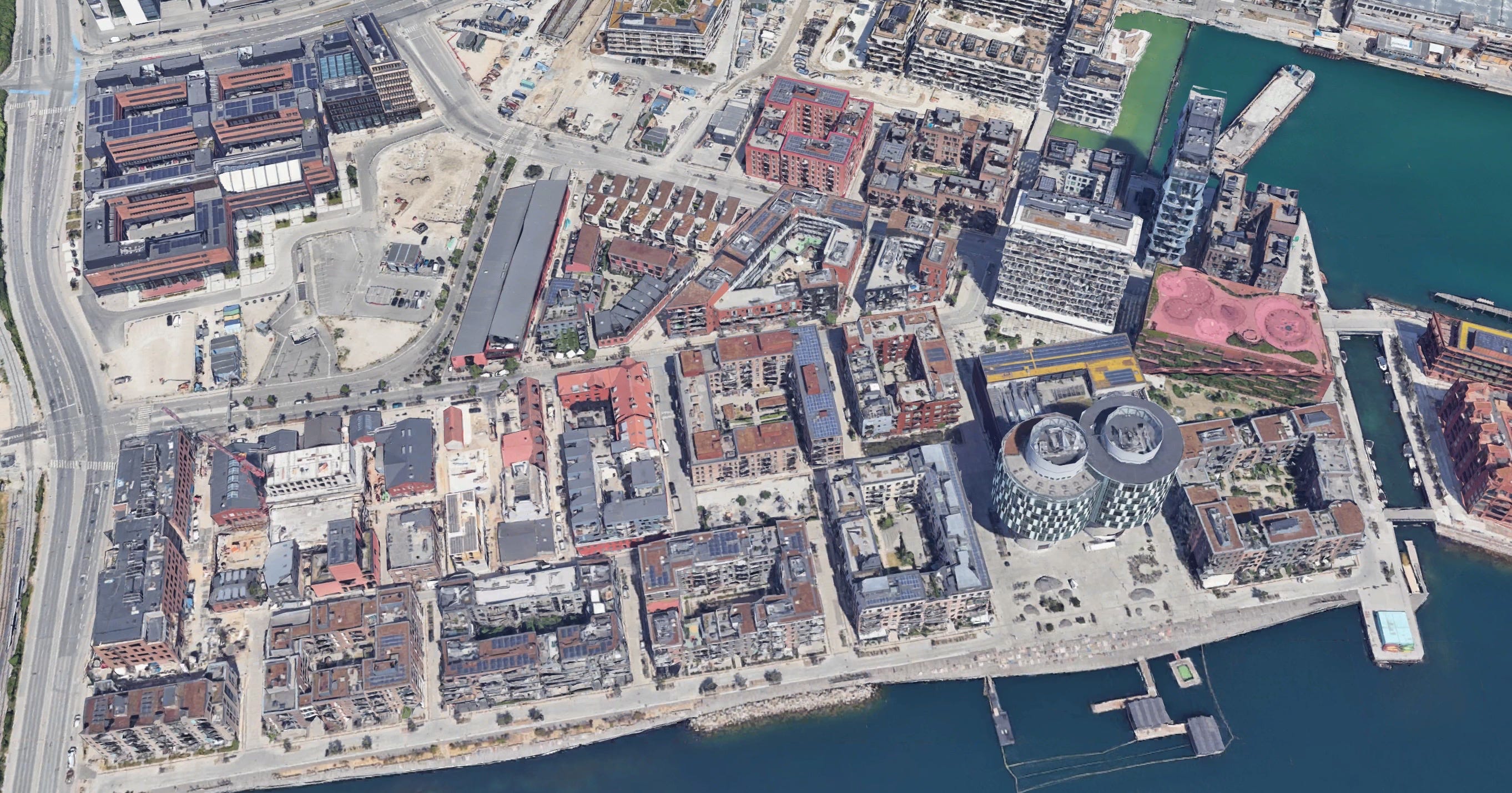
Nordhavn is one of Europe’s most ambitious urban redevelopment projects: a transformation of an industrial harbor into a new city neighborhood.
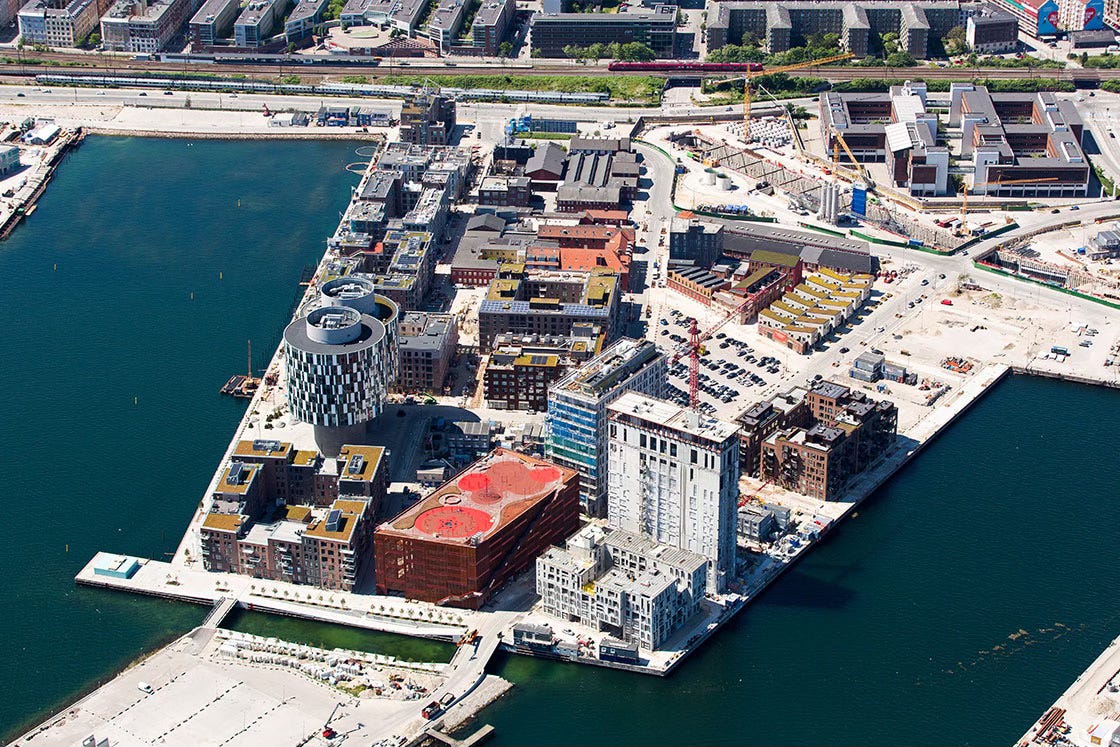
Across roughly 890 acres of former port land, planned for 40,000 residents, 40,000 jobs, and about 43 million square feet of development, it has been designed as a complete neighborhood organized around daily life: how people move, what they encounter, and how easily they can reach what they need.
Led by By & Havn, a public development entity created by the City of Copenhagen and the Danish state, the project has been on going since the early 2000s through a model of centralized land control, major upfront infrastructure investment—including the extension of the Copenhagen Metro—and phased parcel sales to private developers.
The result is a rare contemporary test case: a district that demonstrates how to build walkable, mixed-use urbanism at scale, while also revealing why high-cost, coarse-grained development struggle to produce housing and neighborhoods that work for diverse households across the life cycle.
1. The Good — a new walkable neighborhood by design
Nordhavn begins with the noble premise, which most modern development gets wrong, that planning should start with people rather than cars.
Lars Riemann, the Ramboll planner who led the project, described the inversion that defined Nordhavn’s approach:
“If you go back in time, when you did city planning, you would say: ‘Where do the roads go? How do the cars get from A to B?’
That was your main priority.
Then we’d put bike lanes next to the roads, pedestrian areas next to that and so on.
Here, we did the opposite. We said: ‘What does a walkable city look like? What do the streets look like? What do people like to experience as they are walking?’
At the end, it was like: ‘OK, so now that we have all this infrastructure for walking, biking and public transit, is there still some room for cars?’”
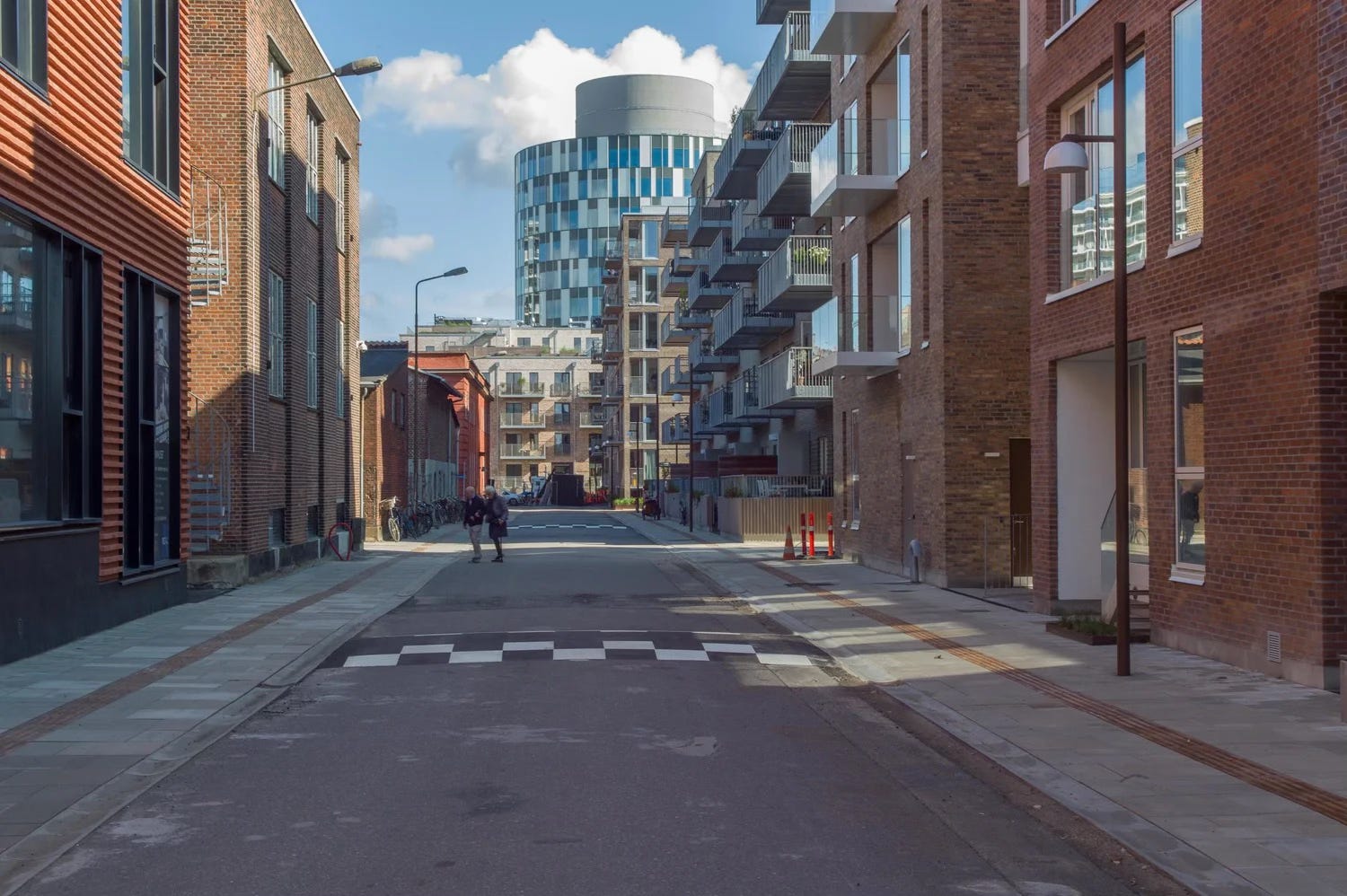
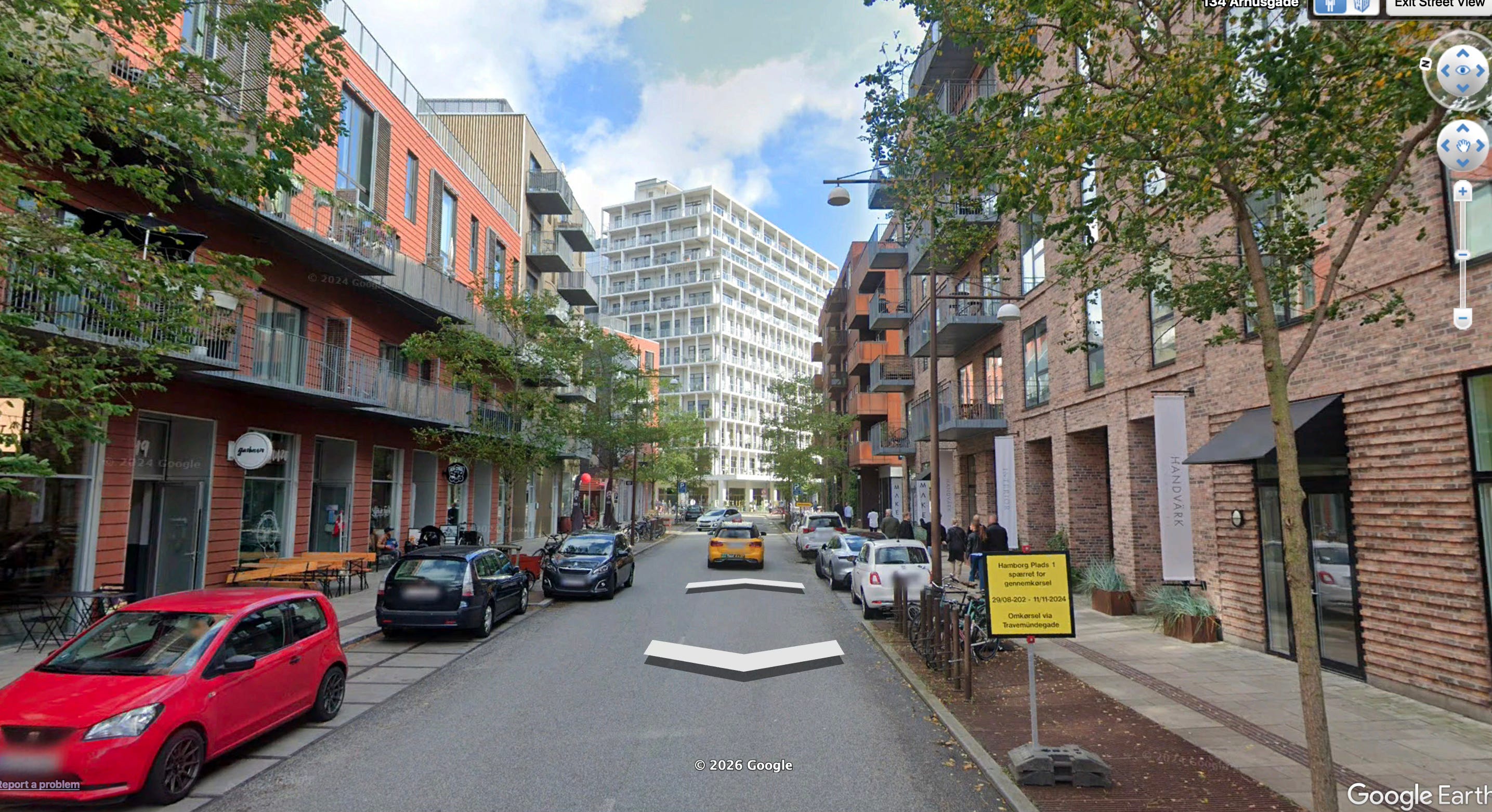
The result is visible in the street itself: cycle lanes as wide as car lanes, streets that are quiet not because they are empty but because there is little traffic noise, and cars that appear occasionally rather than constantly.
This approach differs fundamentally from the American pattern, where cities attempt to retrofit walkability onto road networks that were designed around cars from the outset.
“Easy reach” was defined as the five-minute neighborhood. Around each metro station, planners drew a quarter-mile radius and treated that circle as the basic unit of urban life. Within that distance are housing, shops, schools, childcare, and public space, arranged so that everyday needs are consistently within reach.
A quarter mile is not an arbitrary threshold. It is the point at which walking becomes habitual—folded into daily routines rather than treated as a separate activity. When destinations are this close, walking is often easier than driving. At this scale, proximity begins to shape behavior, and the neighborhood becomes something people experience continuously rather than occasionally.
The results are visible in Århusgadekvarteret, the first fully realized neighborhood within Nordhavn, where daily life has already taken hold. People live there and use the neighborhood naturally.
That outcome reflects a series of deliberate decisions. By & Havn, the public master developer, retained control of ground-floor spaces and curated tenants to establish a coherent street life early on. Buildings combine multiple uses, allowing different activities to share the same footprint and extend activity across the day. Substantial early investment—on the order of DKK 20 billion (~$2.9 billion)—in infrastructure, including the Copenhagen Metro M4 line, ensured that the district was integrated into the broader city from the outset.
By & Havn sold development parcels to private builders but retained ownership of the ground-floor commercial spaces. Managing director Anne Skovbro explained the strategy directly:
“When we sold the plots, we bought all the ground floors back, so we could design and decide what kind of shops we would like to have there in order to create this vibrant urban environment.”
From there, tenants were actively curated. The urban strategy firm BRIQ identified operators for specific spaces and invited them into the district.
One example: for the bike shop on the main street, they approached Pas Normal Studios, a premium cycling brand that had not yet opened a retail location. The result is not just a shop, but a social hub—combining retail, café, and cycling club in a single space.
Peter Bur Andersen’s diagnosis of why new districts often fail is blunt: governments provide transport, parks, and cultural amenities, then “just leave the rest to market forces … and therefore, we often see that these new city districts are born without a soul.”
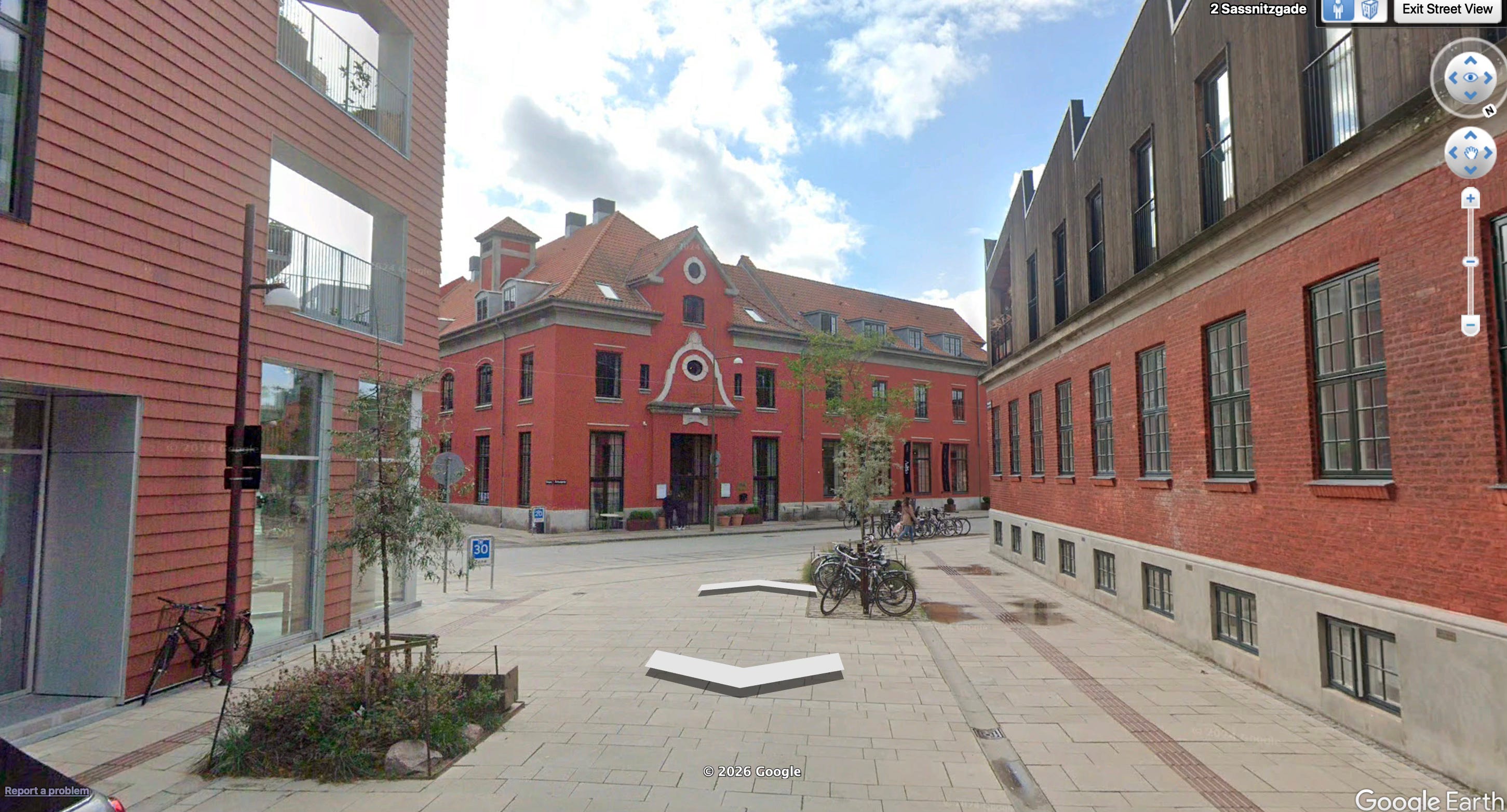
There is something right in this diagnosis, but it is not the whole story. In many cases, what is described as “market failure” is actually the result of how development has been structured: large parcels, high rents, uniform retail bays, and timelines that favor national chains over small, local operators. Under those conditions, the outcome is almost guaranteed to feel generic.
At the same time, there is a valid point about essentials. A functioning neighborhood requires a baseline set of uses—grocery stores, pharmacies, childcare, and basic services—that behave more like public goods than pure market commodities. It is reasonable to treat them that way, whether through subsidy, land control, or deliberate placement, because the entire neighborhood depends on their presence.
Beyond that baseline, however, the market remains a valuable signal. It reveals what businesses can survive, what residents value, and how a district evolves over time. An overly-curated neighborhood is doomed to die of banality. The goal is to structure the environment so that a wider range of smaller, local actors can participate. When that happens, the neighborhood feels real because it has been tested and “worn in” over time.
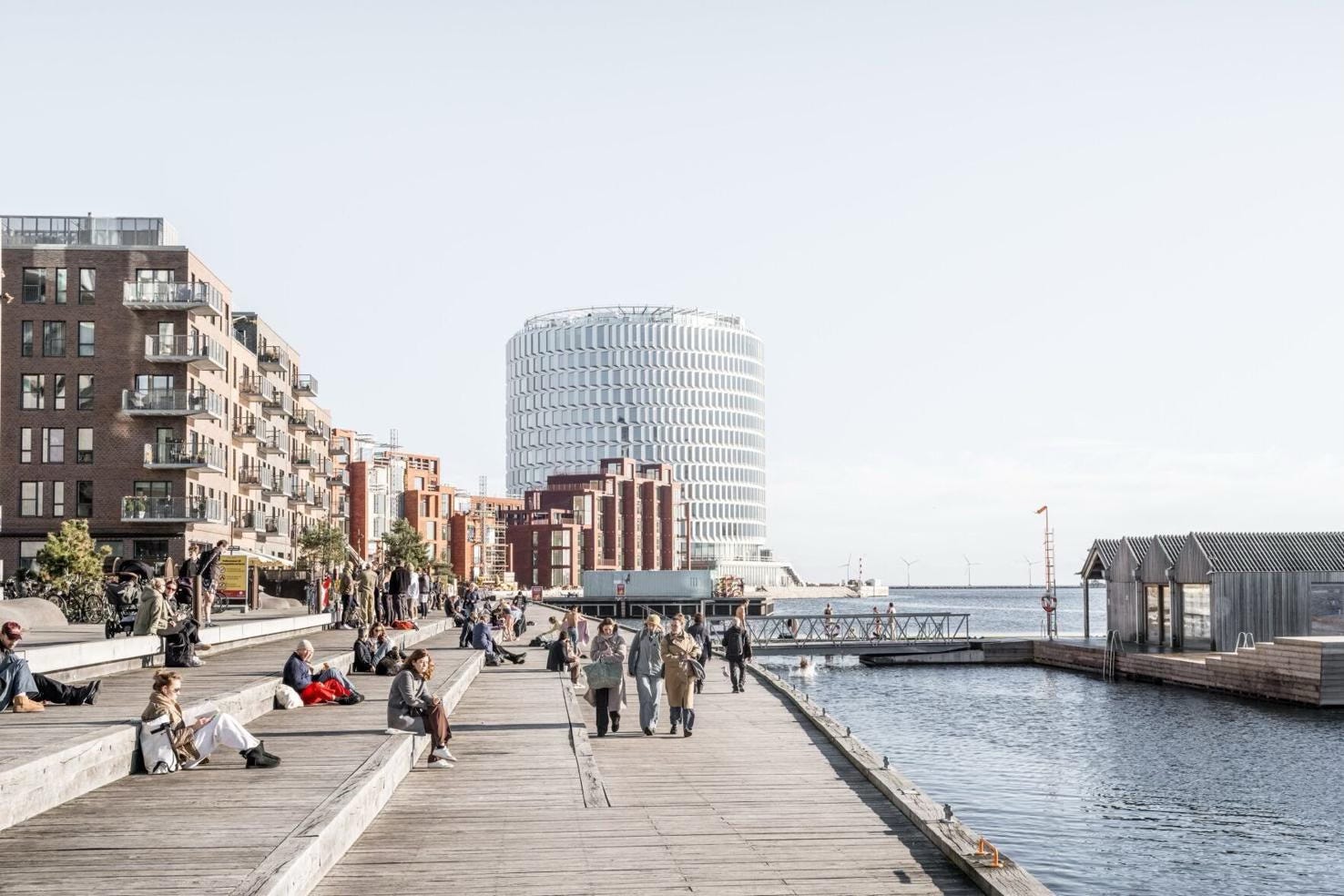
Overall, Nordhavn succeeds as a model of pedestrian-first planning, of large-scale land reclamation, and of a public development entity using its control over land and leasing to create the conditions for urban life.
2. The Bad: Nordhavn works through a model that is expensive, coarse-grained, and difficult to replicate.
Converting a former industrial harbor into a neighborhood is inherently costly. Before any building could begin, the site required deep piling, soil stabilization, and extensive waterfront engineering. Plus, there was the front-loaded infrastructure strategy—on the order of DKK 20 billion (~$2.9 billion)—including early delivery of the metro. The district is exceptionally well integrated into the city, but it starts with very high fixed costs.
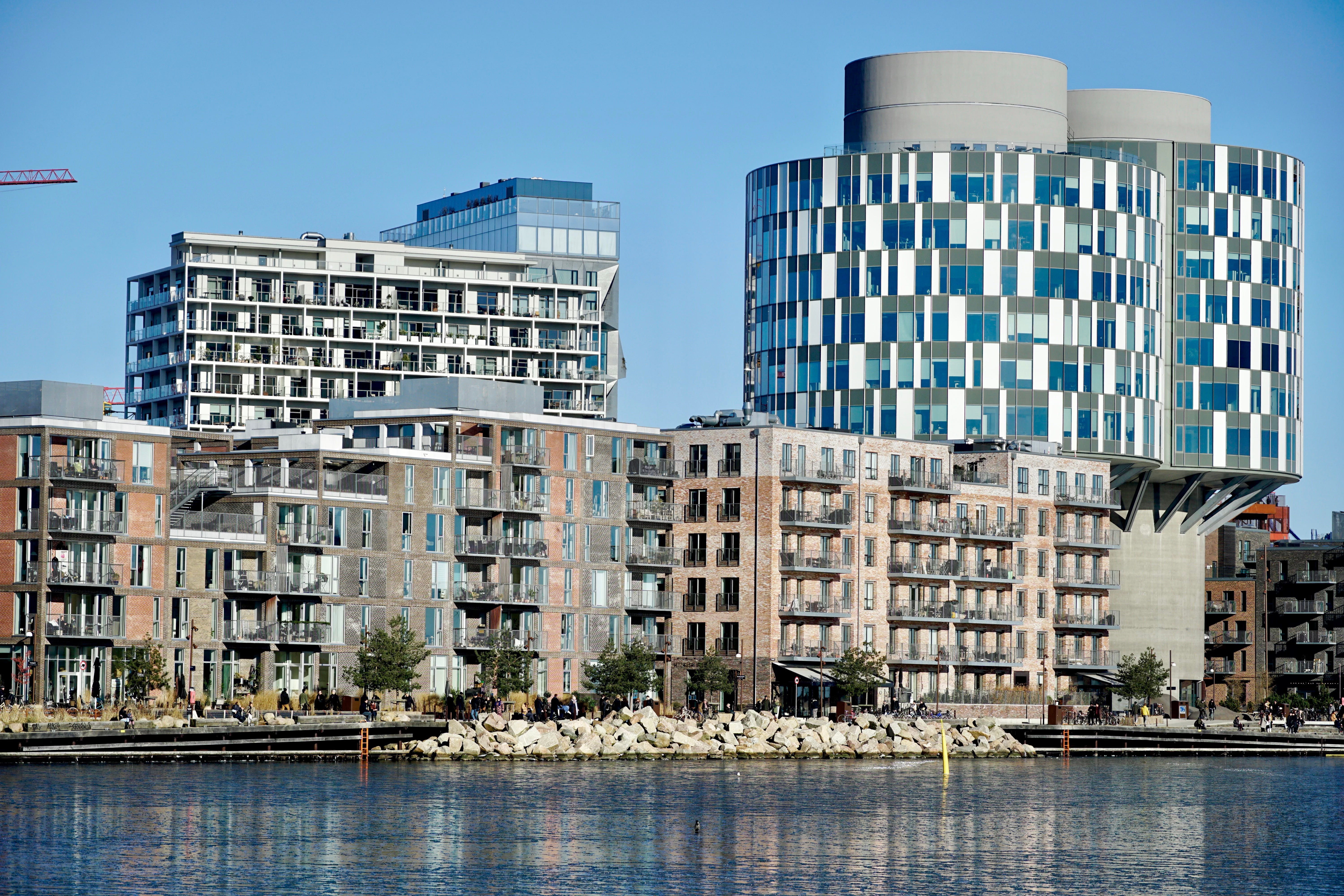
Those costs shape the structure of development itself. Because so much capital must be deployed upfront and recovered, the land is released in large parcels to well-capitalized buyers. Development consolidates into fewer hands: large institutional developers are needed to absorb risk, deploy capital at scale, and generate the proceeds required to repay those investments. Buildings are correspondingly large, high-spec, and delivered as single coordinated projects, with blocks assembled all at once rather than incrementally. The combined weight of land, infrastructure, and construction costs pushes rents and sale prices upward, making the neighborhood financially coherent only at elevated price points. Today, Nordhavn ranks among the most expensive addresses in Copenhagen, with property values roughly 20% above the city average. The result is a district built in large pieces. It is not fine-grained. It is coarse.
Dominated by large-format, expensive buildings, it is no surprise that Nordhavn skews toward affluent, highly educated professionals, with a notable presence of expatriate families. A fee-paying international school opened in 2017, reinforcing that orientation, while secondary school students still commute out of the neighborhood.
Affordable housing in Nordhavn is almost entirely dependent on the public social housing program. The development itself produces little naturally low-cost housing. Copenhagen’s citywide target is 30% social housing, but Nordhavn is currently at less than 20%. Anne Skovbro acknowledged the risk directly: “There is a danger of that [becoming a gated community]. But that’s why social housing is an important part of it.”
The absence of naturally low-cost housing also makes it difficult to accommodate middle-income families and elderly residents. Families typically need larger units and face higher overall living costs, increasing their housing burden. Older residents, often living on fixed or reduced incomes, face similar constraints. Both groups are essential to a complete neighborhood. Without a base of naturally lower-cost housing, it will be difficult for Nordhavn to fully support these life stages over time.
Historically, Copenhagen achieved that kind of social diversity through dense, low-cost buildings that worked for people across the life cycle. Neighborhoods like Nørrebro and Vesterbro were built as fine-grained fabrics of small courtyard apartment buildings: simple, repeatable structures that were inexpensive to construct and maintain. Because costs were low and buildings were small, many actors could build at once. Development was not only incremental; it was parallel and rapid.
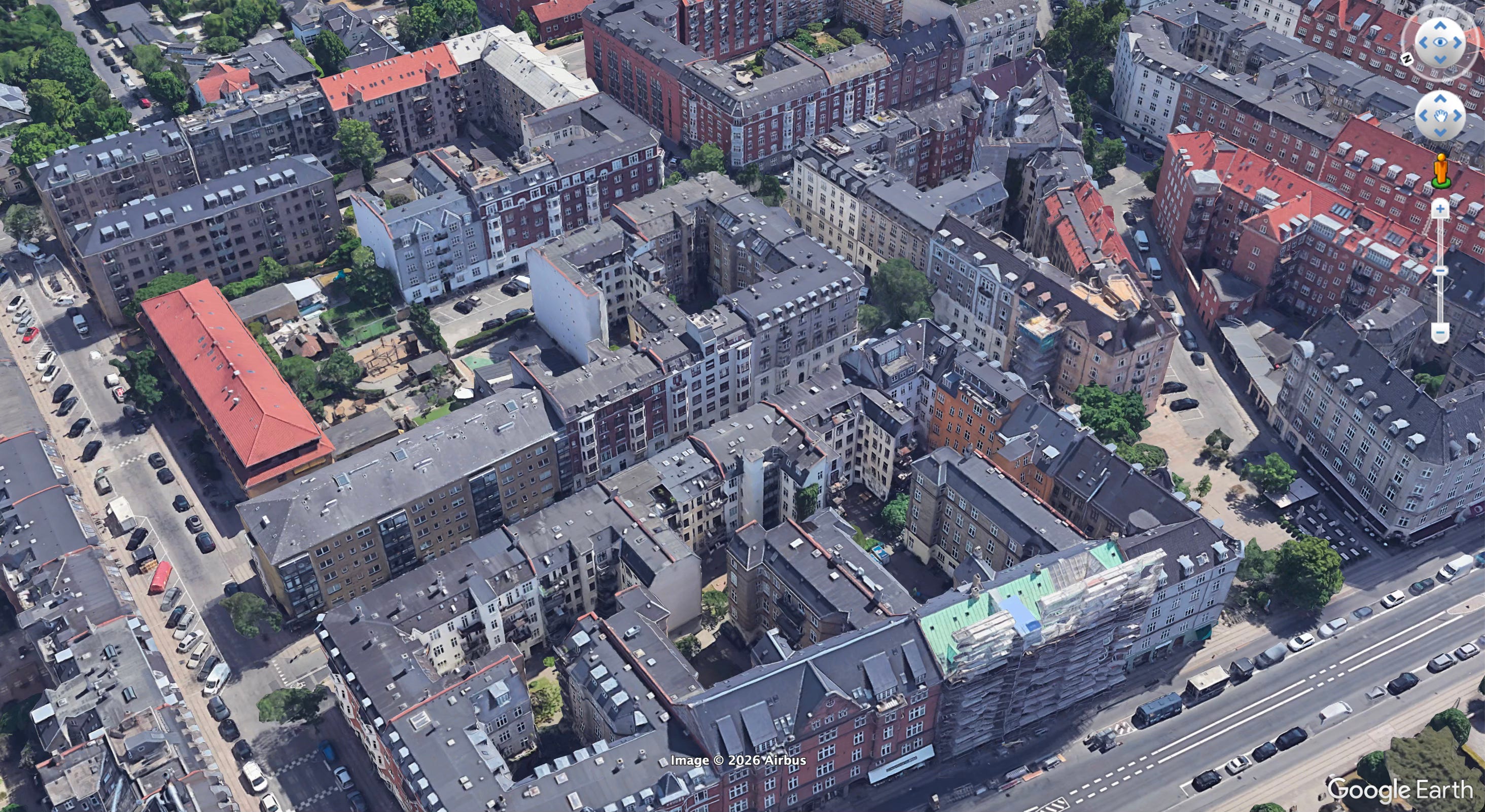
Over time, that structure produced a durable mix. Some buildings were renovated and moved upmarket, while others remained modest. Prices diverged within the same block. Ownership was distributed. Local equity accumulated. And a wide range of households (across incomes and life stages) could live side by side.


In those neighborhoods, diversity was not programmed. It emerged from the underlying structure of the building stock and the passage of time.
Nordhavn, by contrast, delivers quality and coordination at the cost of that structural flexibility. Its coarse grain and high entry costs limit who can participate, both as residents and as builders. It is a successful neighborhood, but one whose social mix is managed rather than generated, and whose form may make long-term, organic diversity harder to achieve.
3. The Ugly: “no greenery” and “soulless architecture”
For all its planning rigor, the district can feel bleak and impersonal. Two criticisms come up again and again: there isn’t enough everyday greenery, and the architecture, while competent, can feel bland or “soulless.” Neither is accidental. Both follow from the same underlying structure: large parcels, institutional delivery, and buildings optimized for coordination and finance rather than affordability and livability.
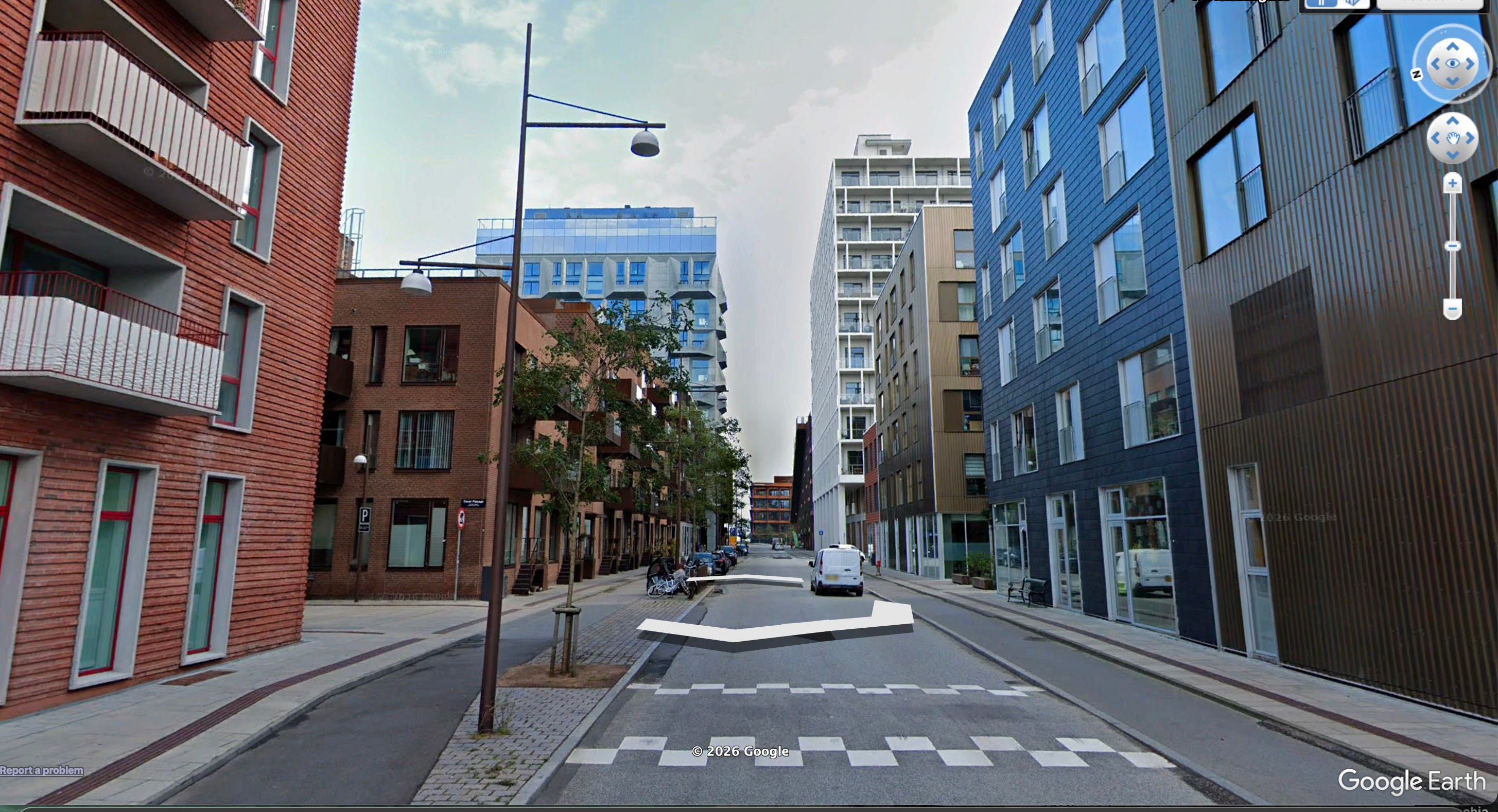
Start with the lack of green space. The outdoor space is mainly linear public space rather than embedded, usable green at the level of daily life. Residents can walk along the water, but there are fewer places to simply sit on grass, let children play informally, or occupy a sheltered, planted space close to home, away from the high winds. Public reactions consistently point to this gap. In one discussion, a visitor noted there were “no notable green spaces” , while another prospective resident worried about “the absence of the green zones / parks” . Others describe the district as “pretty much only… concrete with no green spaces” . The recurring complaint is the absence of ordinary green woven into the neighborhood itself. Many complain of the high winds and lack of shelter.
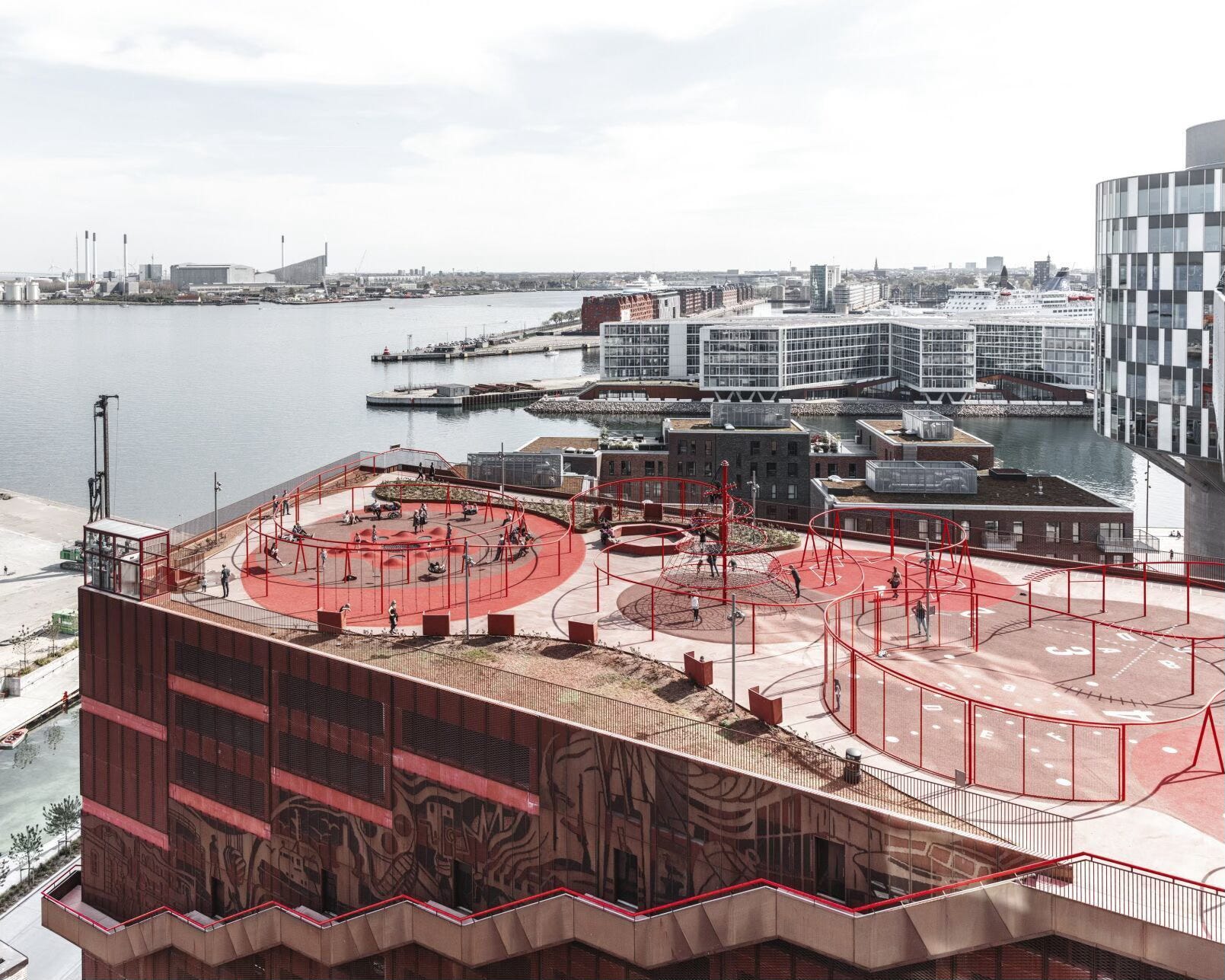
To its credit, the city recognizes this gap. A major new park—Nordør – New Park—is planned as a large coastal landscape intervention. That will help. But, as I often point out, a public park is not a replacement for a backyard. Parks are wonderful, but they are not conveniently accessed from the home, they are not sheltered from the wind. They do not satisfy the need for a small, private outdoor space where children can play, where one can garden, keep a bike shed, etc.
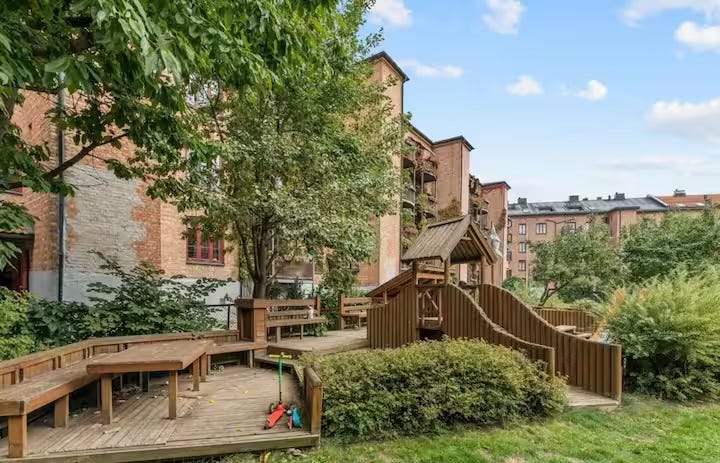
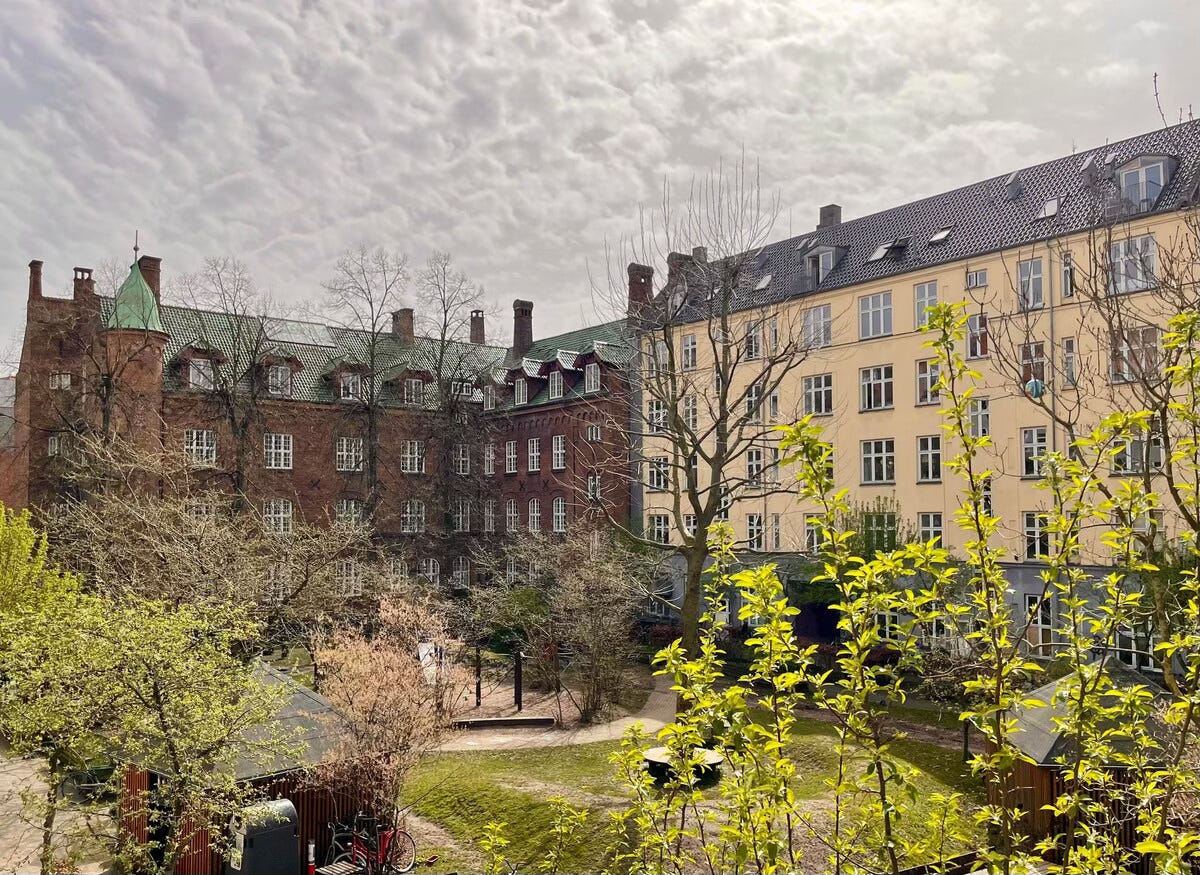
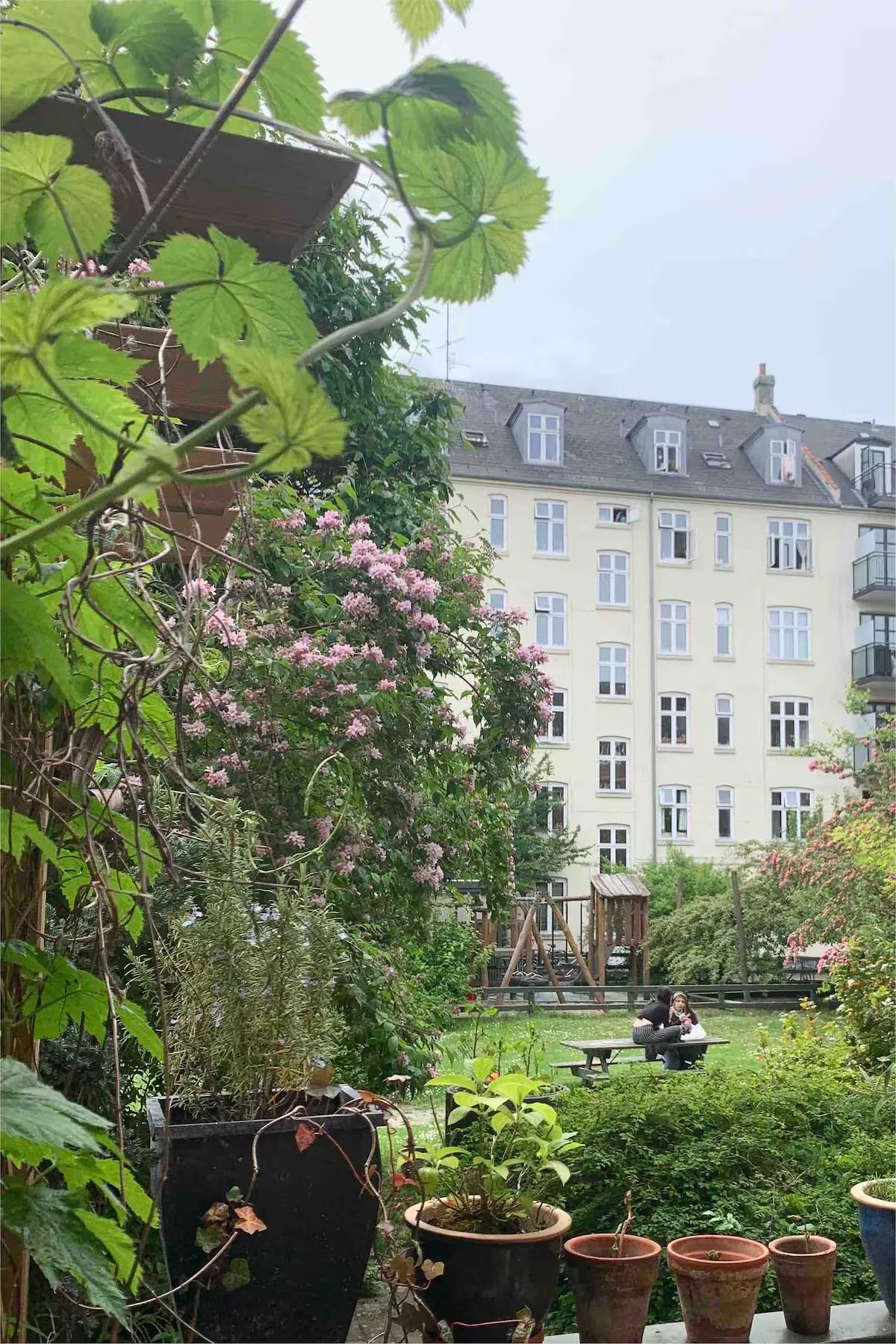
This is where the contrast with courtyard urbanism becomes sharp. A courtyard block distributes green space continuously, at the scale of daily life. Instead of concentrating it in a few large parks, it places it inside the block—semi-private, sheltered, and directly accessible to residents. Green space is not something you travel to; it is something you live with.
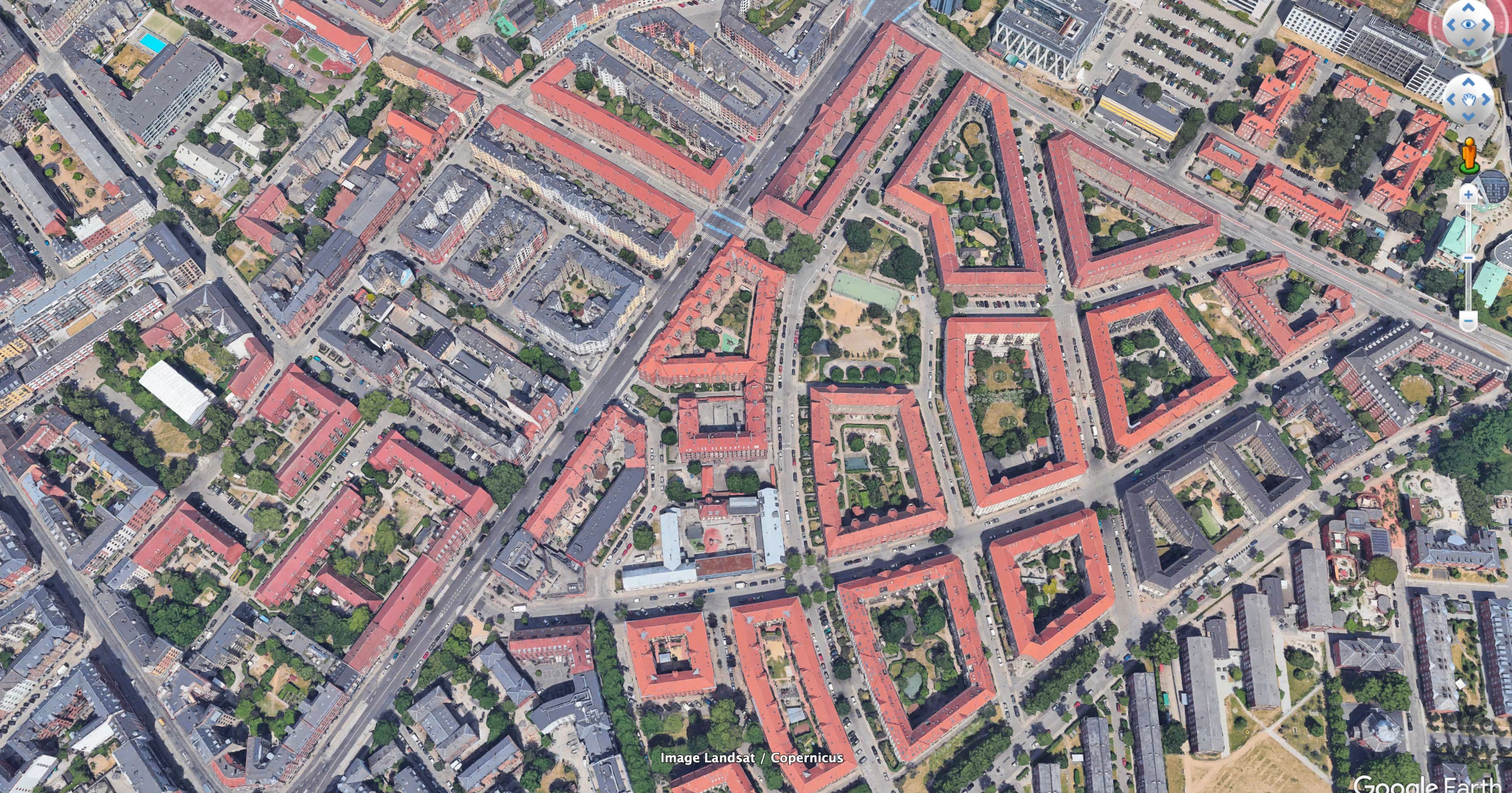
The building form in Nordhavn helps explain the gap. Large, institutionally financed buildings tend toward larger footprints and deeper floor plates. That can be efficient from a development standpoint, but it works against the geometry that produces good interior open space. Where perimeter blocks exist in Nordhavn, the courtyards are often compromised—too shallow, too fragmented, or too residual to function as true shared gardens. Whatever efficiencies come from larger buildings are often purchased at the cost of usable, integrated green space.
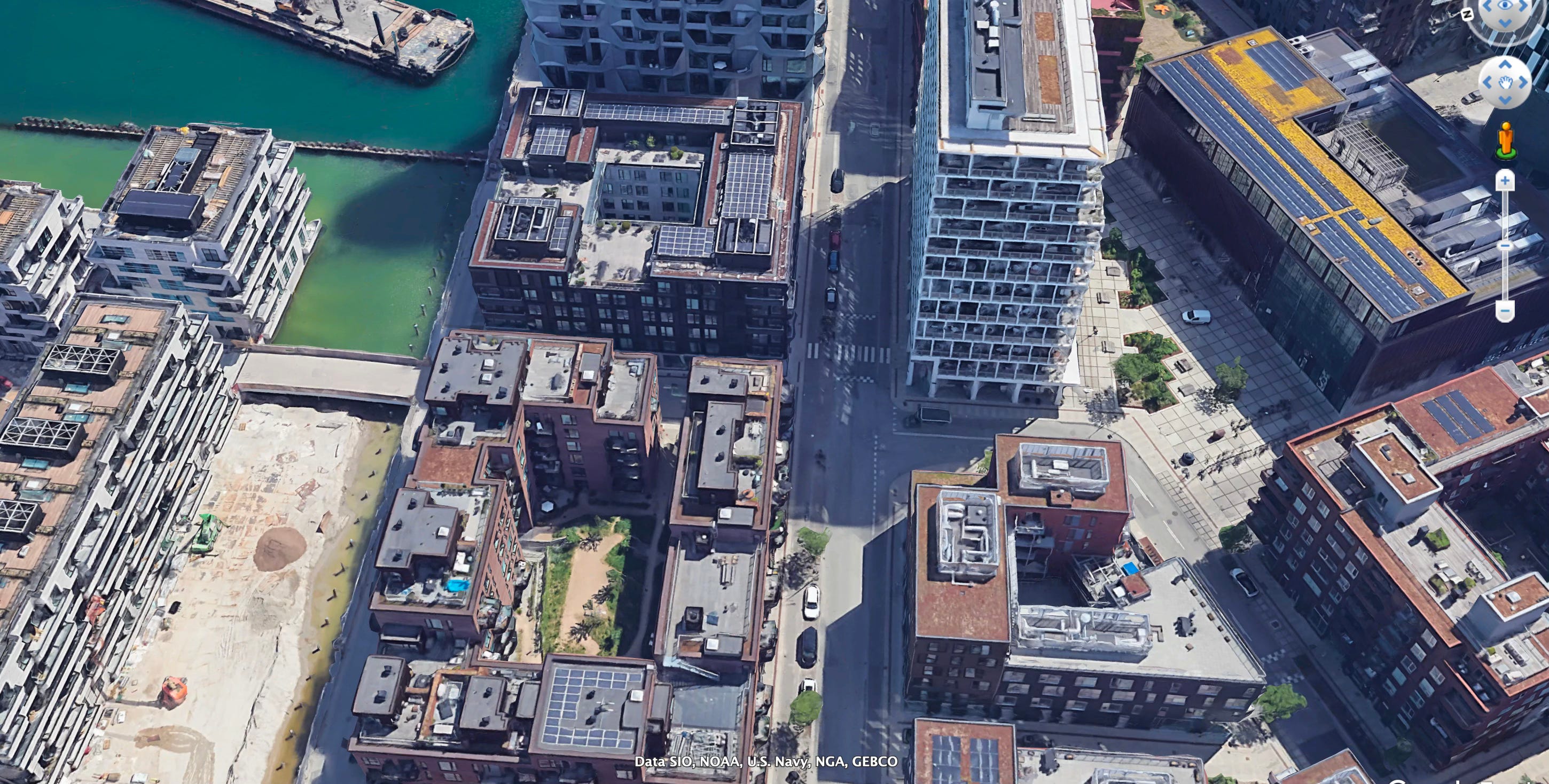
The same structural logic shows up in the architecture. The “soulless” critique is subjective, but it is not random. What people are reacting to is a district built in large increments by a small number of actors, within a controlled design framework. The result is coherent, but also relatively uniform. Materials are consistent, details are precise, and façades are well-composed—but the overall effect can feel flat. There are fewer irregularities, fewer surprises, and fewer signs of incremental change. Public reactions often converge on this point. In one discussion, a commenter described Nordhavn as “utterly soulless,” while another called it “drab, dreary and devoid of charm” (reddit.com). In another thread, a visitor remarked that it “feels like a place designed all at once, rather than something that grew over time” (reddit.com). These reactions are subjective, but they point to a consistent perception: a neighborhood that is well executed, but lacking the layered irregularity and incremental texture that give older urban districts their sense of character.
Charm is easier to produce in fine-grained environments. When buildings are small and ownership is distributed, variation emerges naturally. Different builders, different timelines, and different constraints produce a layered streetscape almost by default. In coarse-grained development, that variation has to be simulated, and it rarely feels as convincing. Larger parcels mean fewer authors. Fewer authors mean fewer deviations. And fewer deviations mean less texture over time.
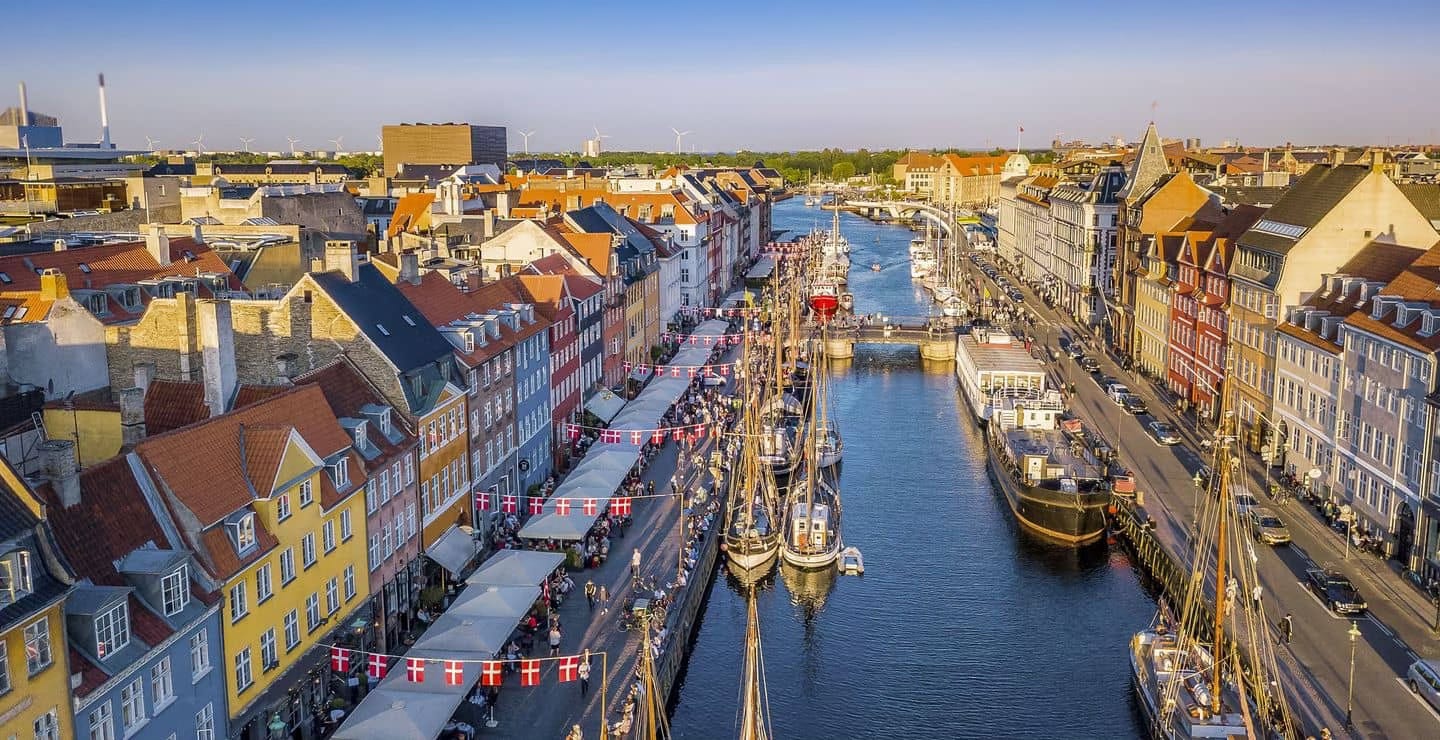
This is not a failure of design talent. It is a consequence of the development model. Large parcels, high costs, and institutional capital produce buildings that are optimized for delivery and performance, not for incremental richness. The same system that made Nordhavn coordinated and efficient also made it harder for the neighborhood to develop the small-scale complexity that people associate with warmth and character.
So the “ugly” side of Nordhavn is not that it lacks quality. It is that, even at a high level of execution, the combination of large buildings, limited embedded greenery, and controlled authorship can produce an environment that feels thinner than expected—visually, socially, and ecologically. Large parks may soften that over time. But a different urban structure—one that embeds green space within the block and distributes authorship across many smaller buildings—would make those qualities easier to achieve from the start.
Conclusion
Nordhavn is a real achievement: a walkable, transit-oriented district built at scale, planned around daily life rather than cars, reclaimed from an industrial harbor. Impressive. But the model that made it possible—high upfront costs, centralized control, and large-scale development—also limits its design and ability to be a socially complete neighborhood.
It produces a neighborhood that is expensive, coarse-grained, and socially narrow, where income diversity must be programmed rather than emerging naturally, and where greenery and character are harder to embed into the fabric itself.
By contrast, Copenhagen’s older neighborhoods show that fine-grained, low-cost building—delivered by many actors in parallel—can produce faster, more durable, and more socially diverse urbanism over time. The lesson is not to reject Nordhavn, but to recognize that great neighborhoods depend on low-cost building and dense, fine-grain design AND aligned policy systems that make them possible. How can combine Nordhavn’s strengths with a more flexible, inclusive, and fine-grained model of development?
Interesting Resources
The Guardian: “The Five-Minute City: Inside Denmark’s Revolutionary Neighbourhood” (Dec 2024) — the source article for this case study; worth reading in full for the resident voices
Cobe Architects — Nordhavn projects — the architecture and urban design firm that has led much of the built work in Nordhavn
By & Havn — Copenhagen’s city and port authority that owns and develops Nordhavn; publishes planning documents and progress reports
Nordhus — the non-profit communal space covered in this issue
To family-friendly courtyards in America,
See you then,
Alicia Pederson
Courtyard Urbanist
This newsletter is free — and Courtyard Urbanist’s best core content will always be free.
But if you want to go deeper into the regulatory, financial, and design questions that make courtyard urbanism work in practice, consider becoming a paid subscriber.
You will receive:
✅ Wildcard Essays — High-impact essays responding to the most compelling idea or debate. Stay on the cutting edge of this movement.
✅ The Courtyard Urbanist Market Brief — An in-depth monthly report on who’s building what, which policies are moving, where the funding is, and what to watch. If you’re a developer, planner, or investor, this is the one you can’t afford to miss.
✅ Quarterly Insider Roundtable Video Calls — Behind-the-scenes project work, design feedback, and direct access to the people building this movement. These calls are where strategy actually gets made.
The weekly free issues will give you a strong foundation.
But if you’re serious about courtyard urbanism—whether you’re building it, funding it, designing it, or advocating for it—the paid tier is where the real work lives.
Consider upgrading to the paid tier to join the practitioner network.
If you enjoyed this post, here’s what to read next:
Setbacks, Parking, and the State Laws That Are Finally Removing Them

Courtyard Urbanist is the leading newsletter for architects, planners, developers, and enthusiasts bringing family-friendly courtyard blocks to American cities.
Might be interesting to compare and contrast this with Mission Bay in San Francisco. I live elsewhere in the city and don't know the details of its history, but my impression is that at a high level it was similar: a large scale redevelopment project built around expensive municipal infrastructure (in our case the T-Third light rail line) and dominated by large-parcel institutional development.
The architecture is similarly bland and corporate. The walkability is decent-to-good by SF standards, aka terrific by US standards, but suffers from a lot of US-standard pathologies of urban design regulation that seem absent in Denmark (e.g. too-wide streets, parking minimums). It feels pretty livable and vibrant anyway thanks to very nice outdoor green spaces, which is partly a testament to SF's excellent parks department and partly a privilege of our mild climate.
Very interesting and spot on capturing the feeling. Exclusive, expensive and kind of neat but no soul. I wonder how cities can align infrastructure improvements with incremental granular development?