


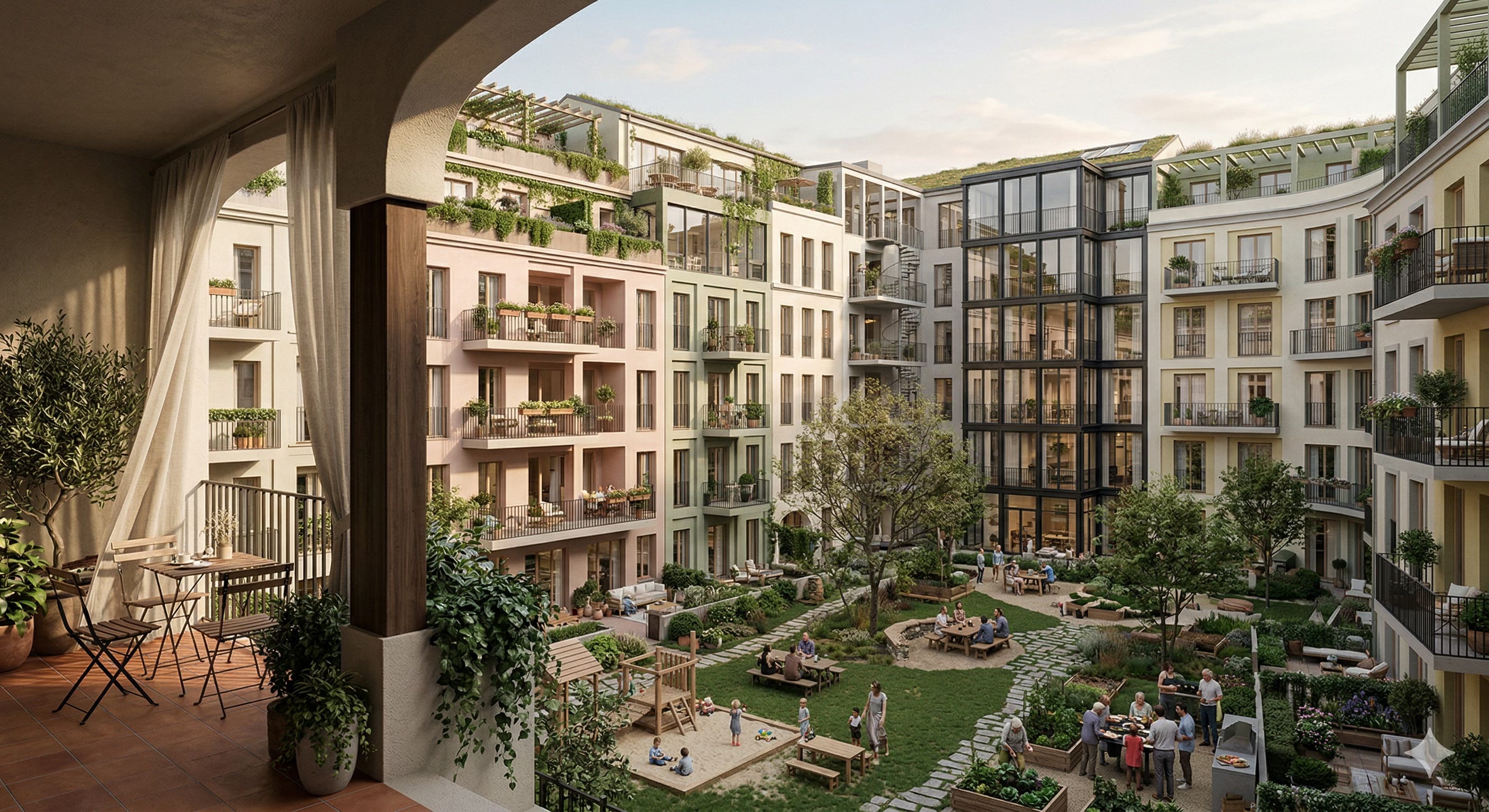
Courtyard Urbanist is a weekly newsletter sharing research, case studies, and courtyard urbanism designs for North American cities, drawing on Europe’s best neighborhoods to upgrade U.S. cities with family-friendly courtyard blocks.
If someone forwarded this to you, subscribe here.

Attached courtyard housing is becoming legal in Illinois law
Illinois is moving to legalize attached and detached courtyard housing in every residential zone across the state, as part of a middle housing reform package backed by the Governor. Meanwhile, on Chicago’s South and West Sides, the first courtyard-style buildings from the city’s Missing Middle Infill Housing program are already breaking ground.
Today we’re covering:
The BUILD Plan legislation that would legalize courtyard housing statewide in Illinois
Chicago’s Missing Middle program putting courtyard buildings in the ground right now
What this moment means for the future of courtyard urbanism across America
What’s New
A. Illinois SB 4060 names courtyard housing as a legal right
Governor JB Pritzker introduced the Building Up Illinois Development (BUILD) Plan in early 2026 — a package of housing reform bills designed to address Illinois’s shortage of 142,000 homes (per a University of Illinois report).
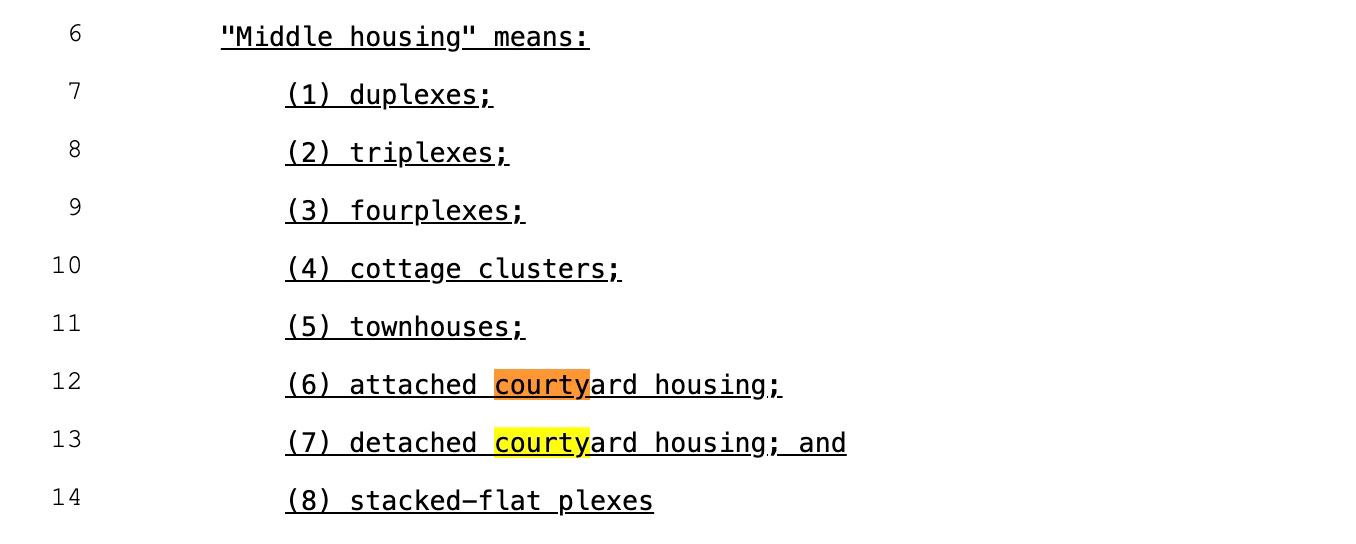
The centerpiece bill, SB 4060, would amend the Illinois Municipal Code to require cities to allow “middle housing” — defined explicitly to include attached courtyard housing and detached courtyard housing — as-of-right in all residential zones statewide.
Under SB 4060, the number of units permitted on a given lot scales with lot size, ranging from 2 to 8 units.
The bill also legalizes:
Cottage clusters
Duplexes
Triplexes
Fourplexes
Townhomes
And stacked flat-plexes.
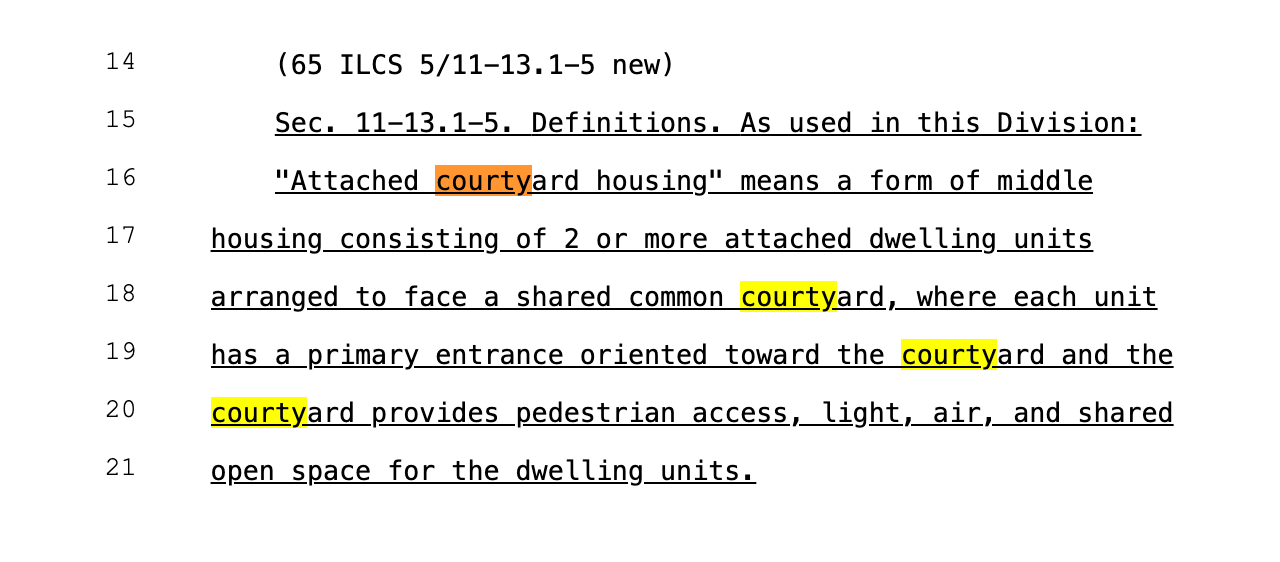
"each unit has a primary entrance oriented toward the courtyard and the courtyard provides pedestrian access, light, air, and shared open space for the dwelling units"

Lots with a minimum of 2,500 sq ft would qualify for middle housing by right. Senator Sara Feigenholtz joined as co-sponsor on March 5, 2026. As of April 2026, the bill has cleared early committee stages and is in active negotiation in the General Assembly.
Companion bills include:
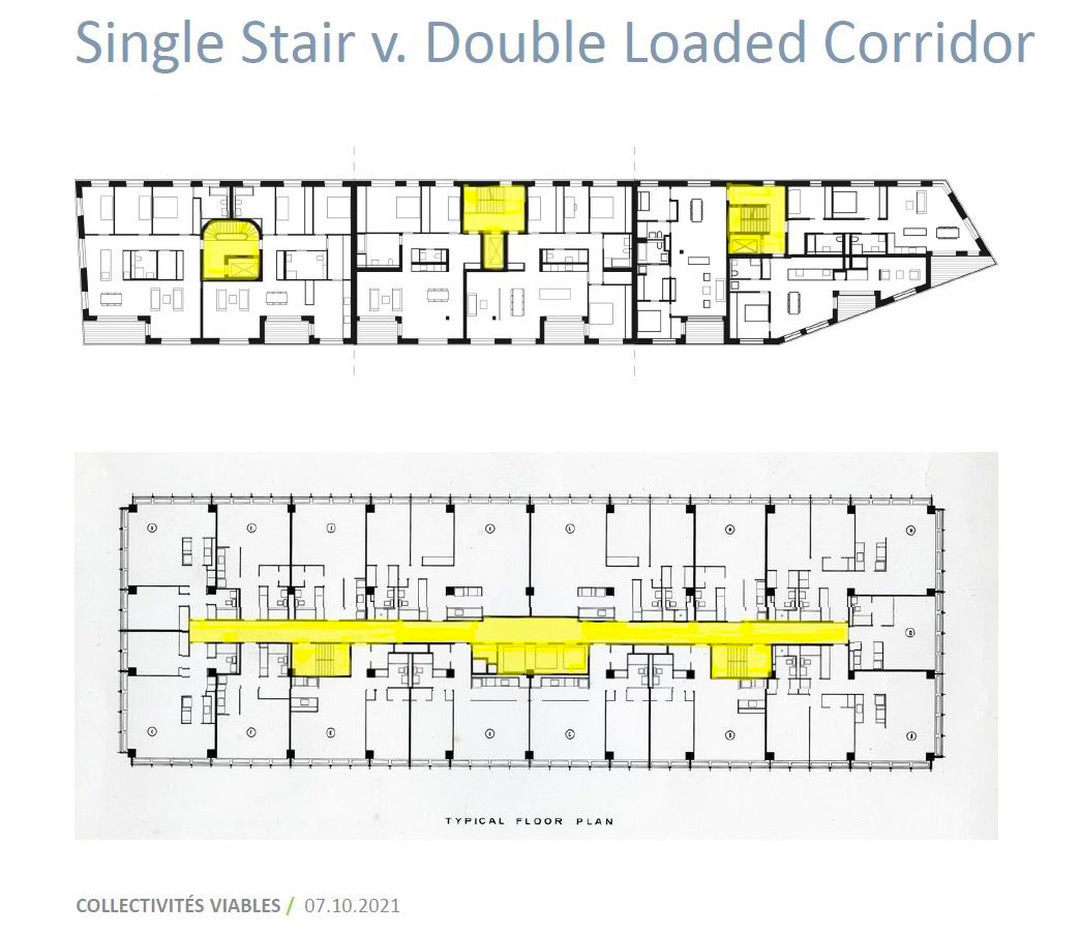
SB 4061 — single stair reform, allowing small multifamily buildings with one means of egress (as safe or safer per research)
SB 4063 — third-party permit review when municipalities cannot process applications fast enough
An April 1, 2026 analysis by the Evanston RoundTable noted the bills could significantly affect local zoning in suburban communities across the state.
Sources: Illinois General Assembly — SB 4060 Bill Status | BUILD Plan roundtable — Illinois Business Journal, Mar 26 | Evanston RoundTable, Apr 1, 2026 | Capitol News Illinois — Pritzker abundance agenda
B. Chicago’s Missing Middle program is building courtyard housing today
While SB 4060 moves through the legislature, Chicago’s Missing Middle Infill Housing program — led by the Department of Planning and Development — has already advanced more than 300 residential units across 106 buildings on vacant city lots across North Lawndale, East and West Garfield Park, Chatham, South Chicago, and Morgan Park (as of February 2026).
Among the designs chosen through the city’s Come Home design competition is “The Courtyard Shift” by ParkFowler Plus — the first competition entry to move into active development — which uses an efficient courtyard layout to lower construction costs while creating shared outdoor space for residents.
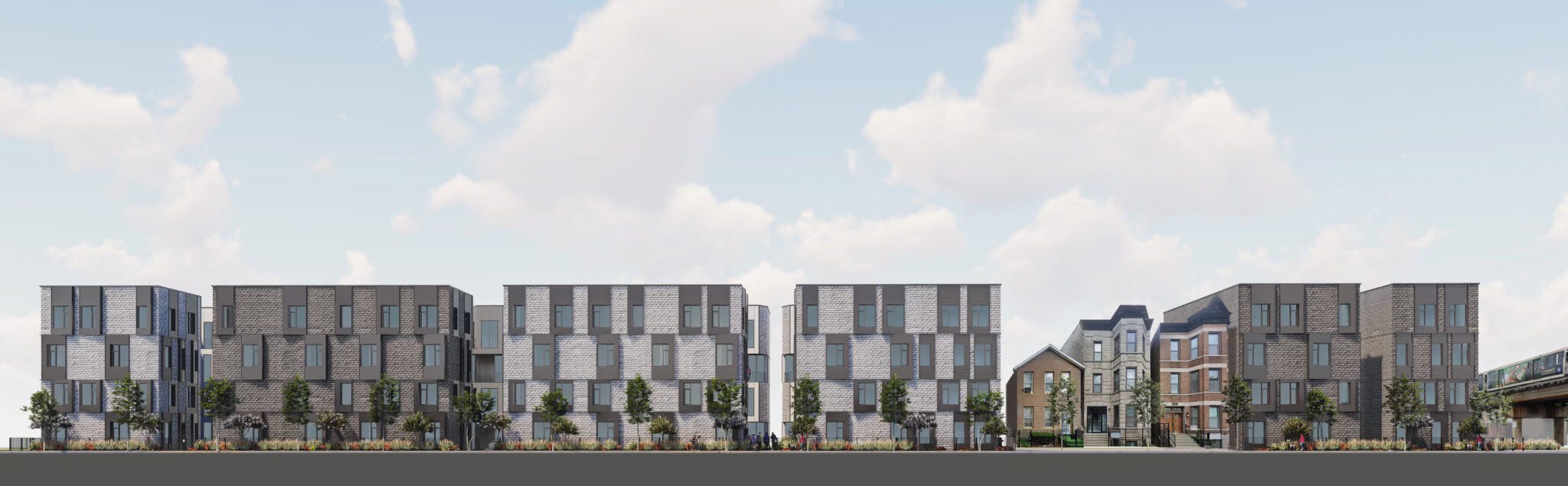
Lots are sold to qualified developers for $1, with up to $150,000 per unit in construction subsidies available through Mayor Brandon Johnson’s Housing and Economic Development bond. Homes target buyers earning up to 140% of area median income, with resale limits to maintain long-term affordability.
In January 2026, Chicago City Council approved 27 Missing Middle projects in Morgan Park, South Chicago, and Chatham — representing $31 million in total investment from five minority-led development teams. A Chicago Sun-Times story published April 3, 2026 framed the program’s mission: bringing more families to the South and West Sides, one vacant lot at a time.
Sources: Chicago Missing Middle Program | Chicago Sun-Times, Apr 3, 2026 | Block Club Chicago — Groundbreaking, Jan 7, 2026 | City of Chicago — City Council approves 27 projects, Jan 2026
C. National data: 2025 was the best year for missing middle construction since 2007
The National Association of Home Builders (NAHB) reported in March 2026 that 2025 saw 19,000 construction starts for 2- to 4-unit housing — the highest volume since 2007, up 6% from 18,000 starts in 2024. Yet this segment still represents only 5% of total multifamily production, and NAHB explicitly names zoning restrictions as the primary barrier to growth.
This is precisely why SB 4060 matters: the demand for smaller-scale, neighborhood-embedded housing is proven. The obstacle is not the market — it is the law.
Sources: NAHB — Best Year for Missing Middle Since 2007, March 2026 | CRE Daily — Missing Middle Hits 18-Year High | LBM Journal — Missing Middle Starts
WHY IT’S RELEVANT
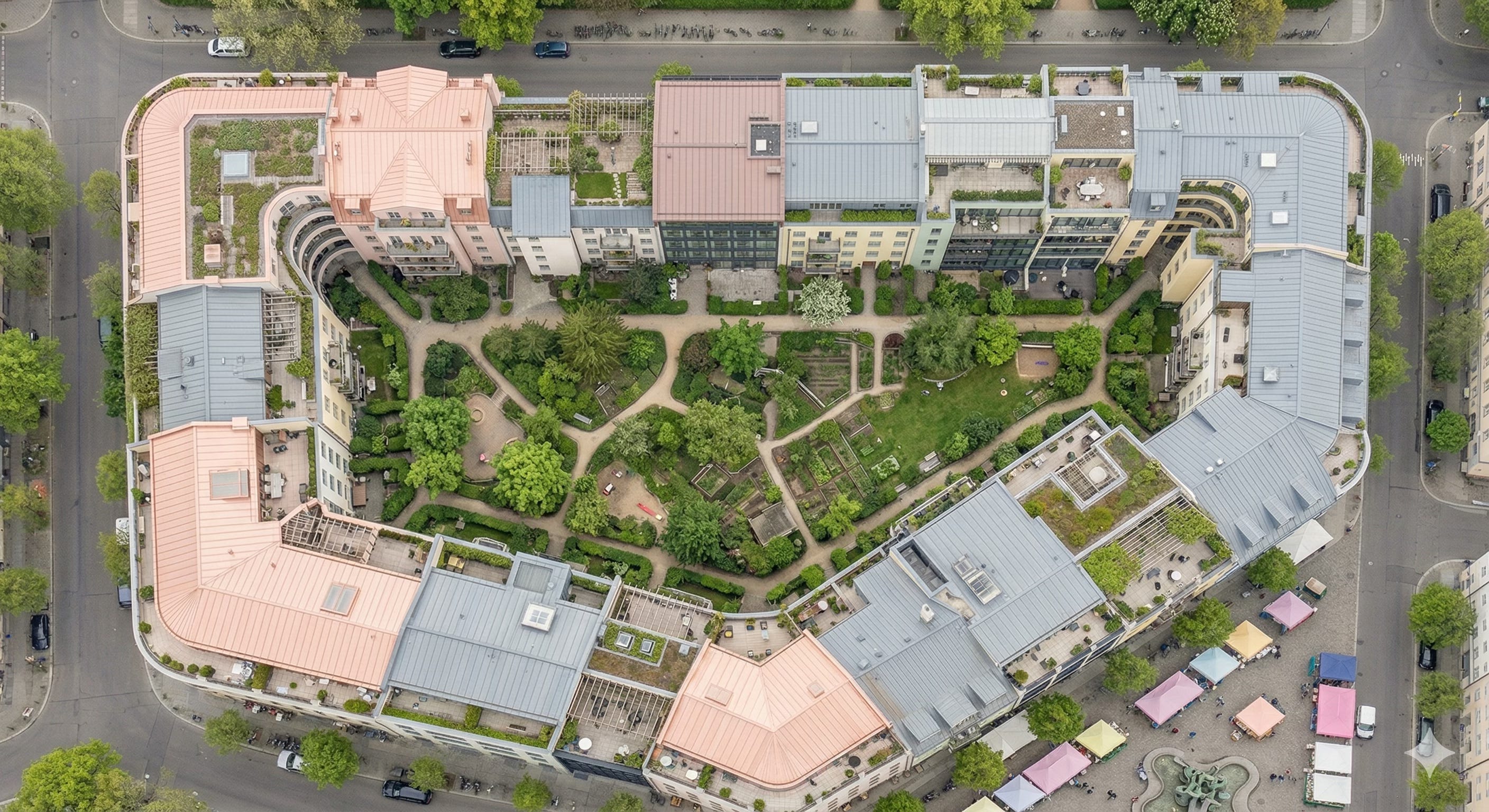
This is the first time state law has explicitly named courtyard housing as a protected type
Most housing reform bills focus on ADUs, duplexes, or density in general terms. SB 4060 goes further and specifically names “attached courtyard housing” and “detached courtyard housing” as types that must be permitted statewide. This is a significant moment for courtyard urbanism as a recognized housing category.
Our movement partners are at the center of this
Abundant Housing Illinois (a grassroots community of 6,000+ activists and a Courtyard Urbanist partner organization) has been central to the BUILD Plan’s development. The group advocates specifically for housing types like four-flats and courtyard buildings as part of Chicago’s architectural heritage and as a replicable model for family-friendly density. You can learn more about them here https://abundanthousingillinois.org
Chicago’s program proves courtyard buildings are viable right now, at scale
The Missing Middle program is not a pilot. It has 106 buildings in active development across six Chicago neighborhoods, with groundbreakings happening in January 2026. Courtyard-style designs like “The Courtyard Shift” are winning city competitions and moving into construction. This is proof of concept that courtyard housing works, it’s fundable, and it’s getting built.
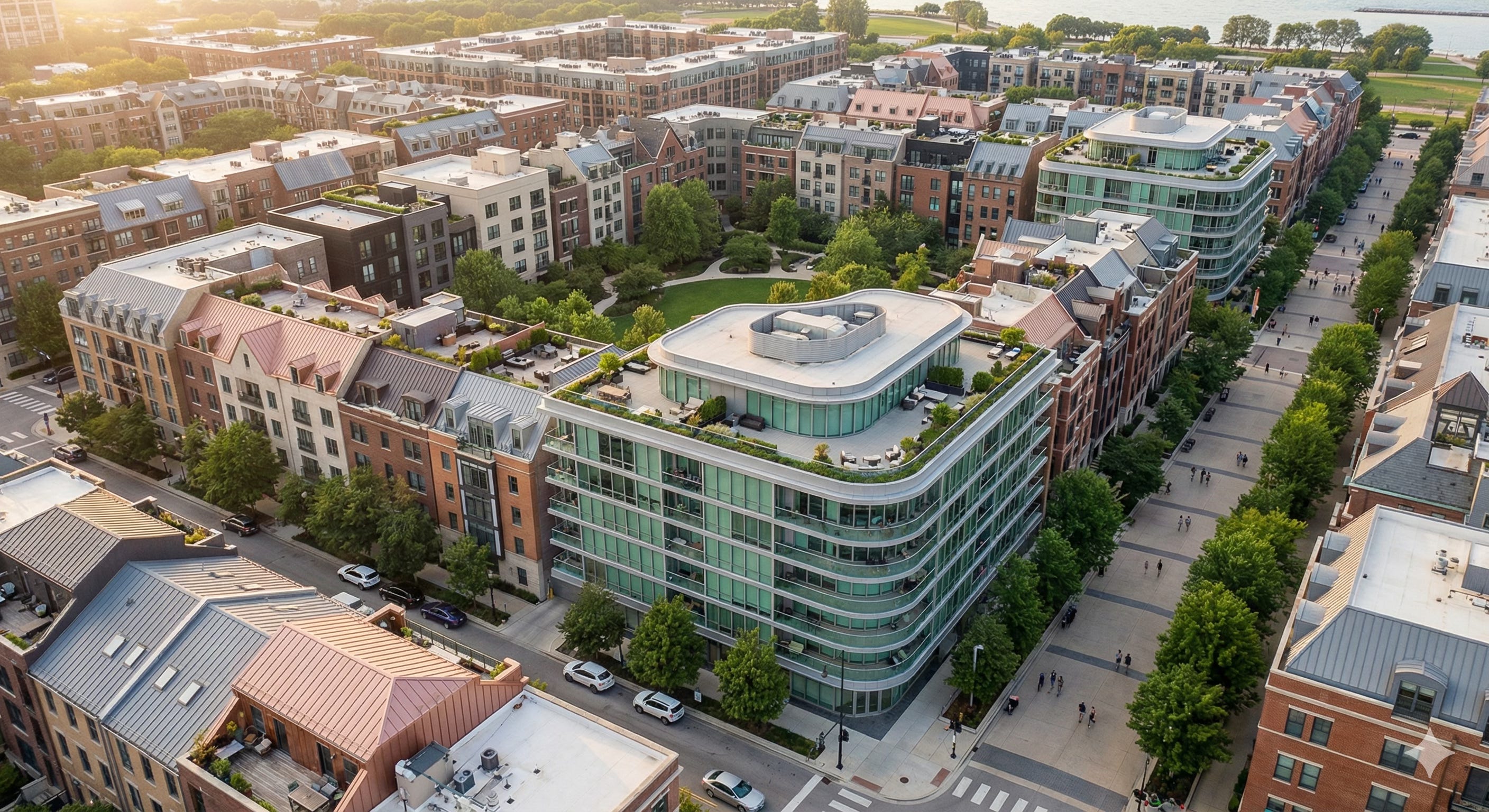
ADDRESSING MISCONCEPTIONS
Misconception 1: “This is just about apartments; it doesn’t apply to families.”
The Missing Middle program and BUILD Plan are both explicitly designed for working and middle-income families. Chicago’s program targets buyers at up to 140% of area median income, with resale restrictions to maintain affordability over time. Courtyard housing creates the kind of family-appropriate spaces (shared outdoor courtyards, ground-floor entries, neighborhood-scale density) that high-rise apartment towers cannot replicate.
Misconception 2: “State preemption of zoning removes local control”
SB 4060 does not tell cities what to build; it removes local prohibitions on certain housing types. Cities retain control over design standards, historic preservation, and permitting processes. What changes is that a city can no longer make courtyard housing illegal by default. This is a floor for housing choice, not a ceiling on community input.
Misconception 3: “Missing middle construction is in decline”
2025 marked the highest 2- to 4-unit construction volume since 2007 — not a decline. The trend is moving upward, and legislation like SB 4060 is designed to remove the zoning barriers NAHB identifies as the primary obstacle to further growth.
What I’m Thinking Of And Reading
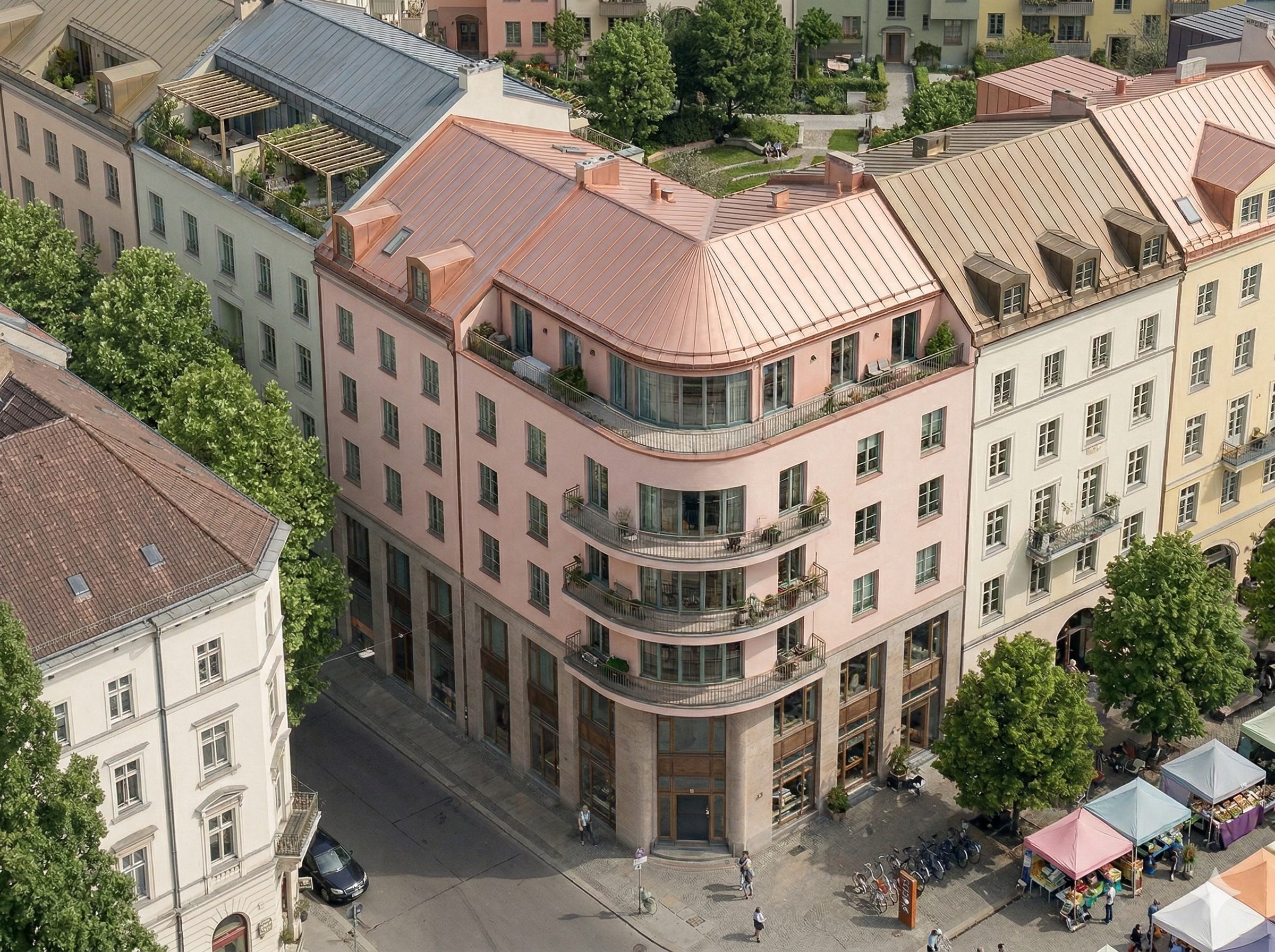
I’ve been deeply immersed in the Horizon Lines 2050 vision (draft here), a plan to scale mid-rise courtyard blocks across Chicago to deliver upwards of 400,000 family-friendly homes by 2050. I’ve also been on many, many calls about potential development on the South and West sides of Chicago, about development modeling tools, about modular prefabrication and panelized prefabrication, about fire code reform, and about demand aggregation. I have been thinking about all of these subjects a lot. I feel like I’ve been writing and talking a lot, but not reading as much as I would like! I have been reading, to my children, Tolkien’s The Fellowship of the Ring, which is something I look forward to every evening.
To family-friendly courtyard urbanism in American cities,
See you then,
Alicia Pederson
Courtyard Urbanist
P.S.
This newsletter is free — and Courtyard Urbanist’s best core content will always be free.
But if you want to go deeper into the regulatory, financial, and design questions that make courtyard urbanism work in practice, as a paying subscriber, you will receive:
✅ Wildcard Essays — High-impact essays responding to the most compelling idea or debate. Stay on the cutting edge of this movement.
✅ The Courtyard Urbanist Market Brief — An in-depth monthly report on who’s building what, which policies are moving, where the funding is, and what to watch. If you’re a developer, planner, or investor, this is the one you can’t afford to miss.
✅ Quarterly Insider Roundtable Video Calls — Behind-the-scenes project work, design feedback, and direct access to the people building this movement. These calls are where strategy actually gets made.
The weekly free issues will give you a strong foundation.
But if you’re serious about courtyard urbanism—whether you’re building it, funding it, designing it, or advocating for it—the paid tier is where the real work lives.
Consider upgrading to the paid tier to join the practitioner network.
People who want this to become law can show their support by sending a letter to their state rep and senator
https://actionnetwork.org/letters/pass-the-build-plan
There is also a lobby day on April 15. Ride the Amtrak to Springfield with 50 other YIMBYs and talk to state electeds about the BUILD plan
https://airtable.com/appzwumHROgxp506v/pagvEqb4wIqV88wYM/form
Fingers crossed on the BUILD Plan! Abundant Housing Illinois will be conducting a day of action on 4/15 to meet with legislators to ensure this passes.