



Yeah, I know … everyone loves alleys because they visibly move trash and cars off the public street. Everyone is horrified when they go to New York City and see piles of reeking garage on the sidewalks. And, yes, Chicago streets DO look cleaner without trash piled on the sidewalks.
However, when we put trash collection, car storage, and other services at the center of the block, we give up valuable land area for garbage and cars. Alleys and garages consume land that could otherwise support housing, stores, offices, or green yard space. The impact of systematic alley systems becomes clear when we look at cities like Baltimore, Chicago, Detroit, and St. Louis, which have struggled to retain families, population, and tax revenue. By contrast, cities with partial or no alleys—such as New York City, Boston, Copenhagen, Paris, and Tokyo—have generally fared much better since the widespread adoption of cars. In effect, alleys are associated with urban decline, car-oriented behaviors, and reduced real estate value. They also are linked to population migration to greener suburban neighborhoods.
In this article, we will explore the hidden costs of alleys and consider solutions: how cities can transform alleys into activated mixed-use streets and plan new neighborhoods as alley-free perimeter blocks that prioritize people over vehicles.


The High Costs of Alleys: Decreased Walkability, Real Estate Value, and Local Retail
Alleys are often treated as leftover “service” space, but they quietly reshape how blocks behave. The three linked harms of alleys are that they 1) reduce walkability; 2) they consume interior block space that could become private green yards or shared courtyards (which raise property values); and 3) they encourage short car trips and drive-to-box-store retail patterns that hollow out local retail corridors. Let’s explore these harms before moving on to what pedestrian-first blocks look like.
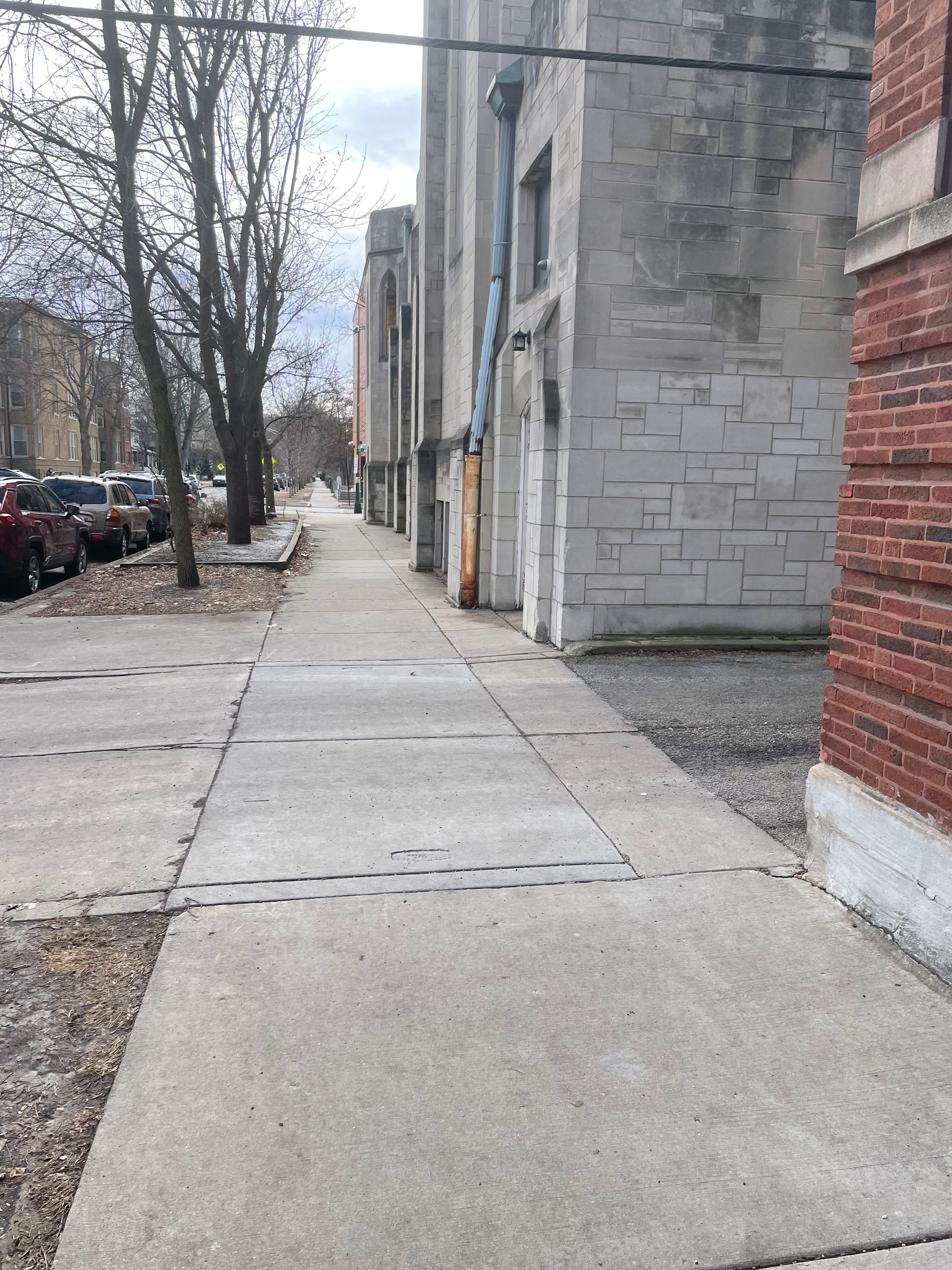
Alleys make city blocks less walkable by breaking up the pedestrian environment with car access points and mid-block crossings. Anyone who’s walked an alley block with small children on scooters knows the anxiety of seeing a child roll toward an unseen car. “STOP AND CHECK THE ALLEY” could be the unofficial motto of every Chicago parent. By pulling traffic into the interior of the block, alleys create extra “hazard” intersections where vehicles cut in and out, interrupting what could otherwise be calm, continuous pedestrian space. These crossings add points of conflict, create dead or inactive edges, and make the block feel less safe and less inviting for walking.
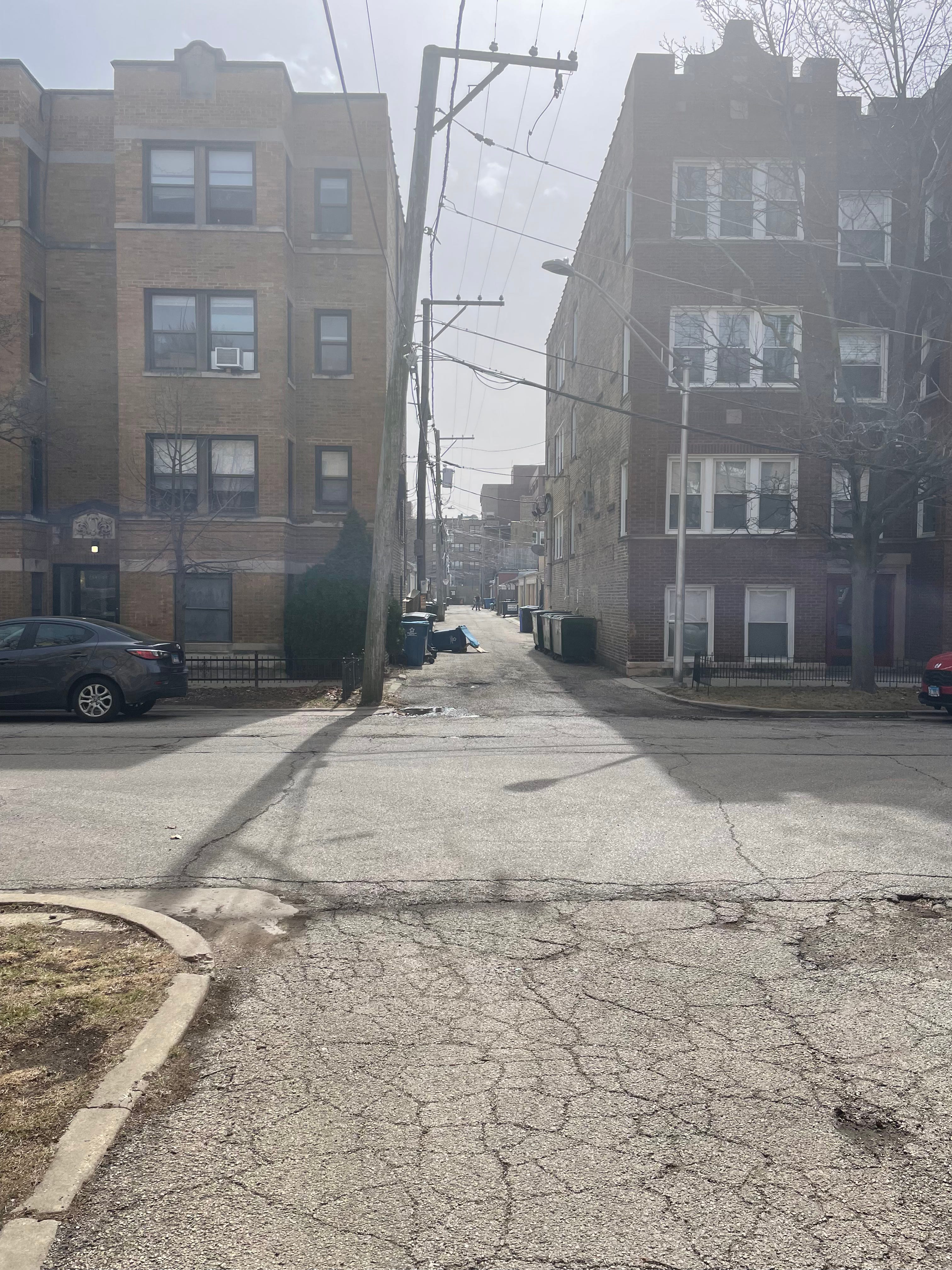
Second, alleys steal interior land that could be used for private or semi-private green space (backyards, shared courtyards, pocket parks, and productive gardens), and that loss shows up in property values. Hedonic-pricing literature finds that proximity to quality green space and usable private outdoor area increases housing prices. But when the block interior is occupied by service lanes and car storage rather than yards or courtyards, that amenity value disappears. In many historic dense neighborhoods the highest-value parcels are those that can reconfigure interior space into usable amenity (shared courtyard housing, rear gardens) rather than stash cars, and studies repeatedly link green-space characteristics to higher residential valuation.1


Third, alleys tend to bias movement patterns toward short car trips and away from local retail. Where the urban fabric prioritizes car service, it becomes easier to run errands by driving to large-format retail or edge-of-block parking rather than walking to frequent, small local shops. When your car is parked in your alley garage, it’s almost always easier to drive to auto-oriented retail (big box store with parking lot) than it is to walk to local businesses or to drive to pedestrian-oriented businesses.2 If your car is parked on the street (or if you don’t have a car), you are much more likely to support local businesses.


When cities give block interiors to garbage and cars, they make life harder for residents and businesses. The next section looks at how cities like Copenhagen and New York City instead use perimeter blocks that put people and businesses, not garbage vehicles, at the heart of urban life.
2. The World’s Most Livable Cities Prioritize People
Look at some of the world’s most celebrated urban environments: Copenhagen, Paris, New York City, and Vienna. Their success stems from a simple spatial ratio. They devote far more land to buildings, green courtyards, and public spaces than to car storage or asphalted rights-of-way.
In Copenhagen, perimeter blocks maximize shared courtyards and family-friendly density, earning it the title of one of the world’s most livable cities and a global model for human-centered design.


Paris’s Haussmannian blocks, though more compact, still offer residents calm courtyards while maintaining highly activated public streets. With fewer than 25% of households owning cars, Paris thrives on walkability and vibrant local commerce.


New York’s 1811 Commissioners’ Plan similarly rejected service alleys, producing long, narrow blocks that concentrate value at the street edge. The plan created higher housing density, more valuable homes with usable private or semi-private outdoor space, and a streetscape that privileges pedestrians over cars. By incentivizing foot traffic over car use, the plan helps maintain healthy commercial real estate values.


Across these perimeter block cities, the pattern is clear: livable urbanism emerges where the physical form of the city prioritizes people rather than vehicles. When blocks are enclosed rather than perforated by alleys, green interiors can replace asphalted service lanes, and streets encourage walking, cycling, and daily social and commercial life.
5. How U.S. Alley Cities Can Reclaim Their Blocks
Reclaiming American alley blocks doesn’t require a total rebuild. It can happen incrementally through design, policy, and community action. The following strategies offer a pathway toward more livable, family-friendly streets and neighborhoods:
1. Activate Alleys and Push Perimeter Development


In cities with existing alleys, one path toward improvement is to transform those alleys into minor mixed-use streets, adding small housing units, micro-retail, and office spaces above garages. This approach can work in conjunction with upzoning and a form-based code that gradually merges narrow, deep lots along main streets into wider, shallower parcels. Over time, this allows long, narrow single-family homes to be replaced by taller, thinner multifamily buildings concentrated along the edges of the block, freeing up the interior for shared green courtyards and permeable ground.


A particularly thoughtful model of this incremental transformation appears in The Impossible Toronto proposal (impossibletoronto.ca/design), which reimagines how mid-rise urban form could evolve block by block. As the authors explain:
“We are not the first to visualize a future for Toronto populated with mid-rise buildings. But many existing proposals illustrate how a single building would look and work, while our interest is in illustrating a complete block—in showing how a large number of buildings can create a desirable and urbanized streetscape over time.”


Working with a standard Toronto block that is bordered by a main street, a smaller residential street, and bisected by an alley, their conceptual master plan envisions two narrower courtyard blocks. By pairing standard mid-block lots into a single parcel, the plan creates a slice of a courtyard block with two buildings (one facing the street and one facing the laneway) separated by a shared courtyard. This illustrates how cities with alley frameworks can incrementally evolve into dense, walkable, and green perimeter-block neighborhoods without large-scale demolition.
2. Design new neighborhoods as perimeter blocks.


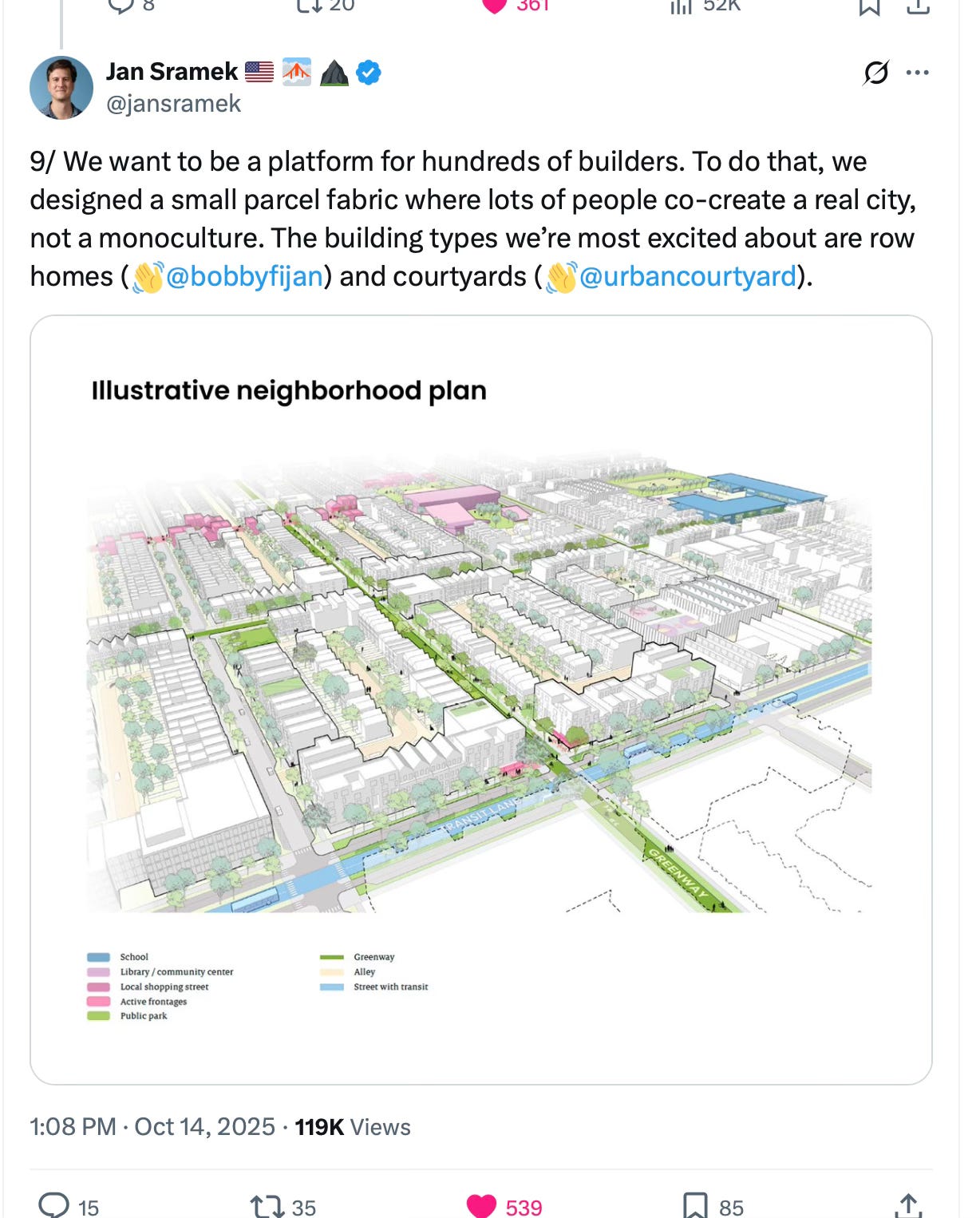
Every major U.S. city should actively plan new perimeter block neighborhoods to increase the supply of dense, walkable, and family-friendly urban fabric. New blocks can prioritize continuous building fronts along the street edge, creating dynamic pedestrian environments while eliminating back-lane garages and private alleys. Trash collection and service functions can be handled through street bins or community-managed systems, preserving interior block space for green courtyards, gardens, and pedestrian activity rather than vehicle access. Several visionary proposals are already exploring this approach. For example, Jan Sramek’s California Forever project aims to implement perimeter block neighborhoods as part of a large-scale urban vision (x.com).
Other projects, such as the Oscar Olderøy’s design proposal for a Bergen port development, similarly envision streetscapes organized around people-first blocks rather than alleys (LinkedIn).


These examples illustrate how careful block design can create neighborhoods that are walkable, valuable, and enduring, while maximizing green space and pedestrian safety.
3. Embrace the post-car transition.
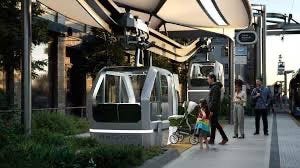
As autonomous fleets, shared mobility, and low-footprint transport systems (like urban gondolas or microtransit) reduce the need for private cars, cities can reclaim the vast asphalt reserves of the 20th century. Streets, alleys, and parking areas can be converted into pedestrian paths, green strips, and community spaces.
By following these strategies, U.S. cities can gradually convert car-dominated alley blocks into people-first neighborhoods, weaving urban fabric that supports walkability, social life, and long-term livability.
Conclusion
Alleys may keep trash and cars out of sight, but they reduce walkability, limit green space (and real estate values), and weaken local retail, ultimately prioritizing vehicles over people. Cities that design blocks around pedestrians, families, and mixed-use activity (like Copenhagen, Paris, and New York) show that urban form can create both economic value and social vitality. U.S. “alley cities” can follow their example by 1) incrementally transforming alley blocks into people-first streets with housing, micro-retail, and green courtyards, 2) planning new perimeter-block neighborhoods, and 3) reclaiming asphalted areas. By reorienting the urban fabric around people rather than vehicles, cities can build denser, greener, and more walkable neighborhoods that endure for generations.
Henry Wüstemann and Jens Kolbe, “The Impact of Urban Green Space on Real Estate Prices: A Hedonic Analysis for the City of Berlin,” Raumforschung und Raumordnung | Spatial Research and Planning 75, no. 5 (2017): 429–438, accessed November 8, 2025, https://rur.oekom.de/index.php/rur/article/view/428.
Centre for Cities, Accelerating Net Zero Delivery: How We Move, (September 2024), accessed November 8, 2025, https://www.centreforcities.org/reader/accelerating-net-zero-delivery/how-we-move/.
Do "where do the transformers go" next.
Alice, where do you place the garbage? Although I do agree that alleys can be better used.