


This is a monthly wildcard essay for paid subscribers, where I explore ideas that go beyond the usual case studies, chronicles, and regulatory analysis.
Courtyard Urbanist is a weekly newsletter sharing research, case studies, and courtyard urbanism designs for North American cities, drawing on Europe’s best neighborhoods to upgrade U.S. cities with family-friendly courtyard blocks.
If someone forwarded this to you, subscribe here.
We don’t often get 47 blank acres in the middle of a major American city.
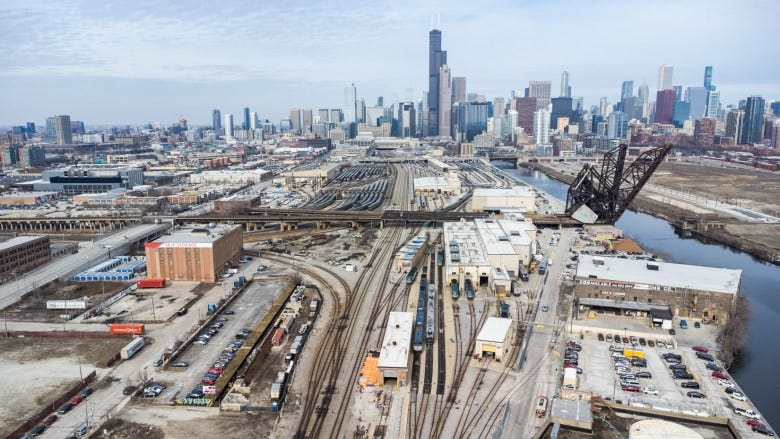
Last week, news broke that Justin Ishbia — the Shore Capital founder poised to become the next White Sox chairman — is under contract to acquire the old Amtrak rail yard in Chicago’s South Loop.
The site sits just south of Roosevelt Road, across the river from The 78, the mega-development where the White Sox had hoped to build a stadium before Chicago Fire claimed the land for a soccer facility.
This is the second act of that story (and might be the better one).
Ishbia’s team has begun early planning for a mixed-use development on the 47 acres. A healthcare innovation campus in partnership with Northwestern Medicine is reportedly part of the vision. And yes, a new White Sox stadium is being floated, too.
Cortyard Urbansist is a reader-supported publication. To receive new posts and support my work, consider becoming a free or paid subscriber.
Stadium districts fail because they are event-driven, single-product environments, while successful urban districts are continuous, life-cycle neighborhoods built on diverse housing and coherent block form.
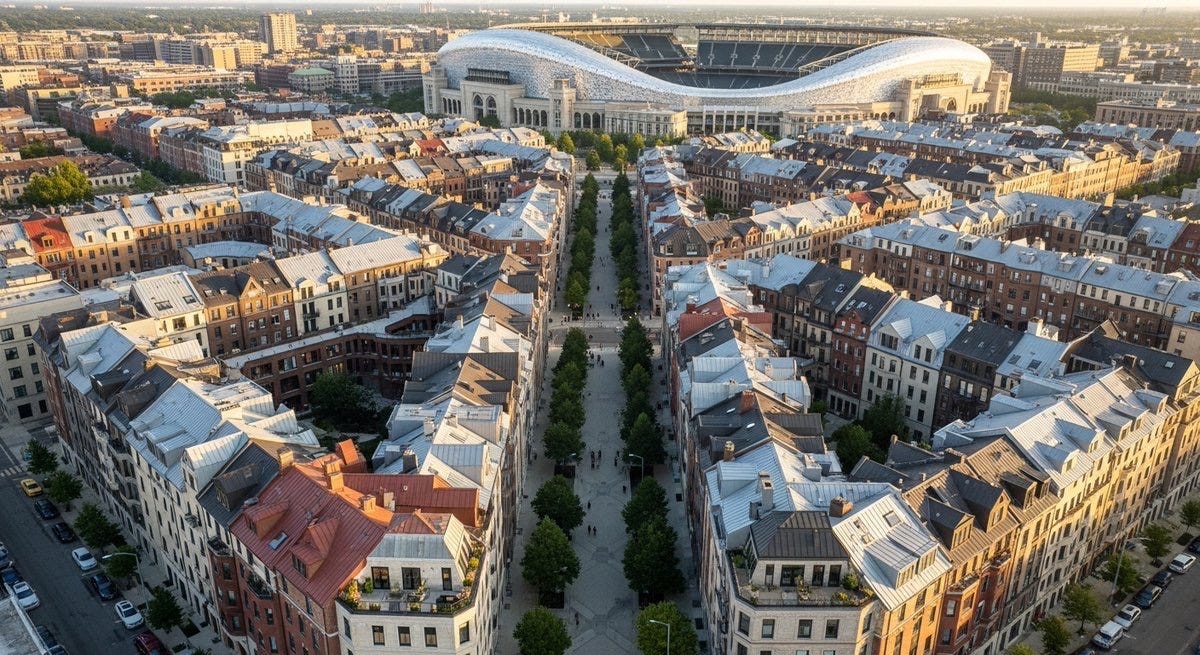
My suggestion? Organize the 47-acre site as a fine-grained, courtyard-based neighborhood, with the stadium embedded inside it.
Stadium districts should be built for everyday life rather than events
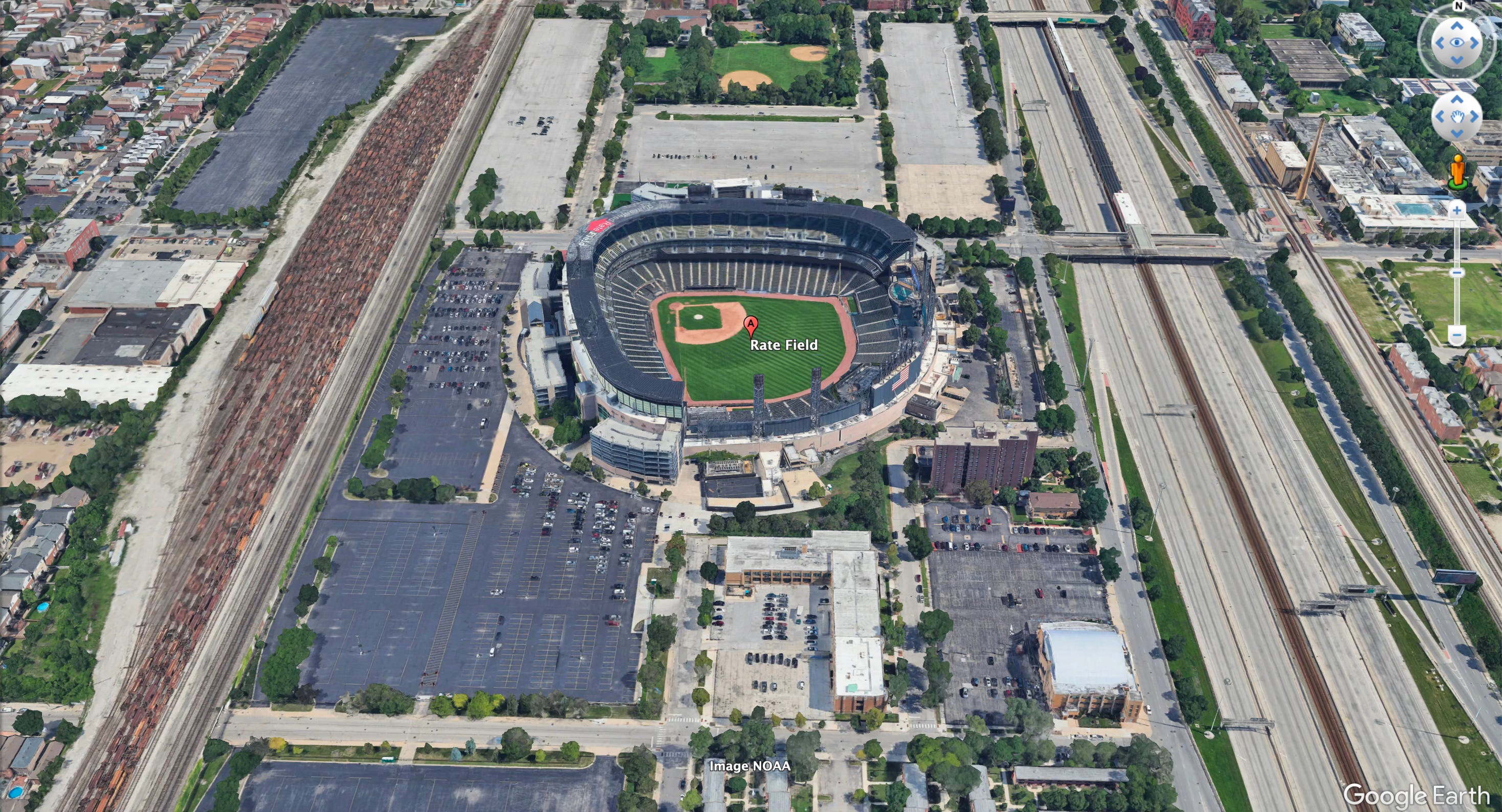
Most American stadium “mixed-use” districts follow the same pattern:
They build a stadium in a lagoon of parking lots
They add a hotel nearby and a few restaurants for fans
On game nights, the model performs exactly as intended. Lots of people stay at the hotels, the bars are crowded, and the entire area rises, like a zombie from the grave, for the event. But for the vast majority of the year—weekday mornings, off-season stretches, road trips—the buildings and infrastructure are dead. For the district is not a living neighborhood, but an undead real estate product that comes to life on occasion.
Great neighborhoods require a full range of housing: The Battery, Atlanta versus Wrigleyville, Chicago
What about The Battery Atlanta? The residential component at The Battery Atlanta is often cited as evidence that the project has moved beyond the traditional stadium model. And in a narrow sense, that’s true. There are apartments on site. People do live there.
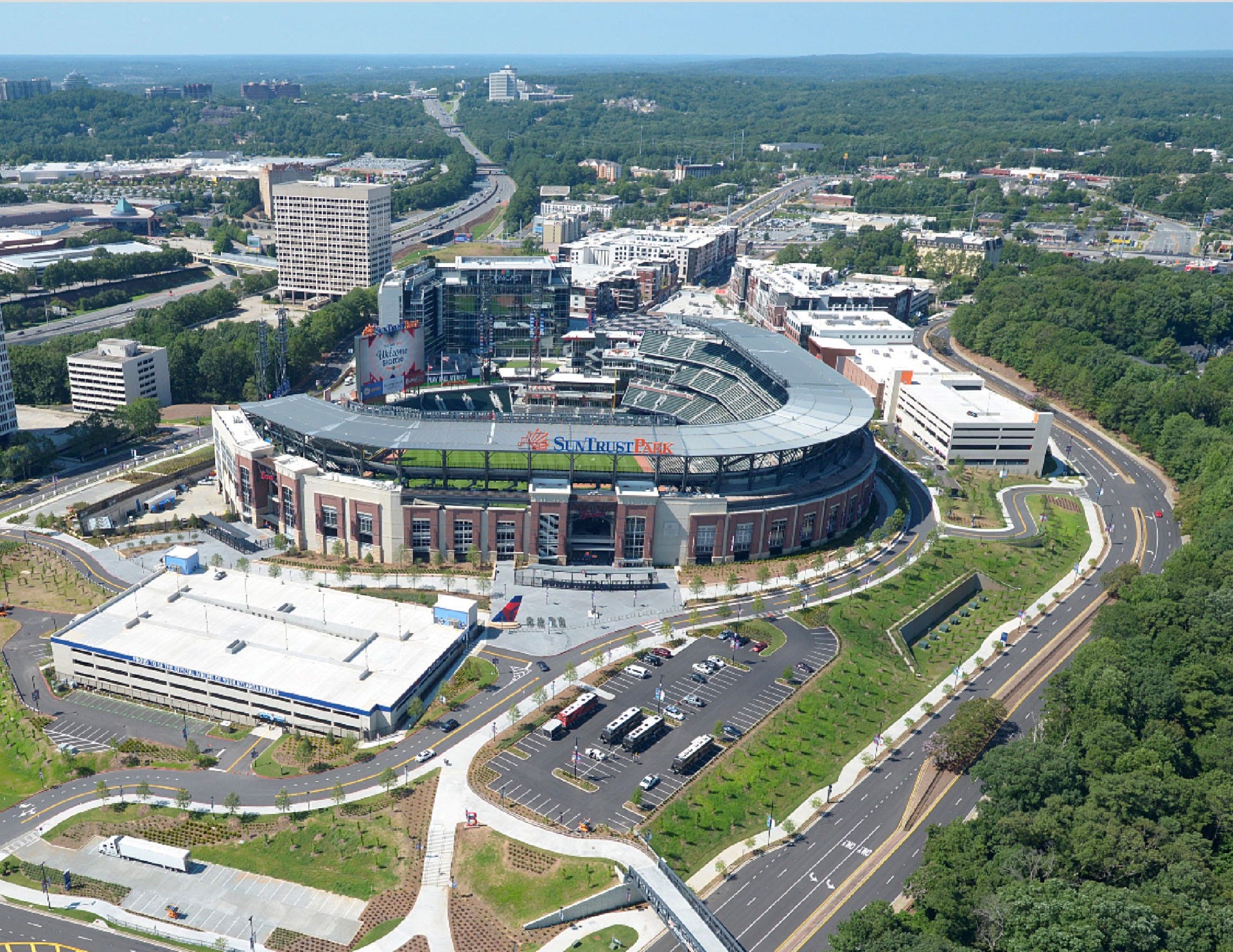
But the small rental housing at The Battery Atlanta targets a narrow slice of the population. The residential structures follow the conventional American podium model: large, single-developer structures composed primarily of smaller rental units—studios, one-bedrooms, and a limited number of two-bedrooms—organized along double-loaded internal corridors and wrapped around shared amenity decks. This is the dominant multifamily product in the United States, and it mostly attracts smaller, more mobile households with shorter expected tenures.
There is nothing inherently wrong with that. Rental housing is indispensable to a healthy neighborhood, providing flexibility and entry points into urban living. It’s a problem when rental housing is the only offering. A neighborhood built on a single housing type is structurally incapable of supporting the complete life cycle, because it cannot accommodate residents as their lives evolve.
A great neighborhood, by contrast, is defined by the range of housing it offers across the full arc of the life cycle. To borrow from Shakespeare’s “Seven Ages of Man” speech, people move through distinct “ages”—childhood, adolescence and peer relations, family and career formation, retirement—and each stage carries different spatial and social needs. Smaller rental units are well-suited to individuals and couples in these more transitional phases, but without larger homes and ownership and yard options, the neighborhood cannot hold them as they move from one age to the next.


That is precisely what The Battery Atlanta does not provide. Its residential component attracts only a narrow slice of renters at a particular life stage, but cannot accommodate the full arc of household change over time. It can draw people in, especially in its early years, but it lacks the unit diversity, ownership pathways, and yard access required to retain them as their needs evolve—from single professionals to couples, from couples to families, from families to empty nesters. As a result, residency becomes transient by design. The district is optimized for throughput, rather than for long-term attachment, social rootedness, or intergenerational continuity.
